Free Crochet Dish Scrubbies Pattern for Beginners
A small flat circle worked in scrubby yarn — a genuinely useful, reusable alternative to a store-bought sponge.
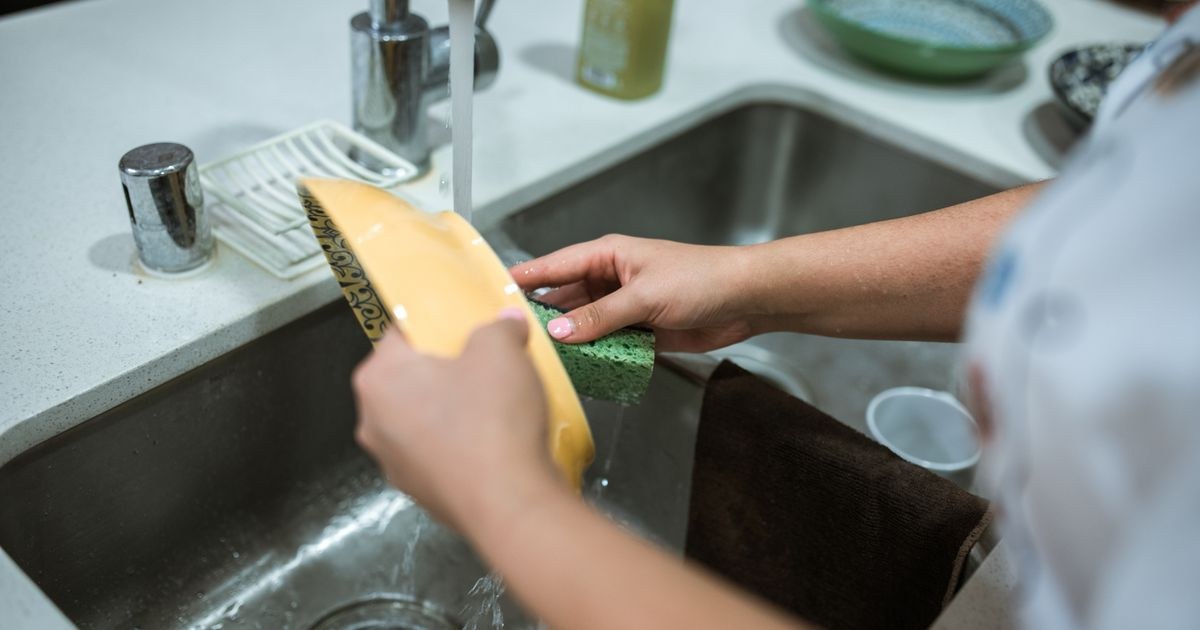
I resisted scrubby yarn for years, convinced it was a gimmick, until the week I ran out of dish sponges and made a crochet dish scrubby out of nothing but curiosity. It has been my main scrubber ever since, and it's the pattern my students finish fastest — which is exactly why I now hand it to anyone who wants a first win. The netting texture does the scrubbing, so even slightly uneven tension still works, and there's a small but real satisfaction in throwing a worn-out scrubby in the wash instead of the bin. I've made sets of three in one sitting and given them away as housewarming gifts, because something so quick to make shouldn't be so genuinely useful.
These scrubbies use the same flat circle increase technique as our coasters pattern, worked in scrubby yarn instead of cotton. The netting texture of scrubby yarn does the actual scrubbing work, while the crochet structure holds it together and gives it a grip-friendly shape.
There's a practical waste-reduction angle here too, since a single skein of scrubby yarn makes several scrubbies for roughly the cost of one multi-pack of disposable sponges, and each one lasts through months of regular use rather than being thrown out after a couple of weeks. It's a small change, but it's the kind of small change that a lot of people find satisfying once they start.
Materials
- 1 skein scrubby (netting-style) yarn (about 80–100 yards for a set of 3)
- 5.0mm (US size H) crochet hook
- Scissors
- Yarn needle, for weaving in ends
Abbreviations (US terms)
| Abbr. | Means |
|---|---|
| sc | Single crochet |
| st(s) | Stitch(es) |
| inc | 2 sc in same stitch (increase) |
| rnd(s) | Round(s) |
See our abbreviations glossary for the full list including UK terms.
Gauge
Exact gauge isn't critical here; scrubby yarn is stretchier and more forgiving than cotton, so a scrubbie slightly larger or smaller than the target size still works fine.
Notes
- Written in US terms, worked in a continuous spiral — same shaping as our coasters pattern, just in a different yarn.
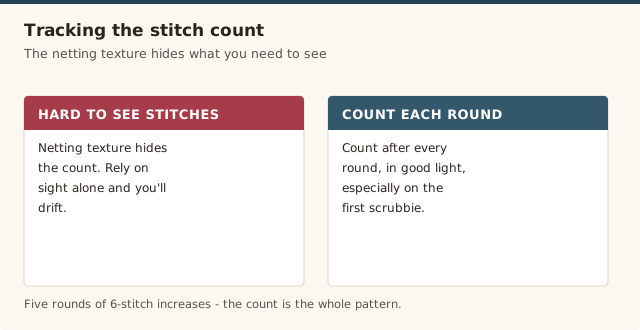
- Scrubby yarn can be trickier to see stitches in than standard yarn; work in good lighting, especially for your first one.
- Makes one scrubbie; repeat 2 more times for a set of three.
Pattern (make 3)
Make a magic ring, 6 sc into ring, place marker. (6 sts)
Inc in every st around. (12 sts)
[sc 1, inc] around. (18 sts)
[sc 2, inc] around. (24 sts)
[sc 3, inc] around. (30 sts)
Slip stitch into the next stitch to close, fasten off leaving a 4in / 10cm tail. Weave in ends with a yarn needle.
A demonstration of crocheting a dish scrubby with scrubby-style yarn, useful for seeing how the rounds build up the scouring texture.
Color combinations
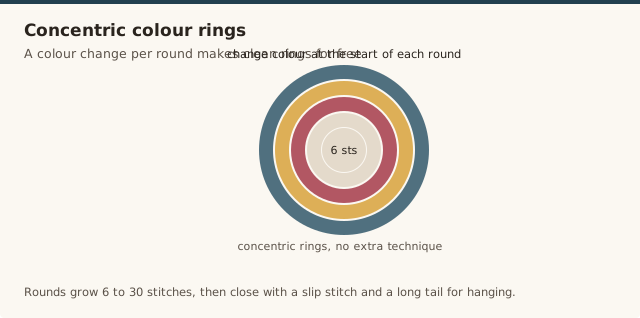
Scrubby yarn comes in a surprising range of colors, and switching between two or three at the start of each round creates clean concentric rings with no extra technique — the natural join point at the start of a round is exactly where a color change happens anyway. A bright color paired with a neutral makes the rings read clearly; two similar shades give a softer, more blended look.
Kitchen color schemes are worth matching to, especially if the scrubbies will sit visibly by the sink rather than tucked in a drawer. A set that coordinates loosely with dish towels or a countertop color scheme reads as a deliberate design choice rather than a random craft project.
If you want to tell scrubbies apart at a glance — one for dishes, one for counters, one for produce — giving each a distinct primary color is more practical than it sounds. It removes any guesswork about which scrubbie touched what, which matters more in a shared kitchen than it might in a single-person household.
Gifting a kitchen set
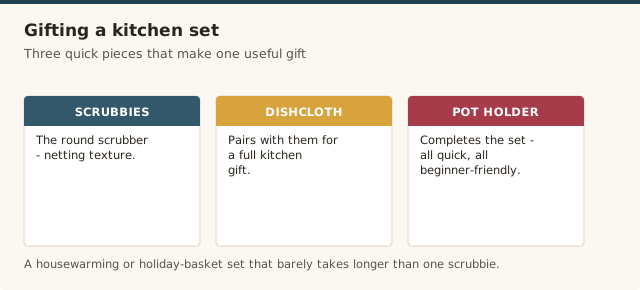
A set of scrubbies pairs naturally with our dishcloth pattern and pot holder pattern for a complete, genuinely useful kitchen gift set, especially for a housewarming or as part of a holiday gift basket. All three use similarly quick, beginner-friendly techniques, so a full set doesn't take dramatically longer than making scrubbies alone.
Because these are consumable items that get replaced every few months, they also make a thoughtful smaller gift on their own — a set of 3 to 6 in coordinating colors, wrapped simply or tied with ribbon, costs very little in materials or time but reads as a considered, practical gift rather than an obligatory one.
They're also an easy addition to a larger care package or hostess gift where the main item is something else entirely — a bottle of wine, a candle, a bag of good coffee. A couple of scrubbies tucked in alongside makes the whole gift feel more personal without adding meaningfully to the cost or the time spent putting it together, since each one takes only a few minutes once the pattern is familiar.
Common mistakes & fixes
Fix: count stitches carefully after each round rather than relying on sight alone, and work in good lighting, especially for your first scrubbie.
Fix: cotton makes a softer, gentler version of the same shape, good for non-stick pans, but scrubby yarn is what provides the actual abrasive texture for stuck-on food.
Fix: weave the tail through several stitches in different directions rather than just a couple of passes — the extra minute of finishing prevents an early unraveling.
Fix: let it air dry fully, draped over a faucet or in a small dish, to extend how long it holds up before needing replacement.
Our pick
Cotton worsted-weight yarn, 3-pack
While this pattern calls for scrubby yarn, cotton yarn from this pack works well for a softer, non-abrasive version of the same shape.
View on Amazon →Frequently asked questions
What is scrubby yarn?
Scrubby yarn is a synthetic netting-style yarn, often made from polyester or nylon, designed specifically for scrubbing dishes. It's more abrasive than standard yarn and holds up well to repeated washing.
How long do crochet dish scrubbies last?
With regular use and air drying between washes, a scrubby yarn dishcloth typically lasts several months before needing replacement, similar to a store-bought sponge.
Can I machine wash crochet dish scrubbies?
Yes, scrubby yarn is generally machine washable; check the yarn label for specific care instructions, since some brands recommend air drying rather than tumble drying.
Can I mix colors within one scrubbie?
Yes — switching scrubby yarn colors at the start of any round creates clean concentric rings with no extra technique, since the color change happens naturally at the join point of each round.
How do I store scrubbies to make them last longer?
Hang or prop them somewhere they can air dry fully between uses rather than leaving them balled up wet in the sink, which is the main thing that shortens a scrubbie's working life.
Can I use scrubby yarn for projects other than dish scrubbies?
Yes — the same yarn and flat-circle technique work for bath poufs (worked larger and often gathered into a ball shape) and produce vegetable scrubbers using the identical pattern as written here.
Can I use regular cotton yarn instead of scrubby yarn?
Yes, cotton makes a softer, gentler scrubby that is safe for non-stick pans and delicate surfaces, but it will not have the same abrasive scrubbing power for stuck-on food. For real scrubbing power, stick with scrubby yarn.
How big should crochet dish scrubbies be?
Around 4 inches (10 cm) across is the sweet spot, big enough to grip comfortably and small enough to work around dishes and into cup corners. If yours come out larger or smaller, they will still work fine.
CrochetGuides is a participant in the Amazon Services LLC Associates Program. As an Amazon Associate we earn from qualifying purchases, at no extra cost to you.