How to build a picture or pattern out of solid blocks and open mesh spaces, reading a filet chart row by row.
Updated 2026 · US terms · Traditionally worked in cotton
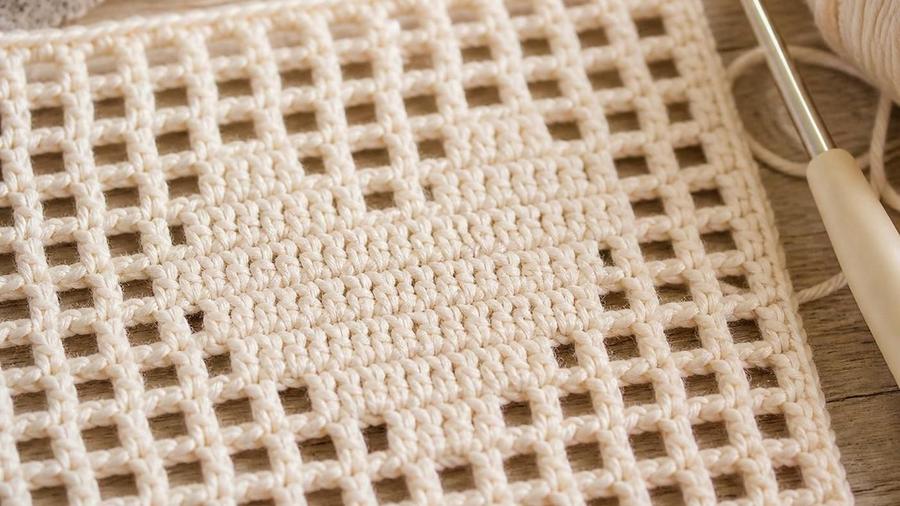
My first filet crochet attempt looked like a photo taken with a slightly warped lens: the picture was recognizable, but every mesh square was subtly the wrong shape, some stretched wide, some squeezed narrow, none of them quite square. I'd been chaining "about 2" for each space instead of counting exactly, assuming the difference between 2 and 3 chains was too small to matter. It wasn't. Filet crochet's whole visual structure depends on every space being the same size, and a single inconsistent chain count anywhere in a row distorts not just that space but the overall grid the picture is built on.
This tutorial covers the basic block-and-space stitch pattern, how to read a filet chart's alternating row direction, and specifically why chain-count consistency matters more here than in almost any other crochet technique.
Filet crochet has stayed popular for well over a century for a simple reason: it produces a genuinely pictorial, almost lace-like fabric using only two stitches most crocheters already know, double crochet and chain. There's no unfamiliar stitch to learn here, the entire skill is in reading the chart correctly and counting carefully, which makes it a good technique to pick up once basic double crochet is comfortable, well before tackling more stitch-heavy techniques.
Worked flat in rows, in double crochet with chain spaces, following a charted grid.
A "block" is 3 dc worked into 3 consecutive stitches; a "space" is ch-2, skip 2 sts, dc.
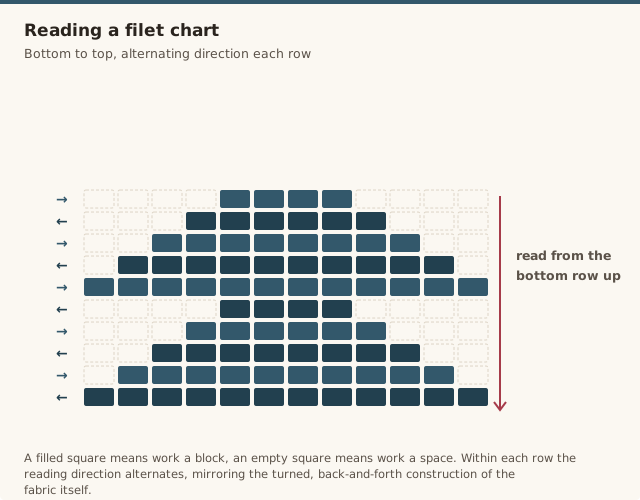
Charts are read bottom to top, alternating reading direction each row to match the back-and-forth construction.
Reading a filet crochet chart
A filet chart is a grid where a filled-in square means "work a block here" and an empty square means "work a space here." Unlike a picture you might glance at as a whole, a filet chart needs to be read one row at a time, from the bottom row up, since that's the order the rows are actually crocheted in. Within each row, reading direction alternates: right to left on one row, left to right on the next, mirroring the turned, back-and-forth construction of the fabric itself.
Before starting your actual project, count the total number of squares across the chart's width and confirm your foundation chain matches that count (plus the extra chains needed for the pattern's specific block-and-space setup). A foundation chain that's even one square off throws every single row above it out of alignment with the intended picture.
Most filet charts also mark the edges of the design with a border row or two of plain mesh, framing the actual picture rather than starting the motif immediately at the very first row. Check whether your chart includes this border before you begin, since skipping it (or accidentally including an extra one) changes the finished piece's overall proportions even though the picture itself is unaffected.
Working blocks and spaces
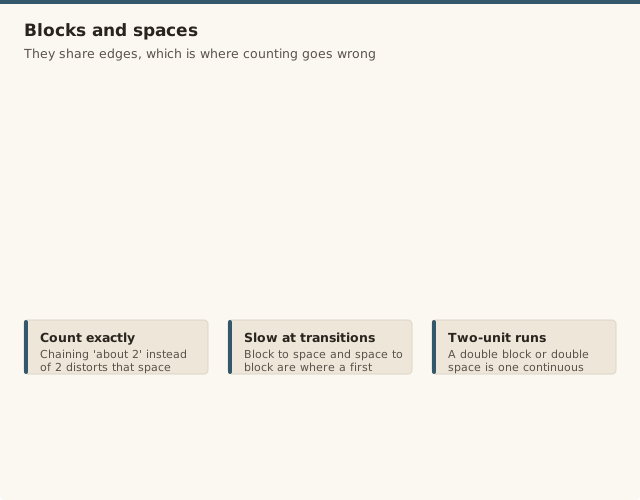
A block is 3 double crochet stitches worked into 3 consecutive stitches from the previous row, creating a small solid square of fabric. A space is ch-2, skip the next 2 stitches, then dc into the following stitch, creating an open square-shaped gap. Both block and space "units" share stitches at their edges in a continuous row, a block's third stitch is often also the start of the next unit, so following a written or charted row instruction exactly (rather than approximating) keeps the shared-stitch counting correct.
Transitioning between a block and a space, or a space and a block, within the same row is where a first attempt often goes wrong, since the stitch count changes differently depending on which direction you're transitioning. Slow down specifically at these transition points rather than trying to work through them at the same pace as a long uniform stretch of blocks or spaces.
A useful variant worth knowing once the basic pattern feels comfortable is the "lacet and bar" version, which replaces some spaces with a slightly more decorative open stitch combination for added texture within the mesh. This isn't necessary for a first project, but it's worth knowing the term exists, since many published filet charts specify it as an option and it's easy to mistake for an error in the pattern instructions if you've never encountered it before.
It's also worth practicing a "double block," two blocks worked side by side with no space between them, and a "double space," two spaces worked side by side, since these two-unit combinations show up constantly in real charted designs and are easy to miscount if you're still thinking in strictly single-unit terms. Treat any run of consecutive blocks or consecutive spaces as one continuous stretch to count through, rather than resetting your counting logic at every individual unit boundary.
Keeping the mesh genuinely square
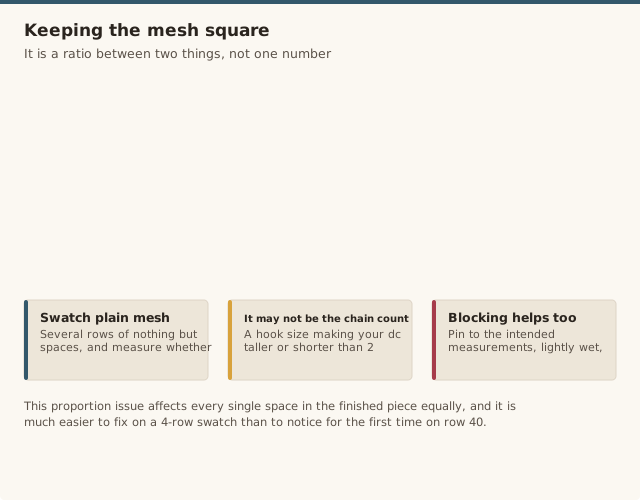
A "space" is only visually square if its width (the 2 chains) and height (one row's worth of double crochet) are proportioned correctly relative to each other, which is a function of your specific yarn and hook combination, not a universal constant. If your finished spaces look noticeably rectangular rather than square, the fix isn't necessarily the chain count, it may be your hook size relative to your yarn weight producing double crochet stitches that are taller or shorter than 2 chains' worth of width.
Work a small test swatch of plain mesh, several rows of nothing but spaces, before starting your actual charted project, and measure whether the resulting gaps look genuinely square. If they read as rectangles, try a different hook size before committing to the full piece, since this proportion issue affects every single space in the finished piece equally and is much easier to fix on a 4-row swatch than to notice for the first time on row 40 of a large piece.
Blocking the finished piece also helps square up any minor unevenness left over even after careful stitch counting. Pin the piece out to its intended measurements on a blocking board or towel, spraying or lightly wetting cotton yarn as needed, and let it dry fully in that pinned shape. This step is standard practice for finished filet pieces and noticeably crisps up the overall grid regardless of how carefully the counting was done along the way.
Good first filet projects
A small filet coaster or a simple bookmark, using a basic geometric or single-letter motif, is the standard low-stakes starting point, since it's finished quickly and any counting mistakes are cheap to redo. A table runner with a repeating border motif, worked across a longer but narrower piece, is a natural next step once the block-and-space pattern and chart alternation feel comfortable, since a repeating border only requires mastering one motif and then working it consistently many times across the runner's length.
Curtains, doilies, and larger wall-hanging pieces are the traditional showcase projects for filet crochet, and they're worth working toward rather than starting with, since a mistake made early in a large piece can mean unpicking a substantial amount of work. Build up through smaller pieces first, and treat a first large filet project as a piece you're willing to take slowly and check frequently, rather than one you're racing to finish quickly.
Common filet crochet slip-ups
Mistake: the mesh squares come out rectangular or stretched instead of square.
Fix: match the number of chains in each space to the pattern exactly, one chain too many or too few distorts every space in that row.
Mistake: blocks and spaces don't line up row to row, blurring the intended picture.
Fix: count stitches at the start of every row against the chart and use a row counter, since filet patterns are easy to lose track of over many rows.
Mistake: the edges pull in or flare out over the course of the project.
Fix: keep the total stitch count specified for the chart's width consistent every row, filet crochet is unforgiving of stitch-count drift at the edges.
Mistake: the finished fabric looks floppy instead of holding the picture crisply.
Fix: use a firmer cotton yarn rather than a soft acrylic, filet crochet is traditionally worked in cotton because it holds the mesh shape better.
Mistake: it's hard to tell blocks from spaces while reading the chart mid-project.
Fix: track the current row with a sticky note or a printed chart and highlighter, since filet charts are read bottom-to-top and alternate direction every row.
Filet crochet FAQ
What yarn works best for filet crochet?
A firmer cotton yarn is the traditional and still the best choice, since it holds the open mesh's square shape far better than a softer, stretchier acrylic. Cotton's lack of give keeps the spaces looking crisp rather than sagging out of shape over time.
How do I read a filet crochet chart or graph?
A filled-in square on the chart means a block (a small group of solid stitches), and an empty square means a space (an open mesh gap). Charts are read bottom to top, alternating direction left-to-right and right-to-left the same way the fabric itself is worked in rows.
Can any picture be turned into a filet pattern?
In principle yes, since any image can be reduced to a grid of filled and empty squares, but simple, high-contrast silhouettes translate far more clearly than detailed or shaded images. A single clean outline, a heart, a leaf, an animal silhouette, reads clearly in filet; fine internal detail tends to get lost in the mesh's resolution.
Why do the mesh squares come out uneven?
Uneven squares almost always come down to an inconsistent number of chains within each space. Match the chain count in every space exactly to what the pattern or chart specifies, since even one extra or missing chain distorts that space and often the ones next to it.
Is filet crochet good for a beginner?
Yes, since it only requires double crochet and chain stitches, both typically among the first stitches a new crocheter learns. The main new skill is chart reading and careful stitch counting, not any unfamiliar stitch technique to add to your toolkit.
What's the actual difference between filet crochet and tapestry crochet?
Filet crochet creates its pattern through solid blocks versus open mesh spaces in a single color, using the structure of the stitches themselves rather than color. Tapestry crochet creates its pattern through color changes within a solid single crochet fabric, carrying a second color behind the work. They can even be combined, a colored filet piece, though that's an advanced combination of both techniques worth trying only once each is comfortable on its own.
Nora has been teaching crochet for 12 years, from absolute beginners to people coming back to the craft after decades away. She started CrochetGuides to write the clear, honest instructions she wishes she'd had when she was learning — the ones that actually work the first time.
CrochetGuides is a participant in the Amazon Services LLC Associates Program. As an Amazon Associate we earn from qualifying purchases, at no extra cost to you.