How to Fix a Crochet Project That's Too Small or Too Big
Why your finished piece doesn't match the pattern's stated size, and what to actually check before your next attempt.
The first fitted thing I ever crocheted was a vest that came out closer to a child's size than an adult's, and I'd followed every row exactly as written. It took a frustrated evening of re-reading before I found the one line I'd skipped entirely: the gauge swatch instructions at the very top. I hadn't skipped it out of laziness — I genuinely didn't understand why it mattered until that project taught me the expensive way. Now, twelve years into teaching, I still see the same thing in my classes: a finished piece that's the wrong size is almost never bad luck. It's tension, hook size, or a yarn substitution. Check those three before you start, and sizing stops being a mystery.
Why it happens
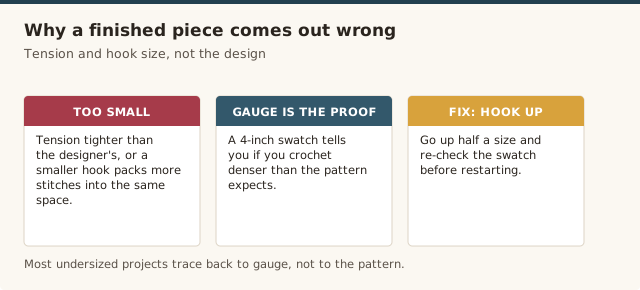
Most likely cause: your natural tension is tighter than the designer's, or your hook is smaller than the pattern calls for. Both pack more stitches into the same space, shrinking the finished piece.
Fix for next time: go up half a hook size and re-check your gauge swatch before starting the actual project.
Most likely cause: the reverse — looser tension than the designer's, or a hook one size larger than recommended.
Fix for next time: drop half a hook size, and check whether your stitches are loose enough to see gaps between them, which is often a visible sign before you even measure.
How to actually check gauge before you start
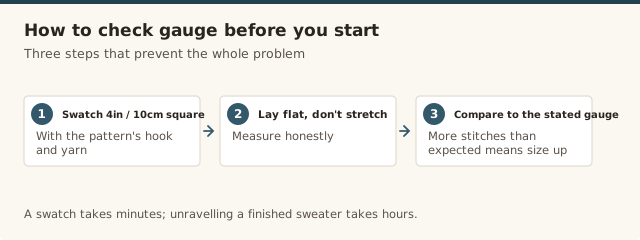
- Crochet a swatch using the hook and yarn weight the pattern specifies, at least 4 inches (10cm) square.
- Lay it flat without stretching it, and measure how many stitches and rows fit into that 4-inch square.
- Compare your count to the pattern's stated gauge. If you have more stitches than the pattern expects, size up your hook. Fewer, size down.
If gauge terminology is still unfamiliar, our guide to reading a crochet pattern covers exactly what it means and how it's written into a pattern.
Can you fix a project that's already finished?
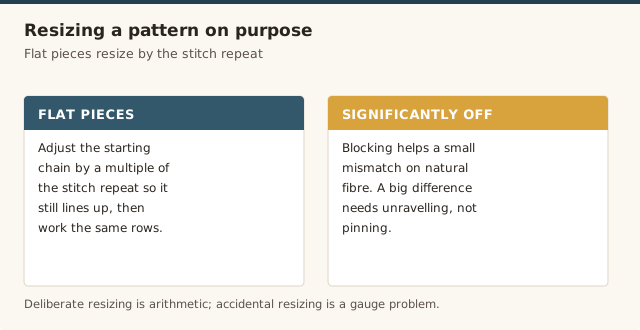
It depends on how far off it is. A small mismatch can sometimes be corrected with blocking — dampening the finished piece and reshaping it while it dries, which works especially well on natural fibres like cotton or wool. A significant size difference usually can't be blocked away, and the more reliable fix is unravelling and reworking with an adjusted hook, using the checks above before you start again.
Resizing a pattern on purpose
Sometimes the goal isn't matching a pattern's stated size, it's deliberately changing it — a bigger blanket, a smaller hat. For flat pieces, adjust the starting chain by a multiple of the pattern's stitch repeat so the pattern still lines up correctly, then work the same number of rows for a wider-but-same-height result, or add rows for both wider and longer. For pieces worked in the round, add or remove full increase rounds evenly on both sides of the shaping so the piece stays symmetrical rather than lopsided.
Whichever direction you're resizing, swatch first with your actual planned yarn and hook. A resize calculated from a mismatched starting gauge just produces a differently wrong size, rather than the size you intended.
Common mistakes & fixes
Fix: a swatch takes a few minutes; unravelling a finished sweater takes hours. Always swatch first for anything where the finished size genuinely matters — garments, amigurumi with matching parts, anything meant to fit a specific person or space.
Fix: blocking can nudge dimensions slightly, but stretching a piece far beyond its natural size distorts the stitches and often doesn't hold once the item is used or washed again. Treat blocking as a small correction, not a substitute for the right gauge from the start.
Fix: yarn weight categories cover a range, so two worsted-weight yarns from different brands can knit up differently. Always swatch with the actual yarn going into the project, not a different yarn of the same labelled weight.
Related fixes
Sizing issues often show up alongside other common problems — our four crochet mistakes guide covers curling edges, unexplained holes, and tension creep, which frequently have the same root cause as sizing.
A walkthrough of resizing a project using gauge, useful for seeing how hook size and stitch count affect the final measurements.
Frequently asked questions
Why did my finished crochet project come out smaller than the pattern says?
The most common cause is tighter tension than the pattern's gauge, or using a hook one size smaller than recommended. Both result in more stitches per inch than the pattern expects, shrinking the final size.
Can I fix a crochet project after it's already finished?
For a small size difference, blocking (dampening and reshaping the fabric while it dries) can adjust dimensions slightly, especially with natural fibres. For a significant size mismatch, the fabric usually needs to be unravelled and reworked with an adjusted hook size or stitch count.
Do I need to check gauge for every crochet project?
For fitted items like garments or amigurumi with matching parts, yes. For forgiving projects like blankets or scarves where an inch either way doesn't matter, most crocheters skip the swatch and adjust as they go.
How do I deliberately resize a pattern to make it bigger or smaller?
For flat pieces, adjust the starting chain by a multiple of the pattern's stitch repeat, then work the same number of rows. For pieces worked in the round, add or remove full increase rounds evenly, keeping the shaping symmetrical. Either way, recheck your gauge swatch first so the resize is starting from an accurate baseline.
Does switching yarn brands change my finished size even at the same weight?
Yes, this is common. Yarn weight categories cover a range, so two worsted-weight yarns from different brands can still produce a noticeably different gauge. Always swatch with the actual yarn you plan to use, not just yarn labelled the same weight.
How much can blocking change a finished crochet project's size?
Blocking can adjust dimensions a small amount, usually an inch or so, especially on natural fibres. It's a minor correction, not a substitute for the right gauge, and stretching a piece far beyond its natural size tends to distort the stitches and won't hold after washing.
Should I size up my hook or my yarn to make a project bigger?
Start with the hook, since it's the easiest change to reverse. Going up one hook size with the same yarn makes the fabric looser and larger; switching to a heavier yarn weight changes the look and weight of the finished piece, so only do that if you want a fundamentally different fabric.
CrochetGuides is a participant in the Amazon Services LLC Associates Program. As an Amazon Associate we earn from qualifying purchases, at no extra cost to you.