Amigurumi Starter Kit: The Hooks & Tools You Actually Need
What to actually buy before your first amigurumi project, and what you can safely skip.
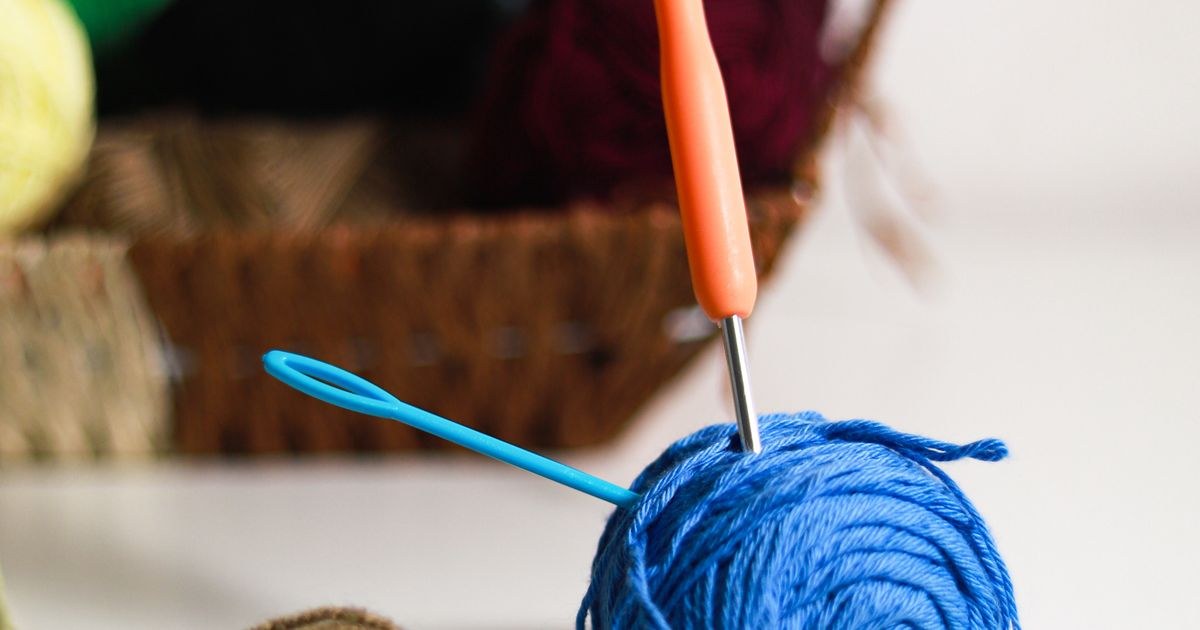
Before I understood what mattered, I bought one of those giant amigurumi kits online and used almost none of it — a novelty hook shaped like a cat, a stitch counter I never touched, and a bag of googly eyes that weren't even proper safety eyes. What actually changed my work was a single smaller hook I bought separately for a few pounds. In my classes I now hand new students four things and tell them to ignore the rest: one 3mm hook, a bag of polyester stuffing, a mixed pack of safety eyes, and a blunt yarn needle. Everything else on the fancy supply lists can wait until your third or fourth toy.
The essentials
Ergonomic crochet hook set, 9 sizes
Covers the smaller amigurumi range (2.5–3.5mm) alongside standard sizes, so one set handles both amigurumi and regular projects.
View on Amazon →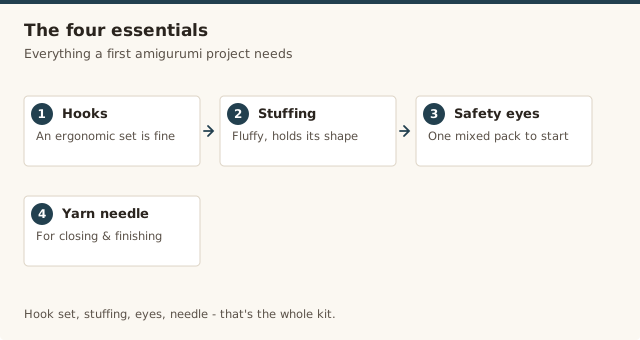
Fairfield Poly-Fil Premium Fiber Fill, 32oz
Stays fluffy without clumping over time, which keeps a finished toy holding its shape rather than sagging after a few weeks.
View on Amazon →Assorted safety eyes with washers, multiple sizes
A mixed-size set covers most amigurumi scales without needing to order a specific size mid-project.
View on Amazon →Stitch marker & tapestry needle kit
Locking stitch markers track your round starts in continuous spirals, and a blunt yarn needle sews pieces together without splitting the yarn.
View on Amazon →What you can skip for now
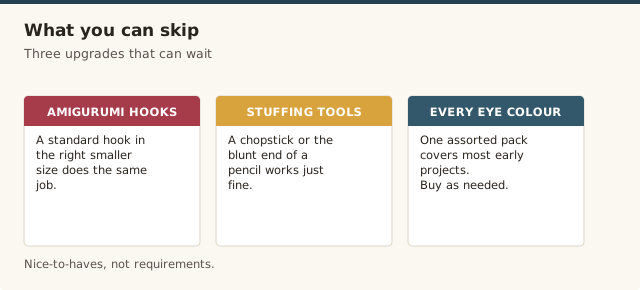
- Amigurumi-specific hooks. Marketing aside, a standard hook in the right smaller size does the same job as one labelled "for amigurumi."
- Specialty stuffing tools. A chopstick or the blunt end of a pencil works fine for pushing stuffing into small spaces — a dedicated stuffing tool is a nice-to-have, not a requirement.
- Full colour range of safety eyes. One assorted mixed-size pack covers most projects; buy specific colours only once you know you need them.
Building the kit on a budget
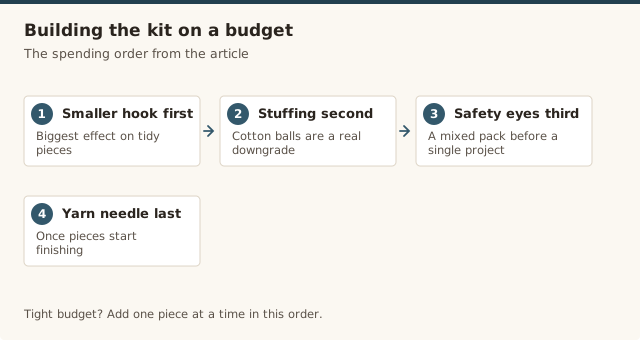
You don't need all four essentials on day one. If money's tight, buy in this order: the smaller hook first, since it has the single biggest effect on whether your finished pieces look tidy; polyester stuffing second, since cotton balls and fabric scraps are a real downgrade in the finished result; a small mixed pack of safety eyes third; and a yarn needle last, since a large-eye needle from a basic household sewing kit works as a temporary substitute until you buy a proper one.
Buying one project's worth of yarn alongside your hook, rather than a large multi-pack, is also a reasonable way to keep the first purchase small while you confirm amigurumi is something you want to keep making.
Once you've got the basics
With hook, stuffing, eyes, and a needle in hand, you're ready to start — our amigurumi for beginners guide covers the technique itself, and yarn weight explained if you're not sure which yarn to pair with your new hook size. And if you want a quick reference for which hook matches which yarn, our hook size chart is worth keeping open while you shop.
Common mistakes & fixes
Fix: one mixed-size assorted pack covers most early projects. Buy specific colours only once a pattern actually calls for one you don't already have.
Fix: these clump unevenly and go lumpy with handling. Polyester fiberfill is designed to stay fluffy and spread evenly, which is what keeps a finished toy looking smoothly round.
Fix: amigurumi is worked in continuous spiral rounds with no join to anchor a marker in place. A locking stitch marker clips shut and stays put, where an open ring can work loose and get lost inside the stuffing.
Frequently asked questions
Do I need special hooks for amigurumi?
Not special hooks specifically, just a smaller size than you'd normally use, typically 2.5mm to 3.5mm. A standard ergonomic hook set that includes those sizes works fine, no dedicated amigurumi-branded hook is required.
What stitch markers work best for amigurumi?
Locking stitch markers are preferred over open ring markers, since amigurumi is worked in continuous spiral rounds and a marker that can slip off mid-project is more disruptive than one that locks closed.
Is a yarn needle different from a sewing needle for amigurumi?
Yes, yarn needles have a larger eye and a blunt tip, designed to pass through crochet stitches without splitting the yarn. A sharp sewing needle can split fibres and make seams look uneven.
What's the cheapest way to build an amigurumi kit?
Buy in this order as your budget allows: a smaller hook first, since it has the single biggest effect on finished quality; polyester stuffing second; a small mixed pack of safety eyes third; and a yarn needle last, since a large-eye needle from a basic sewing kit works as a temporary substitute.
Can I use cotton balls or fabric scraps instead of proper stuffing?
It's not recommended. Cotton balls and fabric scraps clump unevenly and go lumpy with handling, while polyester fiberfill is designed to stay fluffy and distribute evenly, which is what keeps a finished toy looking smoothly round rather than bumpy.
What size safety eyes should I use for amigurumi?
For small amigurumi, 6mm to 9mm eyes are the most common sizes, with 8mm a safe all-rounder for the kinds of toys in our patterns. A mixed-size pack covers most projects, so you rarely need to order a specific size mid-project.
Do I need a stitch counter for amigurumi?
No, a locking stitch marker is enough for tracking rounds, since amigurumi is worked in a continuous spiral rather than joined rows. A stitch counter can help if you like to track totals, but it's a nice-to-have, not a requirement.
CrochetGuides is a participant in the Amazon Services LLC Associates Program. As an Amazon Associate we earn from qualifying purchases, at no extra cost to you.