Yarn Weight, Explained With Real Swatches
What "DK" and "worsted" actually mean, and which weight to buy for your first three projects.
The most common reason a project does not match its pattern is that the yarn was picked by colour rather than by weight. Three lovely skeins in three different thicknesses will each fit a different pattern, or none of them. Yarn weight is not an advanced concept you can skip: it is the single most practical thing to get right before you spend anything, and it takes about ten minutes to learn.
Yarn labels use words like "worsted," "DK," and "chunky" as if everyone already knows what they mean. They describe how thick the strand is, and that thickness changes almost everything about your project: how fast it works up, how it drapes, and which hook size you need. Here's the whole system, in plain terms.
The yarn weight system
Yarn is grouped into numbered categories, from lace-thin to jumbo. Each category has a typical hook range and a typical use case — see our full hook guide for how to pick the right one:
| Category | Common name | Hook size | Best for |
|---|---|---|---|
| 2 | Sport / Fine | 3.0–3.5mm | Baby items, lightweight accessories |
| 3 | DK (Double Knit) | 3.5–4.5mm | Garments, drapey scarves |
| 4 | Worsted / Aran | 5.0–5.5mm | Beginner projects, everyday items |
| 5 | Chunky / Bulky | 6.0–9.0mm | Blankets, quick gifts, textured throws |
| 6 | Super Bulky | 9.0mm+ | Statement pieces, one-evening projects |
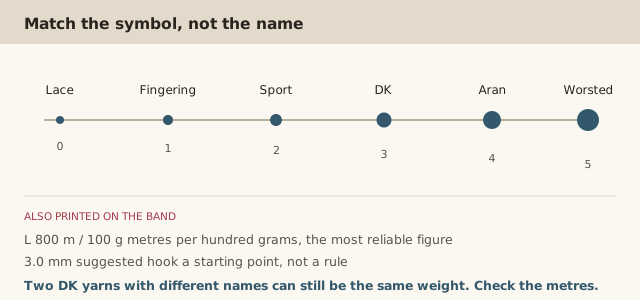
That category number is printed right on the ball band, usually as a small yarn-ball icon with a number in the middle. It's the only label you actually need to match, because "worsted" and "Aran" both mean category 4 even though the words differ, and "sport" and "baby" yarns can both be category 2. Ignore the words, memorise the number, and you'll never accidentally mix two thicknesses again. The matching hook size is on the same band — cross-check it against our hook size chart if the suggested range feels off.
Why weight matters more than colour
New crocheters often choose yarn by colour first and weight second. That's backwards. The weight decides:
- Speed. Chunky yarn works up 3–4x faster than DK for the same size project.
- Stitch visibility. Thin yarn hides your stitches, which makes it harder to spot mistakes as a beginner.
- Drape. Thinner yarns hang softly, which matters for garments but not for blankets or amigurumi.
- Yardage needed. A blanket in DK weight needs roughly double the yarn of the same blanket in chunky.
One consequence people forget: the same pattern, with the same stitch count, comes out a completely different size in a different weight. A hat written for worsted, crocheted in chunky with the same number of stitches, will fit a watermelon, not a head. That's why swapping weights isn't a swap at all — it's a rewrite of the size, whether you meant it to be or not.
DK vs. worsted: the beginner dilemma
These two get confused constantly because they're both mid-weight and both common in patterns. The real difference:
- DK (category 3) is thinner, drapes better, and is the standard for wearable garments — but it's slower to work up and harder to see your stitches on.
- Worsted (category 4) is thicker, faster, and easier to learn on — but it makes stiffer, heavier garments if you use it for clothing.
What DK actually means on the ball band
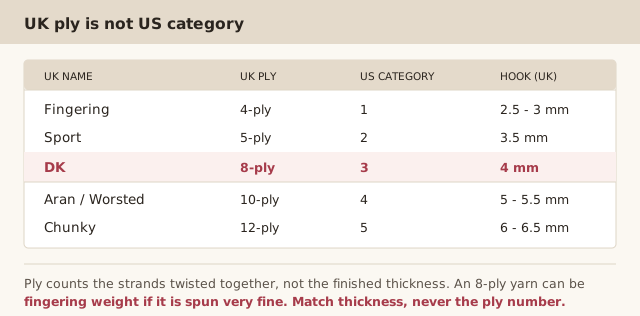
DK is defined by thickness, roughly 280 to 320 metres per 100 grams, and it is usually sold as 8-ply in UK shops. The ply number counts how many strands were twisted together, which is not the same as finished thickness — an 8-ply yarn spun very fine is still fingering weight. Always match on the metres-per-100g figure or the symbol on the band, never on the ply number alone.
Why substituting DK changes the size of your project
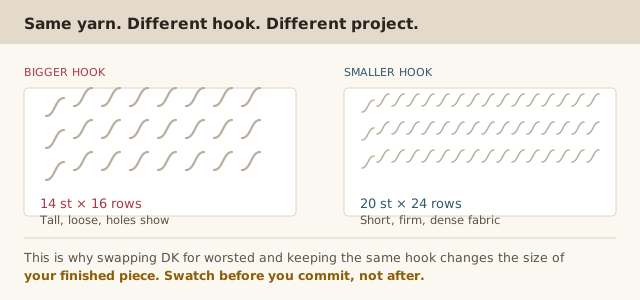
DK and worsted are not interchangeable on the same hook. Because worsted is thicker, the same hook produces shorter, denser stitches, so you fit more stitches into the same width. A swatch that gave you 22 stitches on DK might give you 17 on worsted, which means your finished piece comes out narrower and shorter than the pattern intends.
| Substituting DK with | Change the hook | Expect | Risk |
|---|---|---|---|
| Worsted / Aran | Go down about half a hook size | Fabric closer to the pattern's intended density | Stiff and heavy if the hook goes too far down |
| Sport / fingering | Go up about half a hook size | Fabric closer to the intended density | Too open, and the project grows |
| Anything at all | Swatch and measure first | Nothing guaranteed, but you find out early | Lowest. This is the only safe option. |
Swatching before you commit is what catches this. A 10cm square in the yarn you actually intend to use takes a few minutes and tells you more than any weight label. Our guide to crochet gauge explains how to swatch and what to do when your numbers don't match the pattern's.
If a pattern doesn't specify and you're new, default to worsted. You can always size down once your tension is consistent.
As a quick rule of thumb for first projects: worsted for scarves, hats, and dishcloths; DK for a wearable you want to drape; chunky for a blanket you want finished fast. Amigurumi is the one exception where you deliberately choose a thinner yarn with a small hook — tight stitches are the whole point there. Start with worsted and branch out once you can feel the difference in your hands.
Substituting yarn weights
Sometimes the exact yarn a pattern calls for isn't available, or you already own something close. Substituting is fine as long as you treat it as a small project, not a straight swap: crochet a gauge swatch in the new yarn with the hook size the label suggests, measure it against the pattern's stated gauge, and go up or down a hook size until the stitch and row counts line up.
Match total yardage rather than grams or ball count when buying enough of a substitute — a thicker yarn needs less yardage to make the same size, and a thinner one needs more, so grams-per-ball comparisons between two different weights are misleading.
The gauge swatch is non-negotiable when you substitute, and it's exactly the same skill you'll use for anything fitted. If the phrase "gauge" is still fuzzy, our guide to reading a pattern explains what that number in the pattern actually means and how to check it.
Our picks
Cotton worsted-weight yarn, 3-pack
Smooth, consistent thickness and light colours that make it easy to see every stitch while you're still learning. Cotton also holds its shape better than acrylic for practice swatches.
View on Amazon →Common mistakes & fixes
Fix: this is almost always a weight-and-gauge mismatch, not a stitch-counting error. Crochet and measure a gauge swatch before starting, and adjust hook size until it matches the pattern's stated gauge, rather than trusting the yarn label alone.
Fix: this usually happens when yardage was estimated by ball count instead of total yardage, especially after substituting a different weight. Always check the total yards or metres needed and buy to that number, with a little extra for swatching.
Fix: this is often worsted-weight yarn used in place of a pattern written for DK, without adjusting the hook down. For drapey garments specifically, thinner yarn with a smaller hook gets you closer to the intended fabric than the beginner-friendly default.
Frequently asked questions
What yarn weight is best for beginners?
Worsted weight (category 4) is the easiest to learn on. It's thick enough to see your stitches clearly and works with widely available 5.0mm hooks.
What is the difference between DK and worsted yarn?
DK (double knit, category 3) is thinner and drapes more, making it better for lightweight garments. Worsted (category 4) is thicker and faster to work up, making it better for blankets and beginner practice.
Can I substitute one yarn weight for another in a pattern?
Only if you also adjust your hook size and recheck your gauge swatch. Swapping weights without adjusting will change the finished size of your project, sometimes significantly.
How much yarn do I need if I substitute a different weight?
Yardage, not weight in grams, is what to match. Check the pattern's total yardage requirement and buy enough of your substitute yarn to cover that same yardage, since a thicker or thinner substitute will use a different number of balls to reach it.
Why does my gauge swatch not match the pattern even with the recommended yarn weight?
Yarn weight categories cover a range, so two worsted-weight yarns from different brands can still knit up slightly differently. Your own tension also plays a role. Adjust your hook size up or down half a millimetre at a time until your swatch matches the pattern's stated gauge, rather than assuming the labeled weight guarantees a match.
What do the yarn weight numbers 1 through 6 mean?
The numbers are a standard scale from thinnest to thickest: 1 (fingering/sock), 2 (sport), 3 (DK), 4 (worsted/aran), 5 (chunky/bulky), and 6 (super bulky). The higher the number, the thicker the strand and the larger the hook it needs. The number is printed on the ball band as a yarn-ball icon.
How do I figure out a yarn's weight if the label is missing?
Wrap the yarn around a ruler for one inch without gaps or overlap, and count the strands. A yarn in the 8-11 wraps-per-inch range is usually worsted; 12-17 is closer to DK, and fewer than 8 is chunky or thicker. It's a rough guide, but good enough to match a mystery ball to a pattern category.
CrochetGuides is a participant in the Amazon Services LLC Associates Program. As an Amazon Associate we earn from qualifying purchases, at no extra cost to you.