Free Corner to Corner (C2C) Baby Blanket Pattern
Diagonal bands of pink, mint, and cream, built one small block at a time from a single corner — no charting software required.
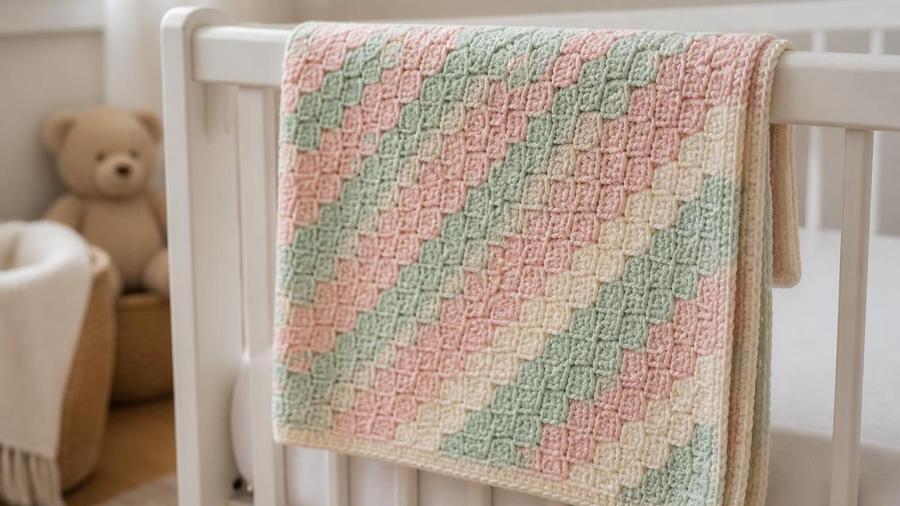
C2C intimidated me for years before I actually tried it, mostly because every photo I saw online showed enormous graphic designs with dozens of colour changes and what looked like a spreadsheet's worth of counting. Then a student asked me to help her recreate a simple striped C2C blanket she'd seen for her sister's baby shower, and I realized the technique itself is almost embarrassingly simple once you strip away the pixel-art ambition: it's just double crochet, worked in small blocks, added one at a time along a diagonal. The stripes in this pattern come from changing colour every few rows, nothing more complicated than that.
What makes C2C worth learning, beyond how good it looks, is how forgiving the diagonal structure is. Because you can see the whole shape growing block by block, a miscount shows up immediately as a lopsided edge rather than hiding in the middle of the fabric the way it can in a straight-row pattern. If you want to see the individual stitch mechanics up close before diving into a full blanket, our corner to corner (C2C) tutorial walks through a single practice block in detail — I'd recommend working through that first if C2C is brand new to you.
This blanket uses three colours in a repeating diagonal stripe, worked as a square that increases from one corner to the centre and then decreases back down to the opposite corner. Below is the full pattern in US terms, plus my notes on colour changes, sizing, and the mistakes that turn a crisp diagonal into a wobbly one.
Materials
- About 300 yards each of soft, machine-washable worsted-weight yarn in cream, pink, and mint (roughly 800 yards total)
- 5mm (US H-8) crochet hook
- Stitch markers to mark the centre row
- Yarn needle and scissors
Abbreviations (US terms)
| Abbr. | Means |
|---|---|
| ch | Chain |
| dc | Double crochet |
| st(s) | Stitch(es) |
| block | A group of 3 dc worked into the previous row's chain space |
Written in US terms throughout. Not familiar with C2C's block structure yet? Our C2C stitch tutorial covers the first block, an increase block, and a decrease block step by step.
Gauge
7 blocks measures about 4in / 10cm both across and diagonally down, with a 5mm hook and worsted yarn. C2C gauge is usually measured in blocks rather than stitches — count how many blocks fit in 4 inches on your swatch and compare to this pattern.
Notes
- This blanket is a square, worked corner to corner: it increases by one block per row until the centre, then decreases by one block per row back down to the opposite corner.
- Colour sequence throughout: 3 rows cream, 3 rows pink, 3 rows mint, repeat, both on the increase and decrease halves.
- Place a stitch marker in the row where you switch from increasing to decreasing — that's your centre reference point if you ever need to check your progress against the pattern.
Pattern
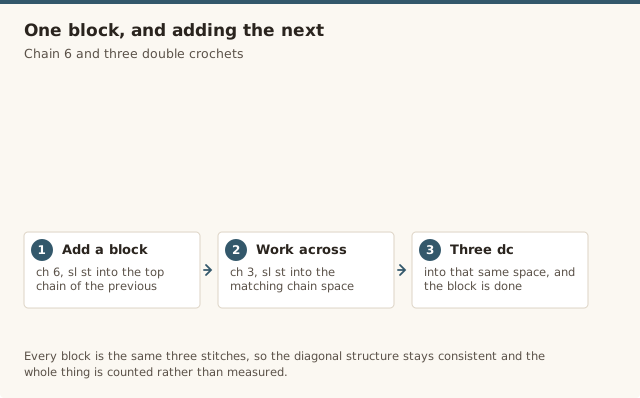
With cream, chain 6. Double crochet in the 4th chain from the hook, and in the next 2 chains. Turn. (1 block)
To add a new block at the start of a row: chain 6, slip stitch into the top chain of the previous row's first block to anchor it, then double crochet in the 4th chain from the hook and in the next 2 chains. (new block added)
Then work across the row: for each existing block, chain 3, slip stitch into the corresponding chain space of the row below, then double crochet 3 times into that same space.
Repeat this increase at the start of every row, following the colour sequence (3 rows cream, 3 rows pink, 3 rows mint, repeating), until row 38 has 38 blocks across. This is the centre of the blanket. Place a stitch marker here.
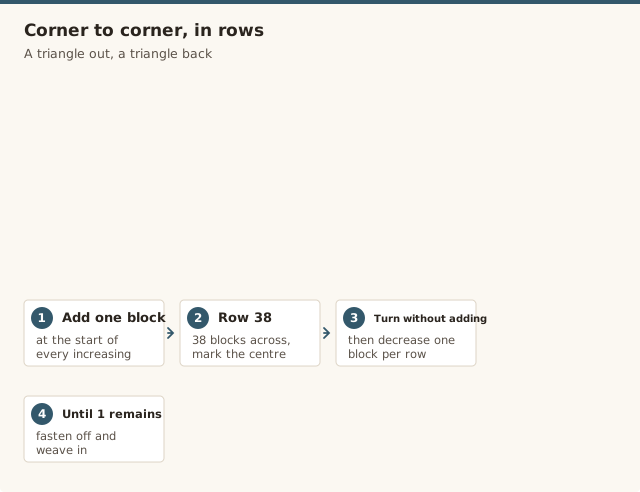
Turn without adding a new block. Slip stitch across the first block's 3 stitches and into the corresponding chain space, then continue working blocks as before, chain 3 and 3 double crochet into each block's chain space, one fewer block than the previous row.
Continue decreasing by one block per row, following the same colour sequence in reverse, until 1 block remains.
Fasten off the last block and weave in all ends. A single row of single crochet worked evenly around all four edges gives the blanket a tidy, finished edge, though it isn't required.
Changing colors cleanly
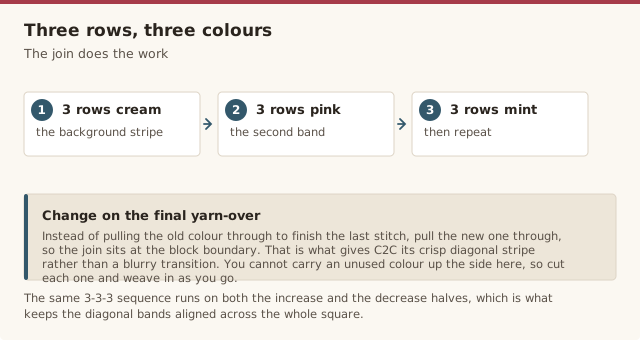
Change colour at the very start of a row, on the final yarn-over of the last stitch in the old colour: instead of pulling the old colour through to finish the stitch, pull the new colour through instead, so the first loop on your hook is already the new shade. This keeps the colour join sitting exactly at the block boundary, which is what gives C2C its crisp diagonal stripe rather than a blurry transition. Our guide to changing colors in crochet covers this technique with photos if you want to see it in more detail before starting.
Unlike a straight-row striped pattern, you can't easily carry an unused colour up the side of a C2C piece, since the diagonal edge doesn't offer a consistent place to catch it. Cut each colour at the end of its last row, leaving a 6-inch tail, and weave in as you go rather than saving all the ends for the finish — a blanket with three colours repeating many times generates a lot of ends, and tackling them in small batches is far less overwhelming.
Sizing up or down
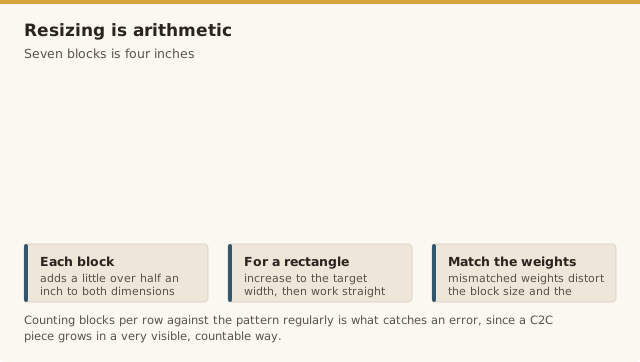
Because C2C grows one countable block at a time, resizing is mostly arithmetic. To make the blanket smaller, stop increasing sooner, say at 28 blocks instead of 38, then decrease back down the same way; to make it larger, keep increasing further before switching to decreases. At this gauge, roughly 7 blocks equal 4 inches, so each additional block adds a little over half an inch to both dimensions.
If you'd rather make a rectangle than a square, increase to your target width in blocks, then work straight rows (adding one block at the start and removing one at the end of every row) until the piece reaches your target length, before starting the decrease. This keeps the diagonal stripe pattern intact while changing the overall shape.
Choosing safe yarn for babies
A soft, machine-washable acrylic or cotton yarn labelled safe for babies is the standard choice for any baby blanket, and it matters even more here because C2C's block structure is more open than a dense stitch like single or half double crochet. Avoid novelty yarns with loose fibres or sequins, and check that all three of your chosen colours are the same weight and fiber content, since mismatched yarn weights will distort the block size and throw off your diagonal alignment. Our yarn weight guide covers how to match yarns confidently.
Common mistakes & fixes
Fix: place a stitch marker in the centre row before you start decreasing, and count your blocks at the start of every row against the pattern's stated count for that row.
Fix: always make the colour switch on the last yarn-over of the last stitch of the previous row, so the new colour begins cleanly with the first stitch of the new block.
Fix: keep your chain-6 at the start of an increase row at the same tension as your other chains; a tight or loose starting chain there is the most common cause of a wavy, uneven edge.
Fix: buy all three colours in the same yarn line and weight from the start, rather than substituting a similar-looking shade from a different yarn family partway through.
Fix: weave in ends as you finish each colour section. A three-colour striped C2C blanket produces dozens of ends, and tackling them in small batches is much less daunting than facing all of them on a finished blanket.
Our pick
Lion Brand Babysoft Yarn
A soft, machine-washable worsted-weight yarn in a wide range of gentle colours, including pastels that match this blanket's pink, mint, and cream palette well.
View on Amazon →Frequently asked questions
What does C2C mean in crochet?
C2C stands for corner to corner, a technique where a project is built diagonally from one corner using small blocks of double crochet, rather than worked in straight horizontal rows like most patterns. It's especially popular for graphic, pixel-style blanket designs.
Is C2C crochet hard for beginners?
The individual stitches are just chains and double crochet, so it's not technically difficult, but the increase-then-decrease shaping and colour changes make it a step up from a straight rectangle. A beginner who's comfortable with double crochet and can follow a repeating pattern can manage it.
How do you change colors in a C2C blanket?
Change colour at the start of a new block, working the final yarn-over of the last stitch in the old colour with the new colour so the join sits cleanly at the block edge. Carrying the unused colour up the side isn't practical in C2C the way it is in straight rows, so most crocheters cut and rejoin each colour change.
Why is my C2C blanket coming out as a parallelogram instead of a square?
This usually means tension changed between the increase and decrease halves of the piece, or a block was added or dropped partway through. Count your blocks per row against the pattern regularly, since a C2C piece grows in a very visible, countable way that makes an error easy to catch early.
What yarn is safe for a C2C baby blanket?
A soft, machine-washable acrylic or cotton yarn labelled safe for babies is the standard choice, since a baby blanket is washed often. Avoid novelty or fuzzy yarns with loose fibres, particularly since C2C's open block structure has more surface area for a baby to grip and mouth than a dense stitch.
How many skeins of yarn does a C2C baby blanket need?
This pattern uses roughly 700 to 800 yards total across the three colours for a 30 by 30 inch blanket, typically 2 to 3 skeins of each shade depending on how the colour blocks are distributed. Buy slightly more of your main or background colour than the accent shades.
CrochetGuides is a participant in the Amazon Services LLC Associates Program. As an Amazon Associate we earn from qualifying purchases, at no extra cost to you.