Easy Crochet Earrings Pattern (Mini Hoops)
Tiny hoops wrapped in single crochet — one of the fastest projects on this site, and a good way to use leftover yarn.
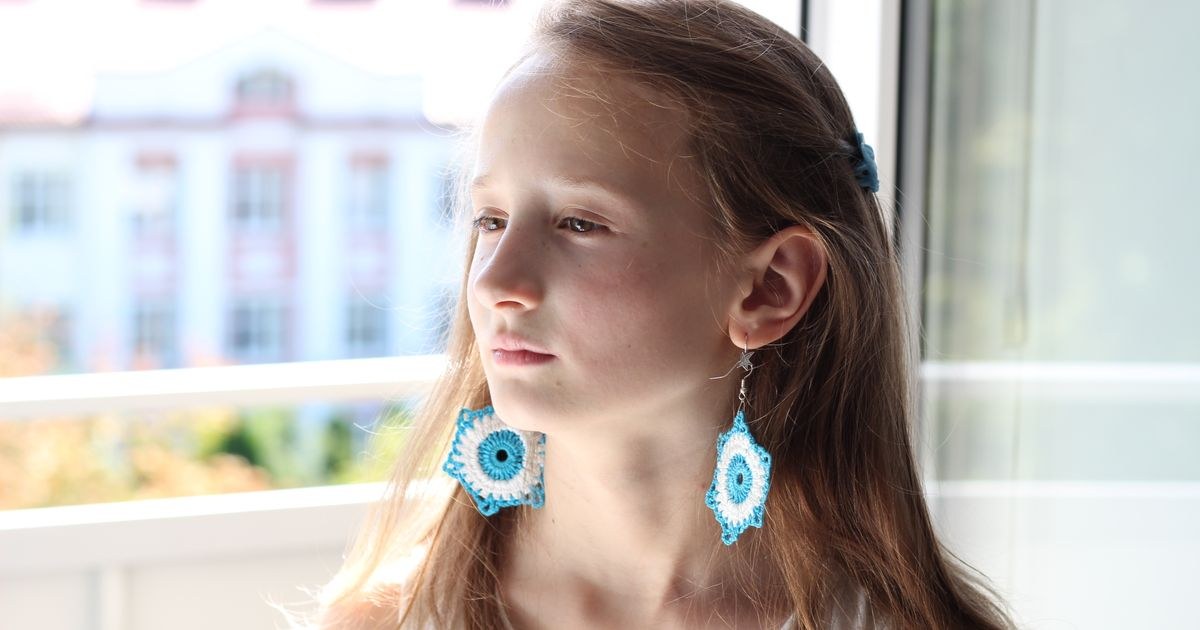
In my classes, the project that wins over even the most reluctant student is usually the smallest one on the table — a pair of crochet earrings. I'll never forget a student who insisted she didn't have the patience for tiny work, then covered her first hoop in single crochet in about fifteen minutes and asked to make a second pair before the class was over. Working over the hoop rather than into a chain is what makes it so quick: there's no shaping to keep track of, just stitch after stitch packed neatly around the metal. It's also the best use of leftover yarn I know — the scraps too small for anything else are exactly the right size for a pair of hoops.
I've also learned these make the best small gift I know. One of my students made a pair for a friend who wore them to a wedding that same week — the hoops cost her a couple of pounds and a single evening. When someone asks what to make for a present they can actually finish in time, earrings are my answer: no sizing, no seaming, and the leftover yarn you were about to throw away suddenly turns into a gift.
What you need
- A small amount of fine or sport weight yarn (or embroidery thread, for a more delicate look)
- 2 small metal or plastic hoops, about 2–3cm
- 2.5mm hook
- Yarn needle, 2 earring hooks, small pliers
Step 1: cover the hoop
Steps
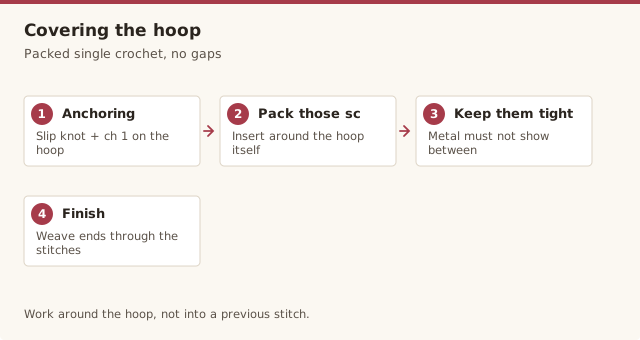
- Leaving a short tail, make a slip knot and place it on your hook.
- Insert your hook through the center of the hoop, yarn over, and pull up a loop, then chain 1 to anchor your yarn to the hoop.
- Work single crochet stitches around the hoop, inserting your hook around the hoop itself each time (not into a previous stitch), packing the stitches closely so no metal shows through.
- Continue around until the entire hoop is covered, then slip stitch into your first stitch to join.
Step 2: finish and attach
Steps
- Fasten off, leaving a short tail, and weave in both ends securely through the covered stitches, not through the hoop itself, so they don't show.
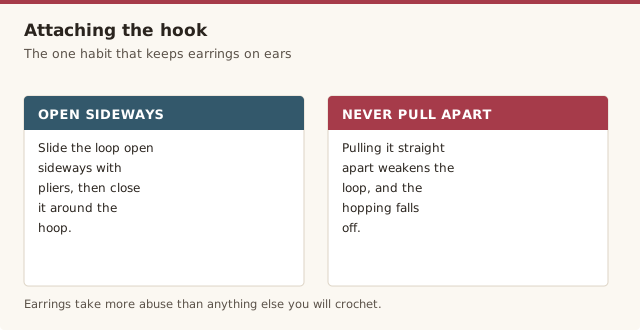
- Open an earring hook sideways with pliers (never pull it directly apart, which weakens the loop), slide it onto the top of your covered hoop, and close it again.
- Repeat everything for a second, matching earring.
A demonstration of small-scale crochet, useful for seeing how thread and a small hook behave differently from yarn.
Yarn and thread choice
For coverage this delicate, thinner is better. Fine or sport-weight cotton, or stranded embroidery thread, wraps a 2–3cm hoop tightly without bulking it up, while worsted weight looks chunky and can leave the metal peeking between stitches. Cotton thread holds its shape and doesn't fuzz against your skin, which matters on something that sits at your ear; rayon or silkier threads are shinier but slip out of place more easily. If your thread is fine enough to split, drop to a 2.0mm or 2.25mm hook rather than wrestling with a larger one — the hook size chart covers the smaller sizes, and a smaller hook packs the stitches tighter so the hoop disappears completely. Our yarn weight explained guide is a quick reference if you're not sure how the thickness changes the look. One small ball of cotton thread makes dozens of pairs, so it's the rare stash-buster that never actually empties the stash, and it lets you experiment with colour without buying anything new.
Beads and embellishments
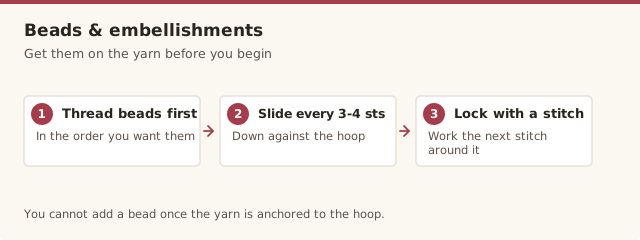
If you want beads, thread them onto the yarn before you begin, in the order you want them to appear, because you can't add a bead once the yarn is anchored to the hoop. Slide one bead down against the hoop every three or four stitches and work the next stitch around it to lock it in place, checking that each bead sits on the outside face rather than the inside where it would rub your skin. Keep the beads small and light — seed beads or tiny glass drops — because heavy beads on a two-centimetre hoop pull the whole earring sideways and strain the earring hook. A little weight is fine; a swinging pendulum is not. If you want sparkle without the weight, a metallic thread worked in as a second strand catches the light beautifully and adds nothing to the finished weight.
Making them last
Earrings take more abuse than almost anything else you'll crochet, because they live on a moving body and get tossed loose into a drawer. Weave every end through the covered stitches rather than leaving a knot at the join — a knot can catch and pull the whole wrap loose the first time it snags on a scarf. When you attach the earring hook, open it sideways with pliers and close it snugly; never pull the loop directly apart, which fatigues the metal and lets the hoop slip free. Store the pair flat in a small box or pouch rather than tangled with other jewellery, and if a stitch ever loosens, re-weave that end straight away before it unravels any further. If you travel with them, a small hard case or a soft-lined pill box keeps the hoops from being bent and the wrap from being crushed at the bottom of a wash bag. A pair stored loose in a drawer will tangle and snag within a season, so a dedicated home is worth the few seconds it takes to make one.
Common mistakes & fixes
Fix: the stitches are too loose or the yarn too thick. Pack the stitches tightly against one another, and if gaps remain, switch to a thinner thread or a smaller hook rather than adding more layers.
Fix: the loop was pulled directly apart, which weakens it. Open the hook sideways with pliers, slide it on, then squeeze it closed the same way — never stretch the loop open.
Fix: you didn't keep the same stitch count on both. Count the stitches as you work the first hoop and note the number, then match it exactly on the second — a visible size difference is the one flaw people notice first.
Fix: the ends were knotted rather than woven through the covered stitches. Thread each tail onto a needle and run it through four or five stitches along the back of the wrap, then snip it flush so nothing protrudes.
Fix: the yarn is too heavy for a hoop this small. Use fine cotton or embroidery thread, and keep any beads light — bulky worsted yarn has the weight to drag the whole earring out of shape.
Fix: the beads weren't threaded before the yarn was anchored. Thread every bead in order first, then slide each into place and work a stitch around it as you go, spacing them evenly around the hoop.
Frequently asked questions
What yarn weight works best?
Fine, sport, or embroidery thread gives the neatest coverage; worsted weight will look bulky on small hoops.
Can I add beads?
Yes — thread beads onto your yarn before starting, then slide one into place every few stitches as you work around the hoop.
Do the two earrings need to match exactly?
For a polished look, use the same stitch count on both, though slightly mismatched handmade earrings are also a popular intentional style.
Will the yarn hold up in earrings I wear often?
Yes — fine cotton or embroidery thread wears well, but avoid anything fuzzy or loosely spun, and re-weave any loose ends before they can unravel.
Can I use plastic hoops instead of metal?
Yes — lightweight plastic hoops work the same way and are often more comfortable for sensitive ears, though they may not last as long as metal.
Are crochet earrings heavy to wear?
No — a pair wrapped in fine cotton or embroidery thread weighs only a few grams, so most people forget they're on. They only feel heavy if you use bulky yarn or large beads, so keep both fine for all-day comfort.
CrochetGuides is a participant in the Amazon Services LLC Associates Program. As an Amazon Associate we earn from qualifying purchases, at no extra cost to you.