Free Crochet Kids Backpack Pattern for Beginners
A soft, washable backpack for ages 3–6, built from single-crochet rectangles — front and back panels, a gusset, a flap, and two reinforced shoulder straps.
The first kids backpack I ever made was for my neighbour's five-year-old, who had one request: pink, "like a flamingo, but not a scary one". She wore it to school every day that term, dragging it by one strap through puddles and filling it with stones and pinecones, and the only part that ever needed fixing was a strap seam I'd stitched once instead of twice. That taught me the thing I now say in every class: with a child's bag, the stitching matters more than the colour. This is the pattern I've refined from years of watching small people be genuinely brutal to their belongings.
It's built from simple single-crochet rectangles — a front and back panel, a side-and-bottom gusset, a flap, and two shoulder straps — sewn together with a yarn needle. There's no shaping to wrestle with and no round to count, which makes it one of the gentlest "big" projects I teach. If you can crochet a square, you can make this backpack.
Safety first
- This pattern has no buttons, beads, zips, or any small part that could come loose and become a choking hazard — the flap simply folds over the top.
- The straps are sewn on, never clipped or buttoned, so nothing can detach in a child's hand.
- The finished bag suits children aged about 3 and up. Always supervise children under three, and keep the straps at a length that won't catch on play equipment.
- Use a machine-washable yarn so the bag can be cleaned regularly without losing its shape.
Materials
- 2 skeins worsted-weight machine-washable cotton (or cotton-acrylic blend) in the main colour (about 250–300 yards total)
- Small amount of contrast yarn for the flap or trim (optional)
- 5.0mm (US size H) crochet hook
- Yarn needle, for seaming and weaving in ends
- At least 4 stitch markers, for lining up seams
- Scissors
Abbreviations (US terms)
| Abbr. | Means |
|---|---|
| ch | Chain |
| sc | Single crochet |
| st(s) | Stitch(es) |
| rep | Repeat |
| row(s) | Row(s) |
See our abbreviations glossary for the full list including UK terms, or our basic crochet stitches guide if you need a refresher on single crochet.
Gauge
14 sc and 16 rows measures about 4in / 10cm square with a 5.0mm hook and worsted-weight yarn. Matching gauge keeps the finished size predictable and the seams tidy. If your swatch comes out smaller, go up a hook size; if larger, go down.
Notes
- Written in US terms, worked flat in rows, then seamed. Each rectangle is worked the same simple way — chain, then single crochet every stitch, turning at the end of each row.
- Work at a firm tension rather than a loose, drapey one; a denser fabric holds its shape and survives playgrounds better.
- For the straps, hold two strands of yarn together throughout — this is the single biggest upgrade you can make to a kids bag.
Sizing for age
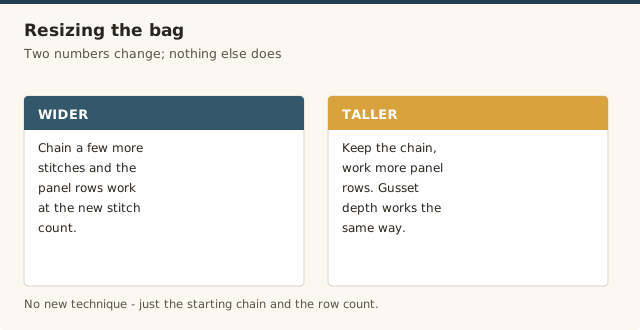
This pattern's numbers are written for a bag that fits most children from about 3 to 6 years old: roughly 9in wide, 11in tall, and 3in deep. Because the whole thing is rectangles, resizing is just a matter of changing the starting chain and the number of rows on each panel — you never have to learn a new technique. Use the table below as a starting point, and if you can, hold the half-finished bag against the child's back before you sew the straps on, since two four-year-olds can be very different sizes.
| Age | Panel chain (width) | Panel rows (height) | Gusset chain (depth) |
|---|---|---|---|
| 2–3 yrs | ch 29 (28 sts) | 36 rows | ch 10 (9 sts) |
| 3–6 yrs (this pattern) | ch 33 (32 sts) | 44 rows | ch 12 (11 sts) |
| 6–9 yrs | ch 37 (36 sts) | 52 rows | ch 14 (13 sts) |
Whatever size you choose, the flap uses the same chain count as the panels, and the gusset length is always two panel heights plus one panel width — that's the three edges it wraps around.
Pattern
Ch 33, sc in 2nd ch from hook and each ch across. (32 sts) Rows 2–44: ch 1, turn, sc in each st across. (32 sts) Fasten off, weave in ends.
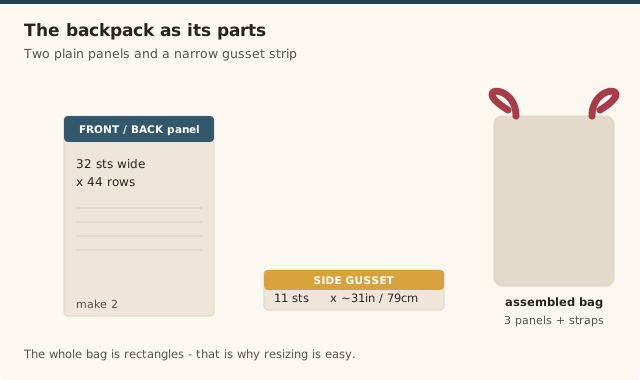
Ch 12, sc in 2nd ch from hook and each ch across. (11 sts) Rows 2 onward: ch 1, turn, sc in each st across. Continue until the strip measures about 31in / 79cm (about 124 rows). (11 sts) Fasten off.
Ch 33, sc in 2nd ch from hook and each ch across. (32 sts) Rows 2–24: ch 1, turn, sc in each st across. (32 sts) Fasten off, leaving a long tail for sewing.
Ch 6, sc in 2nd ch from hook and each ch across. (5 sts) Rows 2–72: ch 1, turn, sc in each st across, until each strap measures about 18in / 46cm. (5 sts) Fasten off, leaving a long tail for sewing.
Assembly
- Lay the back panel flat. Pin the gusset around the left side, bottom, and right side with the wrong sides together, matching the gusset's rows to the panel's stitches, then sew with a whipstitch.
- Sew the front panel to the other long edge of the gusset the same way, leaving the top open.
- Sew the flap to the top back edge of the backpack, so it folds down over the opening.
- Position the straps: top ends about 2in in from the top back corners, bottom ends near the lower back corners. Pin, check the length against the child, then sew each end down, stitching back over each attachment point a second time.
- Weave in all ends. Optional: sew in a fabric lining for extra structure and to keep small items inside.
Choosing yarn for a kids backpack
A child's backpack lives a harder life than almost any other project you'll make. It gets dragged, dropped, worn in the rain, and occasionally used as a cushion. That's why yarn choice matters even more here than it does for an adult bag. I always reach for a machine-washable cotton or a cotton-acrylic blend. Pure cotton holds its shape beautifully and washes clean without felting, which matters when the bag comes home sticky with whatever your child found on the walk to school. A cotton-acrylic blend is softer and usually more affordable, and it dries a little faster after a wash.
Both are fine. The two things I'd steer you away from are fuzzy novelty yarns — they catch on zips and playgrounds, and the texture makes neat seaming much harder — and anything that can't be machine washed, because a child's backpack will be washed whether you planned for it or not. If you need help reading a ball band to work out what you're actually buying, our yarn weight explained guide breaks it down with real swatches.
Durability & reinforced straps
The part of a kids backpack that fails first is almost never the body — it's the straps. Children yank them, swing the bag by them, and put a surprising amount of weight into a bag that looks tiny. So I make the straps in a way I don't bother with for an adult project: I hold two strands of yarn together for the whole strap, which doubles the thickness and makes a strap that barely stretches even when it's tugged hard. I also sew each strap end down, then stitch straight back over the same seam a second time. It looks the same on the outside, but that second pass is what keeps a corner from letting go after a term of being swung around a playground.
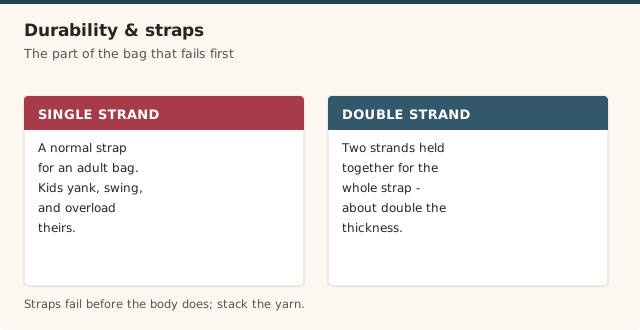
The same logic applies to the body. Work at a firm tension rather than a loose, drapey one, and spend the extra minute reinforcing the corners where the gusset meets the panels, because those corners carry most of the strain when the bag is full. A backpack that's slightly denser than you think it should be is exactly right for a five-year-old.
Care & washing
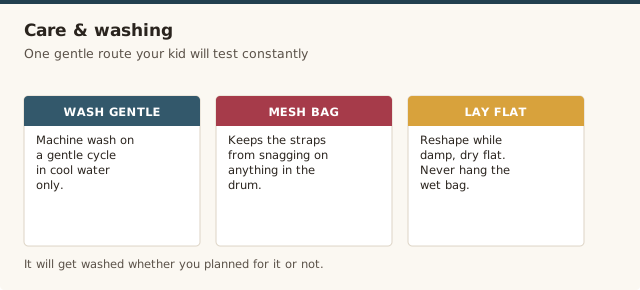
One of the reasons I insist on washable yarn for this project is that a kids backpack will get washed, whether you planned for it or not. Machine wash it on a gentle cycle in cool water, and put the whole bag inside a mesh laundry bag so the straps can't snag on anything in the drum. Reshape it gently while it's still damp and lay it flat to dry — hanging a wet crochet bag lets it stretch into a long, sad shape under its own weight. Don't tumble dry it, and don't wring it.
Between washes, a damp cloth will usually handle a scuffed front panel. This is another point in favour of cotton: it comes out of the wash looking the same shape it went in, which is more than I can say for some acrylics I've met over the years.
Common mistakes & fixes
Fix: your foundation chain is likely too tight. Chain the first row loosely, or try a hook one size up for the foundation chain only, then switch back. Curling panels make the seams bunch, so fix this before you start seaming.
Fix: pin the gusset at the two top corners and the bottom centre of each panel first, then ease the fabric between the pins, matching stitch to stitch. A gentle stretch while sewing hides small differences in row count, but a gusset that's an inch short needs a few extra rows, not a tighter seam.
Fix: this almost always means the straps were worked in a single strand at loose tension. Rip them back and redo them holding two strands together, and keep your tension firm. It costs a little yarn and time, but it's the difference between a term and a year.
Fix: remember the flap has to fold over the top edge and still hang down a couple of inches. If yours just reaches the rim, add 6–8 more rows before fastening off, then attach it and check the fold before weaving in the ends.
Fix: this happens when the gusset was sewn to a slightly different number of rows on each side. Mark the four corners and the bottom centre of each panel with stitch markers before you sew, and line those markers up first so both panels stay square to the gusset.
Fix: skip small buttons and anything a child could pull loose and swallow. If you want a closure, sew a plain fabric loop to the flap and a sturdy fabric-covered toggle sewn firmly to the front — or just leave the flap open, which is what I do for the youngest children.
Our pick
Machine-washable worsted cotton, 3-pack
Soft, sturdy, washable cotton in colours bright enough to make a five-year-old's day, and enough to cover this backpack with leftovers for a matching flap trim.
View on Amazon →Frequently asked questions
What age is this crochet kids backpack for?
The finished backpack measures about 9in wide, 11in tall, and 3in deep, which fits most children from about 3 to 6 years old. Use the sizing table in the pattern to scale the stitch counts up or down for younger or older kids.
Is a crochet backpack safe for young children?
This pattern is designed with young children in mind. There are no buttons, beads, zips, or small detachable parts that could come loose and be swallowed, and the straps are sewn on rather than clipped or buttoned. It suits children aged about 3 and up, and I'd always supervise children under three while they use it.
What yarn is best for a kids backpack?
A machine-washable cotton or a cotton-acrylic blend is best. Cotton holds its shape and washes clean without felting, while a blend is softer and usually more affordable. Avoid fuzzy novelty yarns and anything that can't be machine washed, since a child's backpack will need regular washing.
How do I make the straps strong enough for daily use?
Work the straps with two strands of yarn held together, and sew each strap end down twice, stitching back over the same seam a second time. Reinforced straps are the difference between a backpack that lasts a school year and one that needs repairs after a few weeks.
Can I machine wash this backpack?
Yes, as long as you use a machine-washable yarn. Wash it on a gentle cycle in cool water inside a mesh laundry bag, then reshape it while damp and lay it flat to dry. Don't tumble dry or wring it, and never hang a wet crochet bag, or it will stretch out of shape.
Do I need to line the backpack with fabric?
It's optional but recommended. A simple cotton lining stops pencils and crumbs poking through the stitches and adds structure. Keep the lining plain, with no ties or small fasteners, so you don't add anything detachable.
How much yarn do I need for this kids backpack?
About 250 to 300 yards of worsted-weight yarn for the main colour, plus a small amount of a contrast colour for the flap or trim if you like. Two standard skeins of worsted-weight cotton usually covers the whole project.
CrochetGuides is a participant in the Amazon Services LLC Associates Program. As an Amazon Associate we earn from qualifying purchases, at no extra cost to you.