Basic Crochet Stitches for Beginners: Complete Guide
Six stitches, in the order you'll actually need them, each explained step by step.
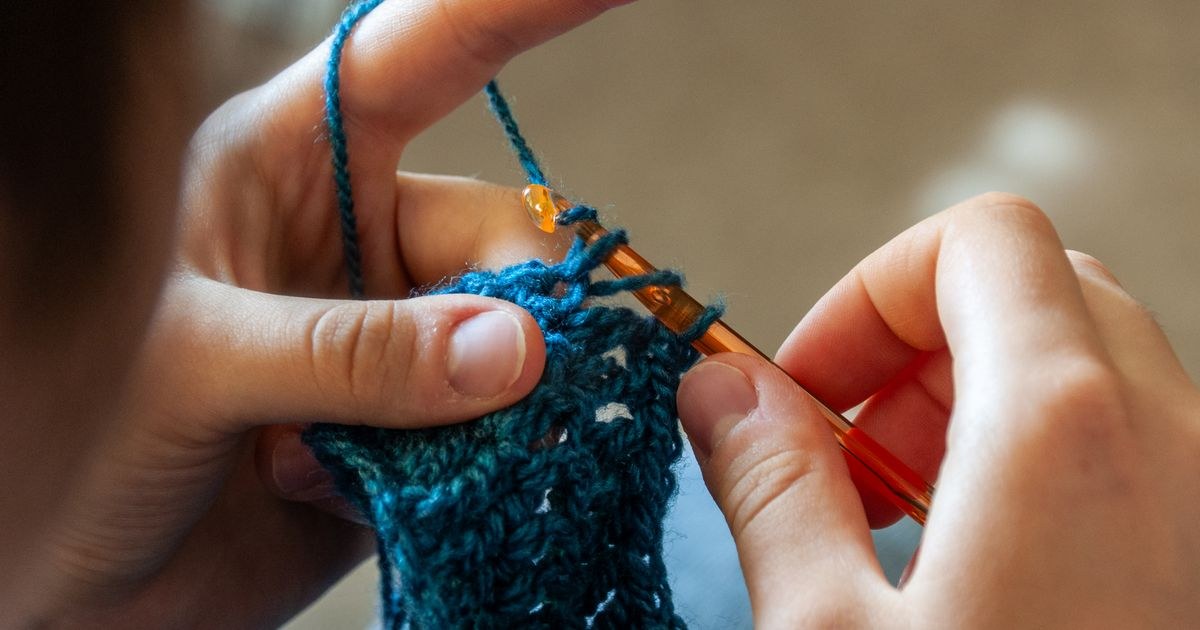
In my first few years of teaching, I'd watch beginners become absolutely certain they were bad at crochet, because their chain kept twisting and their single crochet looked nothing like the picture. What nobody had told them — and what took me a while to learn myself — is that almost none of it is a stitch problem. It's a tension problem, and tension lives in how you hold the yarn, not in the stitch itself. I now spend the first twenty minutes of every class on grip and yarn hold before anyone makes a chain, because once that's settled, each of the six stitches on this page takes about ten minutes to learn. Master them in order and you can make almost anything on this site.
Holding your hook and yarn
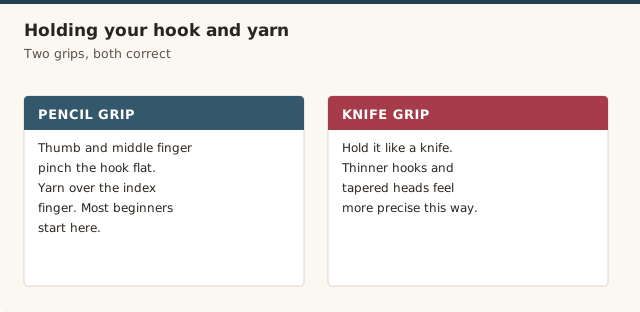
Before the stitches themselves, the single biggest thing that makes crochet feel awkward at first is hand position, not skill. Hold the hook like a pencil, loosely, resting it in the crook between your thumb and index finger rather than gripping it in your fist — a tight grip is the single most common cause of stitches that are too tight to work into on the next row. For the yarn, most people find it easiest to weave it once over the index finger, under the middle finger, and over the ring finger of the hand not holding the hook, then let the index finger do the actual "yarn over" motion. There's no single correct way to do this — if your tension ends up even and your hand doesn't cramp, your grip is right.
The six basic stitches
Chain stitch
Abbreviation: chThe foundation of almost every project. Yarn over the hook and pull it through the loop already on your hook. Repeat to build a chain of any length — this is usually the very first row you make.
Slip stitch
Abbreviation: sl stInsert your hook into a stitch, yarn over, and pull the yarn through both the stitch and the loop on your hook in one motion. Slip stitches don't add height — they're mainly used to join rounds or move across a row without building fabric.
Single crochet
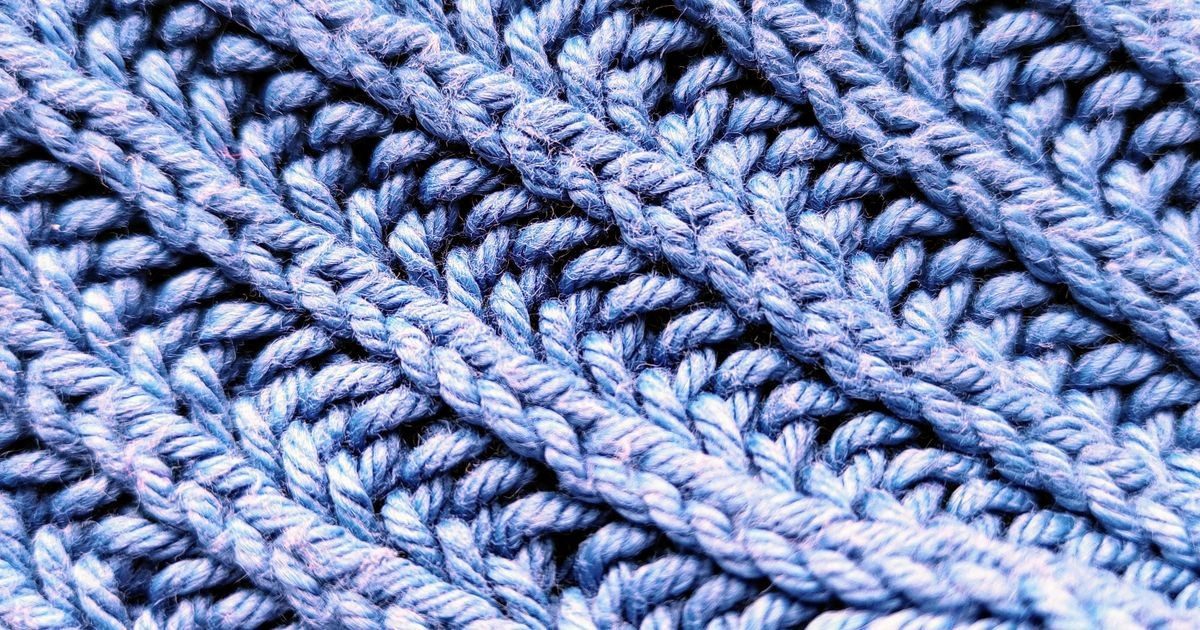
Abbreviation: scInsert your hook into a stitch, yarn over and pull up a loop (two loops now on your hook), yarn over again and pull through both loops. This is the shortest, densest stitch, and the one used throughout our dishcloth pattern.
Half double crochet
Abbreviation: hdcYarn over before inserting your hook into the stitch. Insert, yarn over and pull up a loop (three loops on your hook), yarn over once more and pull through all three loops at once. Slightly taller and softer than single crochet.
Double crochet
Abbreviation: dcYarn over before inserting your hook. Insert, yarn over and pull up a loop (three loops on hook), yarn over and pull through just two loops (two loops remain), yarn over again and pull through the final two loops. Taller still, with more drape.
Treble (triple) crochet
Abbreviation: trYarn over twice before inserting your hook. Insert, yarn over and pull up a loop (four loops on hook), then yarn over and pull through two loops, three separate times, until one loop remains. The tallest of the six, used less often in beginner patterns.
Quick comparison
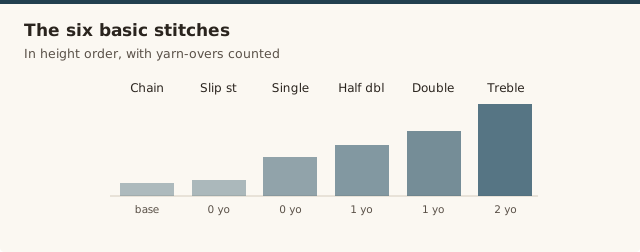
| Stitch | Abbr. | Yarn overs before inserting | Relative height |
|---|---|---|---|
| Chain | ch | — | — |
| Slip stitch | sl st | 0 | None |
| Single crochet | sc | 0 | Shortest |
| Half double crochet | hdc | 1 | Short-medium |
| Double crochet | dc | 1 | Medium-tall |
| Treble crochet | tr | 2 | Tallest |
A video demonstration covering the core stitch motions described above, useful for seeing the yarn-over sequence in action.
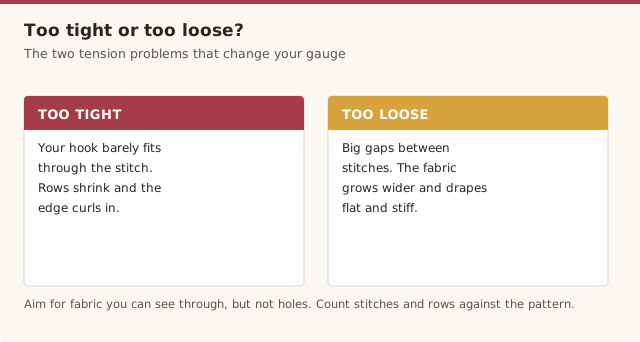
Common tension mistakes
Frequently asked questions
What is the easiest crochet stitch to learn first?
Chain stitch is the very first stitch every crocheter learns, followed by single crochet. Together these two stitches are enough to complete an entire beginner project, like our dishcloth pattern.
What is the difference between single, half double, and double crochet?
The difference is height and the number of yarn overs used before completing the stitch. Single crochet is shortest and densest, half double crochet is a middle height, and double crochet is taller and drapes more loosely.
Do I need to learn treble crochet as a beginner?
Not right away. Treble crochet appears less often in beginner patterns than the shorter stitches, so it's fine to learn it later once single, half double, and double crochet feel comfortable.
Why is my crochet tension so uneven?
Uneven tension almost always comes from how tightly you hold the working yarn, not the hook. Try wrapping the yarn once around your pinky and letting it run over your index finger, which gives consistent, light resistance without you having to think about it.
What does "yarn over" actually mean?
It means wrapping the working yarn over the top of your hook from back to front, before you pull it through a stitch or loop. Almost every stitch in this guide is built from one or more yarn overs in a specific order.
How do I keep my edges straight when crocheting rows?
Count your stitches every row and pay attention to the turning chain — depending on the stitch, the turning chain may or may not count as your first stitch. The most common cause of wobbly edges is accidentally adding or skipping a stitch at the very beginning or end of a row.
Can I crochet left-handed using these instructions?
Yes, the stitches are exactly the same; you'll simply work them in the opposite direction, mirroring the steps. Hold the hook in your left hand and the yarn in your right, and your work will mirror a right-handed crocheter's instead of being identical.
CrochetGuides is a participant in the Amazon Services LLC Associates Program. As an Amazon Associate we earn from qualifying purchases, at no extra cost to you.