Free Baby Socks Crochet Pattern (Simplified Heel)
Soft baby socks with a beginner-friendly simplified heel and a stretchy ribbed cuff, sized 0-3 and 3-6 months.
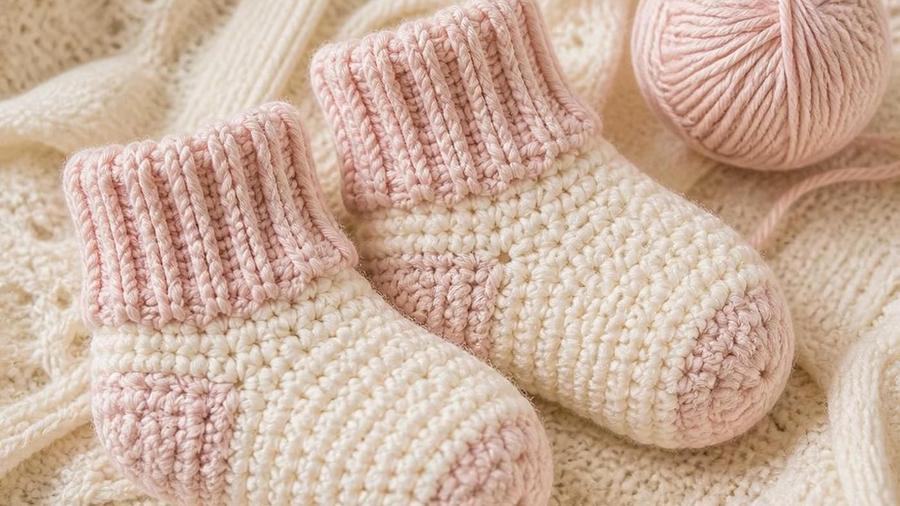
Adult sock patterns intimidated me for years before I made my first pair of baby socks, and it turns out the intimidating part, a full turned heel with a heel flap and gusset, isn't actually necessary at this tiny scale. A baby's foot is small and soft enough that a much simpler short-row heel gives a perfectly comfortable, well-fitting result, without needing the more advanced heel-turning technique a full-size adult sock benefits from. This pattern is deliberately written around that simplified heel, making it a genuinely good first sock-shaped project rather than a scaled-down version of a harder pattern.
This pattern covers the gentle toe shaping, the simplified heel construction written specifically to be approachable, and the safety and softness considerations that matter for anything made to go directly against a baby's skin.
Baby socks are also a genuinely satisfying quick-turnaround gift, since a single pair uses very little yarn and can realistically be finished in one or two sittings. That makes them a good project when you want to make something handmade for a new arrival on short notice, without the time commitment a full baby blanket or garment would need.
They're also a forgiving project to keep practicing on, since a pair that comes out slightly imperfect is still a usable, wearable gift rather than a discarded attempt, and the small scale means any mistake costs relatively little time or yarn to unravel and redo compared to a larger project.
Materials
- About 40–60 yards of soft DK or fingering-weight cotton or cotton-blend yarn
- 3-3.5mm hook
- Stitch marker, yarn needle, scissors
Abbreviations (US terms)
| Abbr. | Means |
|---|---|
| sc | Single crochet |
| inc | Increase |
| FPdc/BPdc | Front-post/back-post double crochet |
See our abbreviations glossary for the full list including UK terms.
Notes
- Worked toe-up in continuous rounds, in a soft cotton or cotton-blend yarn.
- The heel is a simplified short-row construction, easier than a full adult turned heel.
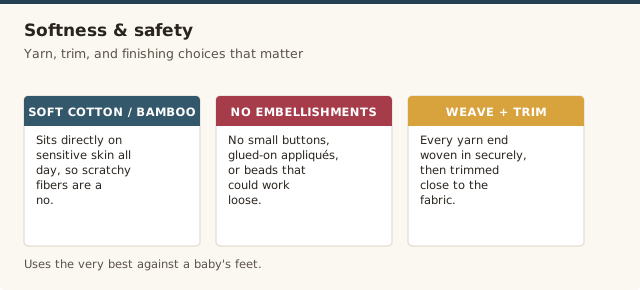
- No embellishments that could detach; weave in all ends securely and trim close.
Pattern
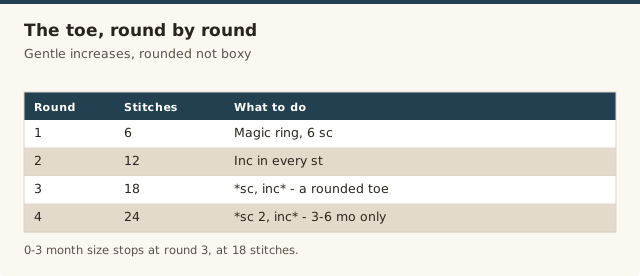
Magic ring, 6 sc into ring (6). Rnd 2: inc in every st (12). Rnd 3: *sc, inc* around (18, this gentle rate builds a rounded toe rather than a boxy one). Rnd 4: *sc 2, inc* around (24) for the 3-6 month size; stop at round 3 (18 sts) for the 0-3 month size.
Work even at your target stitch count for several rounds, checking against actual foot length (roughly 3.5in for 0-3 months, 4in for 3-6 months) until you're about 1in short of the total foot length.
Work across half the stitches only (12 for the 3-6 month size), turn. Row 2: sc across these sts, turn. Row 3: sc2tog, sc to last 2 sts, sc2tog, turn. Repeat row 3 twice more, narrowing gradually. Fasten off this section, then rejoin at the base of the heel flap and sc evenly back up both sides plus across the remaining live stitches to resume working in the round.
Work *FPdc, BPdc* around, repeated for 1-1.5in of ribbed cuff height. Fasten off, leaving the last round slightly loose rather than tight, so the cuff doesn't dig into the ankle.
The simplified heel, step by step
A full adult sock heel uses a heel flap worked back and forth followed by a gusset that adds width for the foot to pull over, a technique that takes real practice to get comfortable with. A baby's foot is small and flexible enough that this level of engineering isn't necessary: the simplified short-row heel in this pattern narrows gradually across roughly half the stitches, then picks back up around the sides, producing a soft, cupped heel pocket without any gusset increases at all.
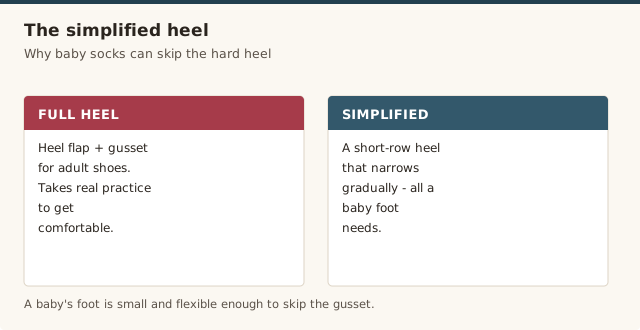
This simplification works specifically because a baby's foot is soft, small, and doesn't bear the same repeated stress and flexing an adult foot puts on a sock's heel during walking. An adult sock genuinely benefits from the extra structure a gusset provides; a baby sock, especially for a pre-walking infant, does not need to work nearly as hard, which is exactly why the more advanced technique can be skipped here without any real compromise in fit or durability.
Work through this section slowly on your first sock, since even a simplified heel is the part of the pattern most likely to feel unfamiliar. Counting stitches at the start of every short row, rather than working by feel, catches a miscount while it's still a two-row fix rather than something you only notice once the heel pocket is already an obviously wrong shape.
Once the first sock's heel is done, the second sock's heel goes noticeably faster, since the row-by-row logic has already clicked. If you're at all unsure how the finished heel should look before starting, working a plain single crochet swatch through just the heel rows first, without committing to a full sock, is a low-stakes way to see the shaping in action before it matters.
A note on softness and safety
The ribbed cuff should be snug enough to stay up without an adult constantly readjusting it, but never tight enough to leave a visible mark on the skin after removal. If a finished cuff looks like it's compressing the skin noticeably, it's worth reworking the final round with one fewer decrease or a looser fastening-off tension rather than leaving it as is.
Check the finished socks against these standards after every wash as well as when new, since a cotton blend can shrink slightly over repeated laundering, which changes fit even though nothing about the construction itself has changed. A pair that fit comfortably when first finished can become slightly tighter after several wash cycles, so it's worth periodically confirming the fit still meets the same comfort standard as the sock ages with wear and washing.
Color and gift-set ideas
A single solid pastel color is the safest, most universally appropriate choice for gifting, since it suits either a boy or a girl without needing to guess in advance. Two colors, a main body with a contrast cuff, adds a small design detail without any construction change, simply switch yarns at the start of the ribbed cuff section and weave in the color-change tail as usual, checking that the transition round still lies flat.
Making a matching pair alongside our newborn hat pattern or a baby blanket in the same yarn and colorway turns a simple pair of socks into a small coordinated gift set, which reads as more thoughtfully put-together than any single piece alone, for very little extra yarn or time investment.
A tiny embroidered initial worked in duplicate stitch on the foot personalizes a gift set further without adding anything that could realistically detach or pose a hazard, since the stitching becomes part of the existing fabric rather than a separate attachment, consistent with the safety approach covered above. Keep any personalization small and worked with a single strand of yarn or embroidery floss, since a bulkier addition can create an uncomfortable pressure point against the sole of a very small foot.
Keeping tiny socks on tiny feet
Fix: work the cuff in a stretchy ribbed stitch rather than plain single crochet, and size the cuff slightly snug, since baby socks need to stay on without an adult readjusting them all day.
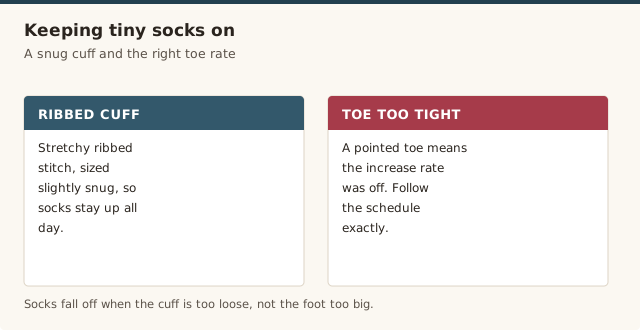
Fix: follow the gentle toe increase schedule exactly, increasing too fast produces a boxy toe instead of a gently rounded one.
Fix: use a genuinely soft cotton or bamboo-blend yarn, not a rougher wool or acrylic, adjusting hook size down to match if substituting a lighter-weight yarn.
Fix: the pattern's simplified short-row heel exists specifically to be easier than a traditional turned heel, follow its row-by-row guide rather than substituting a full adult sock heel.
Fix: count total rounds worked on each sock rather than judging "it looks about the same," since tension commonly drifts slightly between two pieces made on separate days.
Our pick for baby-soft yarn
Lion Brand Yarn 24/7 Cotton Baby Blend
A genuinely soft, machine-washable cotton blend specifically suited to items worn directly against baby skin, giving a gentle hand-feel without sacrificing the structure needed for a ribbed cuff to hold its shape.
View on Amazon →Once you've made one pair, keep the leftover yarn aside, since a second or third pair in a slightly different colorway costs almost nothing beyond the time to work the rounds again. A small stash of finished pairs in a few sizes and colors means you always have a quick, genuinely handmade gift ready whenever a new baby arrives among family or friends, without needing to start a project from scratch under time pressure.
Baby socks FAQ
What yarn is genuinely gentle enough for baby skin?
A soft DK or fingering-weight cotton or cotton-bamboo blend is gentle against sensitive baby skin and machine washable, unlike a scratchier wool or acrylic. Look specifically for yarn marketed for baby items, since regular cotton yarn varies in softness between brands.
How do I size the pattern for different ages?
Work fewer rounds for the 0-3 month size and more for 3-6 months, checking foot length against typical measurements for each age (roughly 3.5in for 0-3 months, 4in for 3-6 months) as you go rather than trusting a fixed round count alone.
Do these stay on better than knit baby socks?
A well-made ribbed crochet cuff holds on at least as well as a knit sock, and often better, since crochet ribbing tends to have slightly more structure than a very loosely knit cuff. The cuff's snugness matters more than the technique used to make it.
Can they be made with the simplified heel for a first-time sock maker?
Yes, that's exactly what the simplified short-row heel in this pattern is designed for, a more approachable version of a full turned heel, specifically so a first attempt at a sock-shaped project doesn't require the more advanced heel-turning technique.
How much yarn does one pair take?
About 40-60 yards of DK or fingering-weight cotton for one pair, making this a genuinely quick, low-yardage project even accounting for two socks.
Timing for a baby shower versus after-birth gifting?
A baby shower gift usually needs to be made without a confirmed size, so working the larger 3-6 month size is the safer choice, giving the baby more time to grow into them. An after-birth gift can be sized more precisely to the newborn's actual measurements if you have access to them.
CrochetGuides is a participant in the Amazon Services LLC Associates Program. As an Amazon Associate we earn from qualifying purchases, at no extra cost to you.