Free Crochet Baby Booties Pattern for Beginners
A simple sole-and-sides construction, worked flat, for a quick and genuinely useful baby gift.
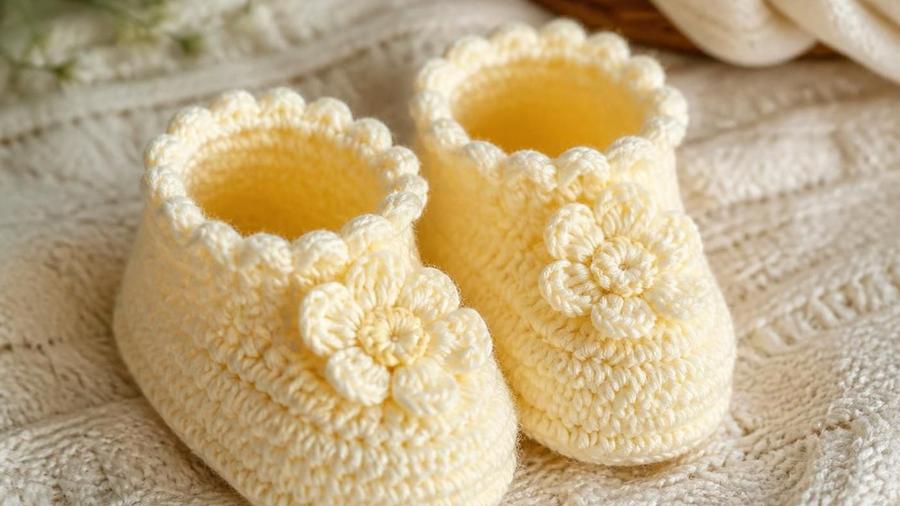
The first baby gift I ever crocheted was a pair of booties, finished at midnight the night before the shower, and I never once checked them against a real foot. They were beautiful and completely useless — sized for a newborn doll, not the six-month-old they were meant for. The mum laughed it off and tucked them on a teddy bear, but I've measured every pair against a reference sole since. That's the lesson I now lead with in every baby booties class: a bootie is small enough that a few millimetres is a whole size, so measure first, then make both. The pattern itself is forgiving; the sizing is not.
Materials
- 1 skein soft, machine-washable worsted-weight yarn labelled safe for babies (about 60–80 yards)
- 4.0mm (US size G) crochet hook
- Stitch marker, to track the start of each round
- Scissors
- Yarn needle, for weaving in ends
Abbreviations (US terms)
| Abbr. | Means |
|---|---|
| ch | Chain |
| sc | Single crochet |
| st(s) | Stitch(es) |
| inc | 2 sc in same stitch (increase) |
| rnd(s) | Round(s) |
See our abbreviations glossary for the full list including UK terms.
Gauge
14 sc and 16 rows measures about 4in / 10cm square with a 4.0mm hook and worsted yarn. Gauge affects fit more here than in larger projects — if your finished sole runs bigger or smaller than about 4in / 10cm long, adjust hook size before making a pair.
Notes
- Written in US terms, worked in a continuous spiral — same technique as our beanie pattern. Use a stitch marker to track round starts.
- Makes one bootie; repeat the entire pattern once more for a matching pair.
- For a slightly larger size, add one more increase round to the sole before continuing to the sides.
Pattern (make 2)
Ch 9. Starting in 2nd ch from hook, sc 7, work 3 sc in last ch, then sc 7 down the other side of the chain, work 2 sc in the last ch. Place marker. (18 sts)
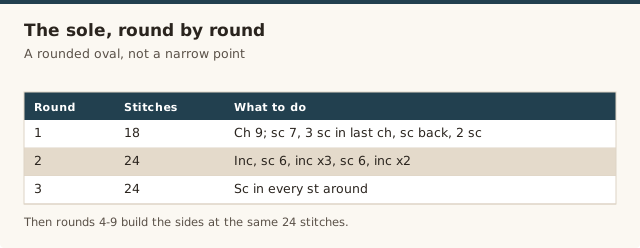
Inc, sc 6, inc 3 times, sc 6, inc twice. (24 sts)
Sc in every st around, no increases. (24 sts)
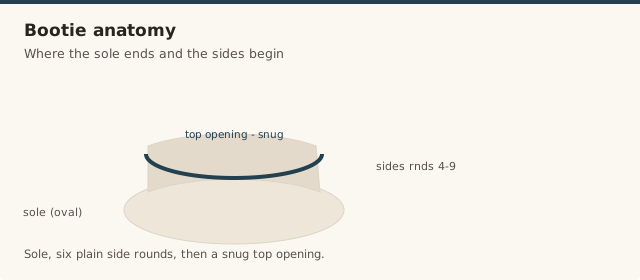
Sc in every st around for 6 rounds, working through the back loop only on round 4 for a defined edge between sole and sides. (24 sts each round)
Fasten off, leaving a long tail. Weave the tail through the front loops of the last round and pull gently to slightly gather the opening, leaving enough space to fit over a baby's foot. Weave in the end.
Sizing for older babies
The pattern as written (Ch 9, 18 starting stitches) fits a newborn to about 6 months, roughly a 3.5–4in / 9–10cm foot. For each size up, add 2 chains to the starting chain in Round 1 and work one extra plain round in the sides section, the same principle used across our sock and slipper patterns: the chain length controls how long the sole is, while the side rounds control how deep it sits around the foot.
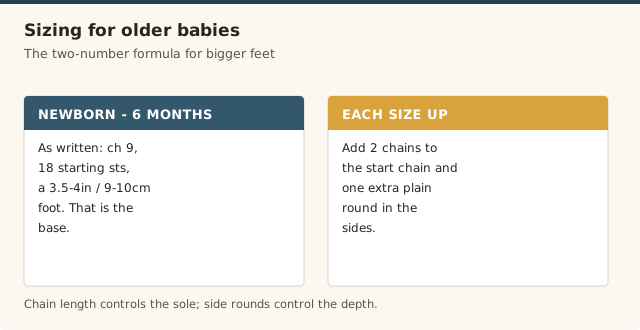
As a rough guide: Ch 9 (18 sts) suits 0–6 months, Ch 11 (22 sts) suits 6–12 months, and Ch 13 (26 sts) suits 12–18 months, adding one more side round at each step up. Always measure against the actual baby or a well-fitting existing shoe before starting if you can, since babies of the same age vary more in foot size than the "months" labels suggest. If your pair comes out the wrong size, our guide to fixing project size shows how to adjust without starting over.
Common mistakes & fixes
Fix: work the last round or two of the top opening with a smaller hook to snug it in, or add the optional ankle strap with a securely sewn button described above.
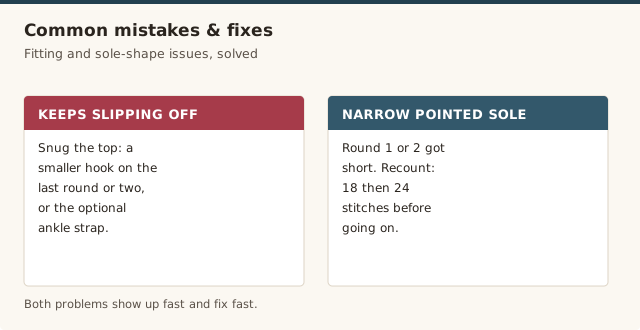
Fix: double-check the stitch count after Round 1 (18 sts) and Round 2 (24 sts) — a miscounted increase round is almost always the cause, and it's easier to rip back two rounds than to keep going on a mis-shaped sole.
Fix: for a tight opening, gather the finishing round more loosely or add a stitch or two evenly around; for a loose one, gather it tighter or drop to a smaller hook for the last round before fastening off.
Our pick
Cotton worsted-weight yarn, 3-pack
Soft, machine-washable, and available in light colours suited to baby items — enough yarn in one order for several pairs.
View on Amazon →A step-by-step look at a pair of booties, useful for seeing how the sole and upper come together.
Frequently asked questions
What yarn is safe to use for crochet baby booties?
Soft, machine-washable acrylic or cotton yarn labelled for baby items is the standard choice. Avoid novelty or mohair-type yarns with loose fibres, which can be a safety concern for infants.
How do I size crochet baby booties for different ages?
This pattern fits 0-6 months. For a larger size, add one more increase round to the sole before starting the sides, which adds roughly a size.
Should baby booties have buttons or ties to stay on?
A simple ankle strap with a button works well for older babies who can't easily remove it, but for very young infants, snug-fitting booties without small attachable parts are the safer choice.
Why do my baby booties keep falling off?
The ankle opening is likely too loose relative to the leg — work the last round or two of the cuff with a smaller hook, or add a simple button or ribbon tie to hold them snug.
How do I wash handmade baby booties?
Hand wash in cool water with a mild, fragrance-free detergent and lay flat to dry; check the yarn label first, since some acrylic and cotton blends can also go on a gentle machine cycle inside a mesh bag.
What hook size is best for baby booties?
A 4.0mm (US size G) hook with worsted-weight yarn is standard for this pattern and gives a soft but structured fabric. If your sole comes out larger than about 4in / 10cm long, drop to a 3.5mm hook; if it comes out smaller, go up to 4.5mm.
Can I make these booties in a toddler size?
Yes, add 2 chains to the starting chain and one extra plain side round for each size up. Ch 9 fits 0-6 months, Ch 11 fits roughly 6-12 months, and Ch 13 fits roughly 12-18 months, always measured against the actual foot.
CrochetGuides is a participant in the Amazon Services LLC Associates Program. As an Amazon Associate we earn from qualifying purchases, at no extra cost to you.