Free Crochet Toddler Beanie Pattern for Beginners
A scaled-down version of our adult beanie — same technique, sized for a small head.
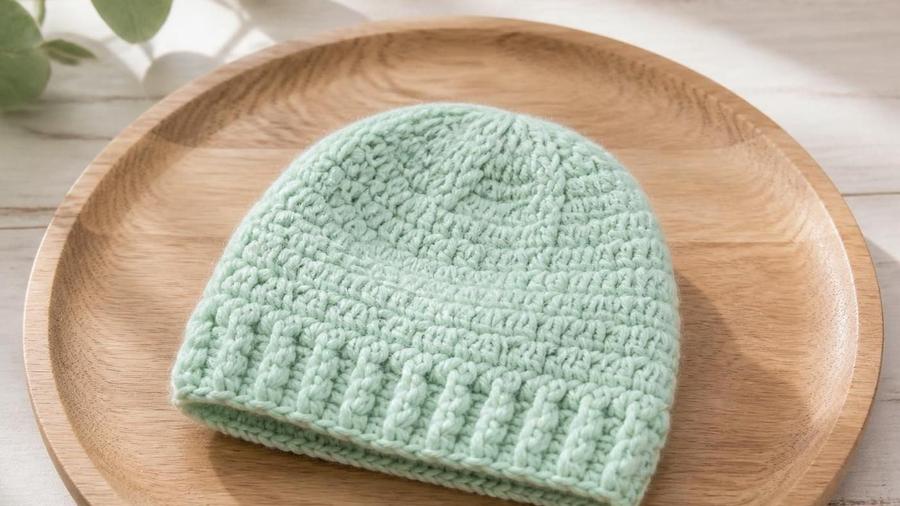
I've lost count of the toddler beanies I've made over the years, and the one lesson that took me longest to learn is that age labels are nearly useless. A two-year-old I crocheted for had a head the size of some five-year-olds, and the first hat I made her — faithful to the "age 1-3" range — wouldn't go past her ears. That's when I started keeping a soft tape measure in my project bag and measuring every small head before I cast on, no matter how confident the parent's guess was. The pattern below is the result: a scaled-down beanie that fits properly because it's built around the actual head, not the label on a size chart.
This is a direct scale-down of our adult beanie pattern, stopping the crown increases two rounds earlier and working fewer straight rounds for a smaller circumference. If you've already made the adult version, the technique here is identical. If starting a hat from a circle is still new to you, our magic ring tutorial covers that first step in detail.
Materials
- 1 skein worsted-weight yarn (about 100–120 yards)
- 5.0mm (US size H) crochet hook
- Stitch marker, to track the start of each round
- Scissors
- Yarn needle, for weaving in ends
Abbreviations (US terms)
| Abbr. | Means |
|---|---|
| sc | Single crochet |
| st(s) | Stitch(es) |
| inc | 2 sc in same stitch (increase) |
| rnd(s) | Round(s) |
See our abbreviations glossary for the full list including UK terms.
Gauge
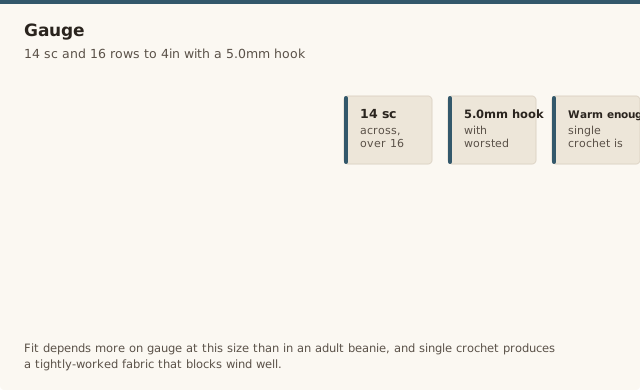
14 sc and 16 rows measures about 4in / 10cm square with a 5.0mm hook and worsted yarn. Fit depends more on gauge at this size than in an adult beanie — measure the toddler's head before starting if possible.
Notes
- Written in US terms, worked in a continuous spiral — use a stitch marker to track round starts, same as our adult beanie pattern.
- Toddler head sizes vary more than adult sizes. Measure and compare against the crown circle before starting the straight rounds if an exact fit matters.
- This pattern stops crown increases at round 6 (adult version continues to round 8), which is the main difference between the two sizes.
Pattern
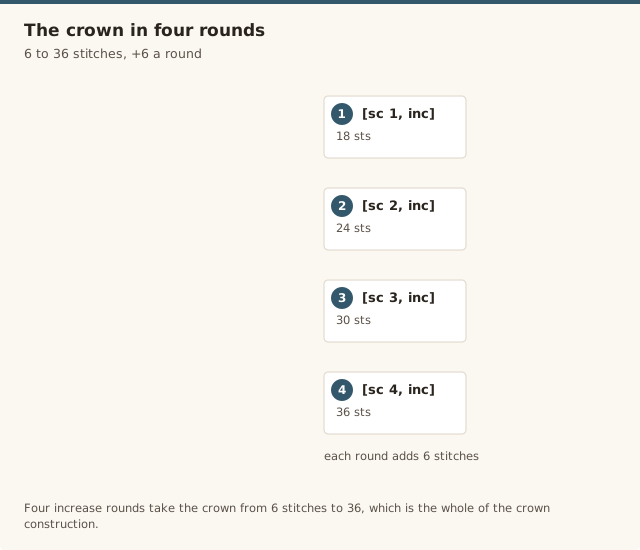
Make a magic ring, 6 sc into ring, place marker. (6 sts)
Inc in every st around. (12 sts)
[sc 1, inc] around. (18 sts)
[sc 2, inc] around. (24 sts)
[sc 3, inc] around. (30 sts)
[sc 4, inc] around. (36 sts)
Sc in every st around, no increases. Work 8 rounds straight, or until the hat measures about 1.5–2in / 4–5cm less than the toddler's head circumference — single crochet fabric stretches slightly once worn.
Slip stitch into the next stitch to close, fasten off leaving a 6in / 15cm tail. Weave in ends with a yarn needle.
A tutorial for a toddler-sized beanie, useful for seeing the crown-to-brim sizing appropriate for young children.
Sizing reliably
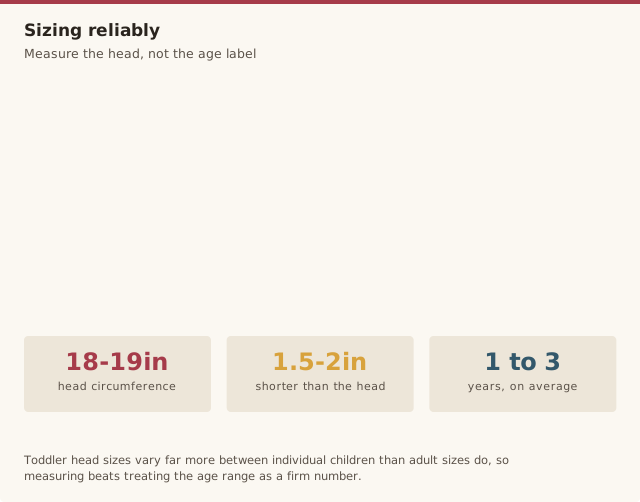
Toddler head sizes vary more between individual children than adult sizes do at the same "age" label, so treating an age range as a firm number is one of the most common ways this pattern comes out wrong. Measuring the toddler's actual head circumference, then comparing the flat crown circle against that measurement before starting the straight rounds, catches a sizing problem while it's still cheap to fix — unraveling six rounds of increases is a much smaller loss than unraveling the whole hat.
Because single crochet fabric has some stretch once worn, working the straight rounds to about 1.5-2in less than the measured head circumference (as the pattern notes) usually gives the most accurate real-world fit, rather than matching the measurement exactly and ending up with a hat that's slightly loose.
If you're making a hat as a gift without the toddler present to measure, it's safer to size slightly generous rather than snug. A hat with a little extra room can still be worn (perhaps folded up at the brim), while a hat that's genuinely too small can't be worn at all until it's unraveled and reworked. When in doubt, ask the parent for the toddler's current hat size or a rough age, and lean toward the larger end of that range.
Ear flaps & pom-poms
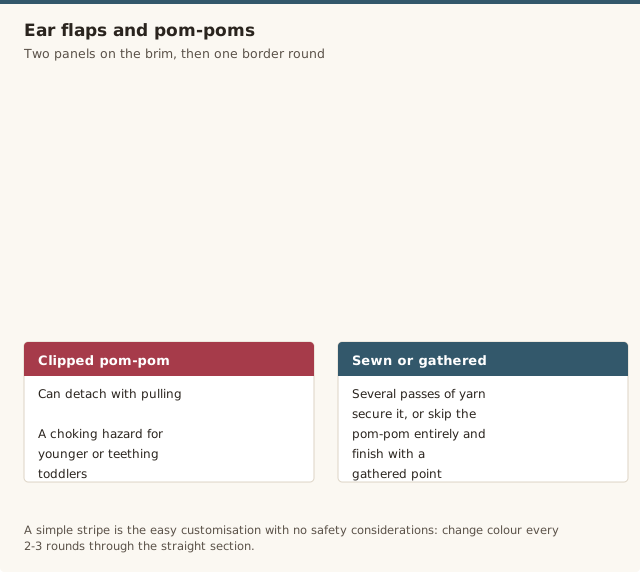
Ear flaps add real warmth for outdoor wear in cold climates and are simple to add without changing the crown construction: work two small triangular panels separately (decreasing a stitch or two each row from a starting width of about 8-10 stitches), then attach them to the brim edge on either side before working a border round around the whole opening, flaps included.
A pom-pom on top is a classic finishing touch, but it's worth thinking about the toddler's age before adding one as a separate piece. For younger or teething toddlers, sewing the pom-pom on securely with several passes of yarn is safer than a clip-on pom-pom, which can detach with enough pulling and become a choking hazard; an alternative is skipping a separate pom-pom altogether and finishing the crown with a simple gathered point instead.
A simple stripe pattern is another easy customization that doesn't add any safety considerations at all: switching yarn colors every 2-3 rounds during the straight section creates clean horizontal bands with no extra technique beyond a basic color change at the start of a round. It's an easy way to use up leftover yarn from other projects and gives each hat in a set of siblings' beanies its own distinct look.
Common mistakes & fixes
Fix: measure the head directly and compare it to the flat crown circle before continuing to the straight rounds — toddler sizes vary too much for an age range alone to be reliable.
Fix: stop the straight rounds about 1.5-2in short of the measured circumference — the fabric stretches slightly once worn, so this usually lands closer to a true snug fit.
Fix: sew any decoration on securely with multiple passes of yarn, or skip a separate piece entirely for younger toddlers who still put things in their mouths.
Fix: choose a soft, machine-washable acrylic or acrylic blend — toddler items get washed often, and comfort against the skin matters more here than with most adult accessories.
Our pick
Stitch marker & tapestry needle kit
A locking stitch marker is essential for tracking round starts on a small spiral project like this one.
View on Amazon →Frequently asked questions
How do I scale an adult beanie pattern down for a toddler?
Stop the crown increase rounds two rounds earlier than an adult version, and work fewer straight rounds for the body, checking the flat crown circle against the toddler's head measurement as you go.
What head size does this toddler beanie fit?
This pattern is sized for an average 1 to 3 year old head circumference, roughly 18 to 19 inches. Measure the toddler's head for the most accurate fit, since sizes vary.
Is single crochet fabric warm enough for a toddler beanie?
Yes, single crochet produces a dense, tightly-worked fabric that blocks wind well. For extra warmth in very cold climates, a wool or wool-blend yarn adds insulation that acrylic doesn't provide.
Can I add ear flaps to this toddler beanie?
Yes — ear flaps are typically added by working two small triangular panels separately and joining them to the brim edge before adding a border round, rather than changing the crown construction itself.
Is it safe to add a pom-pom to a toddler's beanie?
For younger or teething toddlers, it's safer to skip a separate pom-pom or use one that's securely sewn on with multiple passes of yarn rather than a clip-on pom-pom, since a loose or removable one is a potential choking hazard.
How do I make this beanie last through more than one growth spurt?
Working the straight rounds slightly longer than the exact head measurement, and choosing a stretchy single crochet gauge rather than a very tight one, buys a bit more wear before the hat feels too small.
What size crochet hook should I use for a toddler beanie?
A 5.0mm (US size H) hook with worsted-weight yarn gives a soft, stretchy fabric that suits a toddler, but you can drop to a 4.5mm hook for a firmer, denser hat or go up to 5.5mm for a looser, airier one, adjusting the finished size slightly either way.
How do I make the beanie softer for a toddler with sensitive skin?
Choose a soft, machine-washable acrylic or a gentle merino blend rather than a scratchy wool, and wash the finished hat with a little fabric softener before first wear. Avoid textured or novelty yarns around the brim, where they sit against the forehead and ears.
CrochetGuides is a participant in the Amazon Services LLC Associates Program. As an Amazon Associate we earn from qualifying purchases, at no extra cost to you.