Tunisian Simple Stitch: A Beginner's Complete Guide
Bridging the gap between knitting and crochet, the Tunisian simple stitch creates a dense, beautiful fabric that is surprisingly approachable for beginners.
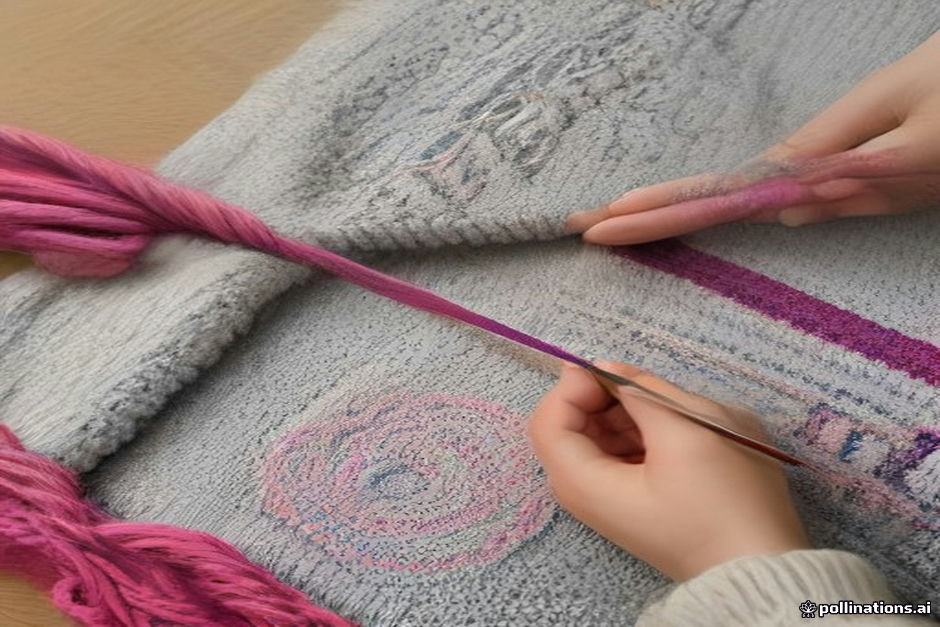
If you have ever wanted to make cozy winter accessories or textured blankets that do not slouch or stretch out of shape, this is the technique to learn. Let us break down how it differs from what you already know, what hook you need to pull from your stash, and how to conquer that pesky curling edge right from your very first practice swatch.
How Tunisian Crochet Differs from Regular Crochet
The biggest adjustment for most traditional crocheters is that you never turn your work. In standard crochet, you turn your piece at the end of every row and work back across the wrong side. With Tunisian crochet, the right side always faces you. You work a forward pass—picking up loops and keeping them all on your hook—and then a return pass, working those loops off two at a time.
Because all your live stitches remain on the hook at once during the forward pass, your project requires holding a much larger number of loops. This creates a dense, woven fabric that resembles knitting in appearance but is worked entirely with a hook. It has less drape than standard crochet, making it fantastic for structured items like pillows, warm winter scarves, and heavy blankets.
- Never turn your work between rows
- Consists of a forward pass and a return pass
- All live stitches stay on the hook during the forward pass
Choosing the Right Tunisian Crochet Hook
You cannot make a wide Tunisian crochet project with a standard short hook because you will run out of physical space to hold your loops. You need a Tunisian crochet hook, which looks like a regular crochet hook on one end but is much longer, often featuring a flexible cable and an end stopper to keep your stitches from sliding off into the abyss.
For your very first practice swatch, a straight aluminum Tunisian hook that is about 10 to 12 inches long is ideal for keeping things simple without managing a dangling cable. Look for a size larger than what your yarn label recommends for standard crochet, as Tunisian stitches tend to pull tighter and benefit from a slightly bigger hook to maintain flexibility.
- Use a long straight hook or a cabled hook for wider projects
- Go up one or two hook sizes from standard recommendations
- Ensure the hook has an end stopper to secure your loops
Steps for Your First Tunisian Simple Stitch Swatch
Start by chaining a modest number, say fifteen chains, using a smooth worsted weight yarn and a matching Tunisian hook. For your foundation row, pick up a loop in the back bump of each chain across, exactly as you would start a normal crochet project. By the time you reach the end of this chain, you should have fifteen loops resting comfortably on your hook.
Now work your return pass: yarn over and pull through just one loop on the edge, then yarn over and pull through two loops repeatedly until only a single loop remains on your hook. To work the Tunisian simple stitch on subsequent rows, insert your hook from right to left under the second vertical bar of the previous row, yarn over, and pull up a loop. Repeat across, finish with your standard return pass, and watch your fabric grow.
- Chain fifteen and pick up loops in the back bumps
- Work the return pass by pulling through two loops at a time
- Insert hook under the vertical bars for the simple stitch
How to Fix the Inevitable Curling Edge
The number one complaint beginners have with Tunisian simple stitch is that the fabric curls up aggressively like a dried autumn leaf. This happens because the front vertical bars pull the stitches forward while the return pass tightens the back. Do not panic and throw your project across the room; this curling is completely normal and entirely manageable with a few reliable tricks.
First, using a hook that is one or two sizes larger than recommended will instantly loosen the tension and reduce curl. Second, you can add a border of standard single crochet or moss stitch around your finished piece once it is blocked. Finally, wet blocking your finished swatch or garment with pins will permanently relax those stubborn fibers into a flat, crisp shape.
- Use a larger hook size to naturally loosen tight tension
- Add a simple border of standard crochet around the edges
- Wet block your finished pieces to relax the fibers flat
Frequently asked questions
Do I need a special hook for Tunisian crochet?
Yes, you need a Tunisian crochet hook, which is extra long or attached to a flexible cable so it can hold all your live stitches at once during the forward pass.
Why does my Tunisian simple stitch curl?
The stitch structure naturally creates tension that pulls the edges forward. Using a larger hook, adding a border, or blocking your finished work will fix this.
Can I use a regular crochet hook for Tunisian crochet?
Only if you are making very narrow items like a headband, where all the stitches can physically fit onto a standard short hook without falling off the end.
Do I turn my work in Tunisian crochet?
No, you never turn your work. The right side always faces you, and you alternate between working a forward pass and a return pass.
Is Tunisian crochet harder than regular crochet?
It is not harder, just different. If you can chain and pull yarn through loops, you can easily learn the rhythm of Tunisian simple stitch with a little practice.