Tunisian Crochet vs Regular Crochet: What's the Difference?
A side-by-side look at how Tunisian crochet and regular crochet differ in hook, fabric, drape, and speed — and which one you should pick up first.
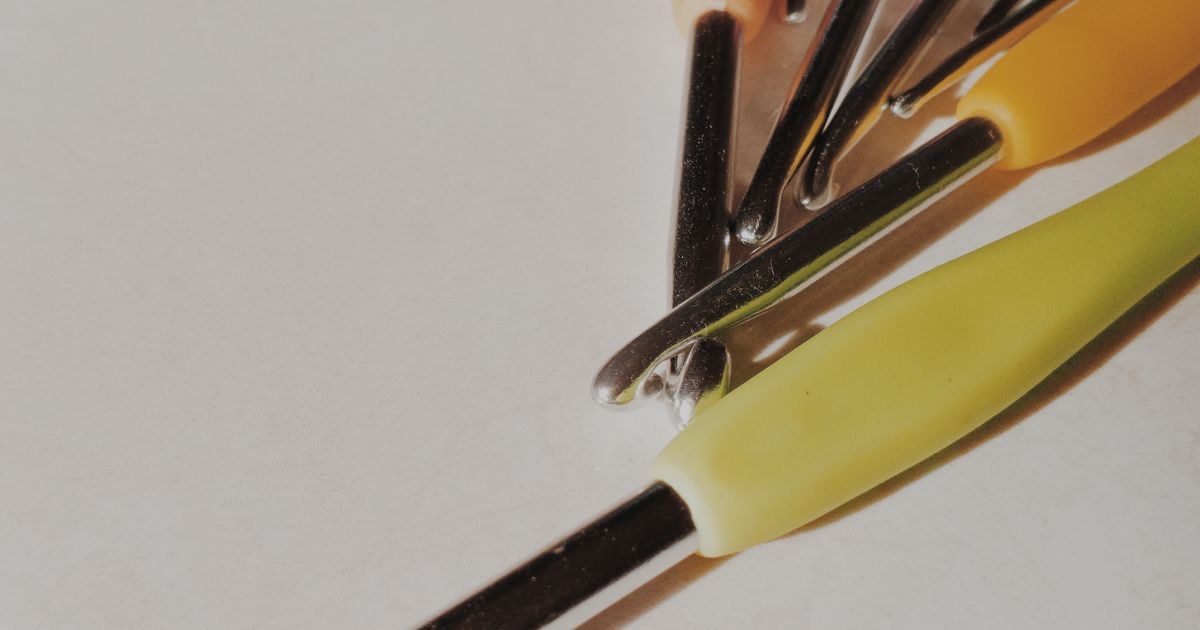
The first time I put a Tunisian hook in a student's hands, she looked at the length of it, looked at me, and asked whether it was for someone with two sets of hands. It's the reaction almost everyone has, and it's fair — a Tunisian hook is basically a regular crochet hook that kept going, long enough to hold a whole row of stitches at once. That one physical difference is the entire story of how these two crafts differ. Regular crochet keeps a single live loop on the hook and finishes each stitch completely before moving on. Tunisian crochet casts a whole row of loops onto that long hook on the forward pass, then works them all off again on the return pass, which is exactly why the fabric comes out looking almost knitted. I've taught both for twelve years, and the people who think they can't crochet are almost always just holding the wrong hook for the fabric they had in their head.
How each one works
Regular crochet is built one stitch at a time. You yarn over, pull a loop through the fabric, and immediately finish that stitch off the hook, so there is never more than a single live loop waiting on you. If you stop mid-row to answer the door, nothing unravels behind your back. It's the reason regular crochet is so forgiving while you're learning, and it's the foundation every beginner should get comfortable with first — our basic crochet stitches guide walks through the core ones step by step.
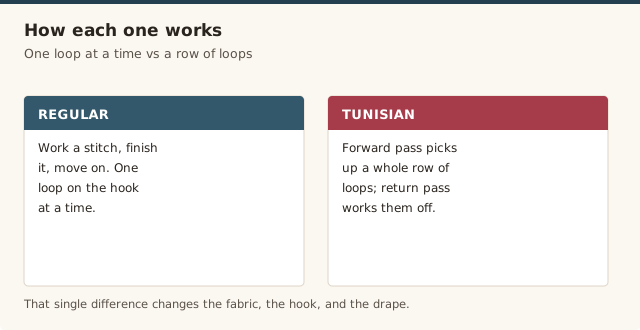
Tunisian crochet, sometimes called afghan stitch or Tricot crochet, works differently. A row is done in two passes. On the forward pass you work from right to left, drawing a loop up through each stitch and leaving every loop sitting on the hook — so by the end of the pass you're carrying a full row of live stitches, just like a knitting needle would. On the return pass you work back from left to right, yarn over and pulling that loop through the loops already on the hook until only one remains. The two passes together make one complete row. That's why the fabric is called knit-like: those loops held across the front of the work behave a lot like knit stitches, even though you're using a single hook.
Neither craft is more "correct" than the other, but they feel genuinely different in your hands. Regular crochet is a loop, finish, loop, finish rhythm. Tunisian crochet is a collect, then release rhythm, and it's that collect-and-release that gives you the distinctive look and weight.
The hook difference
The tool is the first thing you'll notice. A regular crochet hook is short — usually around six inches — with a hook at one end and sometimes a flat thumb rest in the middle. A Tunisian hook is long, often ten to fourteen inches, because it has to hold every loop of an entire row at once. If you're making a blanket, that means a cable version: a normal-length hook on the end of a flexible cord with a stopper at the other end, so the loops have somewhere to sit when a row is two hundred stitches long.
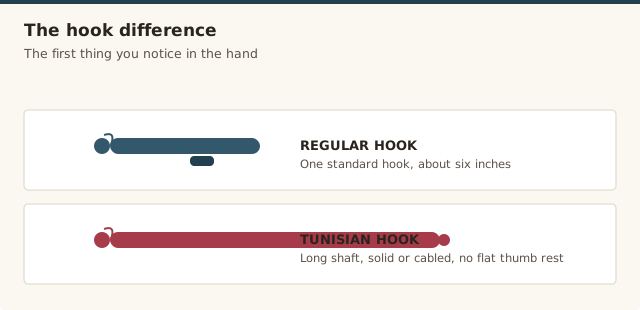
This isn't a cosmetic difference. Try to work Tunisian crochet on a regular hook and you'll run out of room in about twelve stitches, with loops squeezed so tightly they slide off the end. If you already have a regular hook and want to experiment before buying anything, you can work a narrow sampler strip on a hook with no thumb rest — but the moment you decide you like it, a proper hook is worth it. Our beginner crochet hooks guide covers what to look for, and the hook size chart helps you match the right size to your yarn.
One more practical difference: because Tunisian fabric is dense, you'll often go up a hook size or two compared to what you'd use for regular crochet with the same yarn. The thicker the fabric, the more room those loops need to move.
Fabric & drape
This is where the two crafts really part ways, and it's the reason most people pick one over the other for a given project. Regular crochet fabric is open and relatively light. It drapes and folds, and it has a soft stretch to it that comes from the gaps between stitches. Tunisian crochet fabric is dense, thick, and much less stretchy — it hangs straighter and holds its shape, which is why it reads as almost knitted even though it's made with a hook.
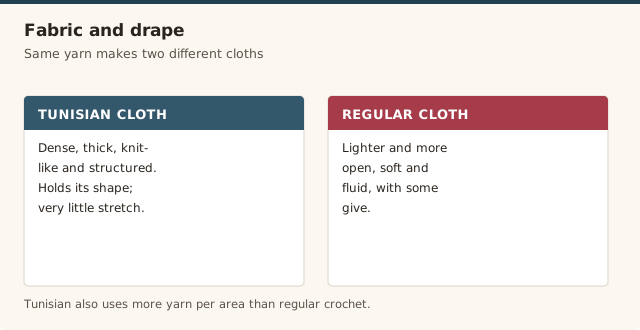
I keep two swatches in my teaching bag that make this click in about five seconds: a regular single crochet square and a Tunisian simple stitch square, both the same yarn and roughly the same size. The regular one crumples softly when you bunch it up. The Tunisian one stands almost rigid, like a thick woven coaster, with that neat vertical-stitch texture on the front. Students always pick up the Tunisian swatch and run a thumb over the front, because it genuinely looks like it was knitted by someone very patient.
The trade-off is stretch. Regular crochet will give a little and bounce back. Tunisian crochet has far less give, so a garment made in Tunisian simple stitch can feel stiff and unforgiving until you've chosen your yarn and hook carefully. That stiffness is a feature when you want structure — a sturdy bag, a dense blanket, a warm scarf that doesn't flop — and a drawback when you want a sweater that moves with you. Yarn choice matters enormously here, which is why it's worth reading our yarn weight guide before committing to a big project.
Speed & difficulty
Let's be honest about both, because speed and difficulty are where a lot of the online advice gets vague. Regular crochet is faster to learn. One loop, one motion, mistakes that unravel cleanly — most people are making a neat dishcloth within a couple of sessions. Tunisian crochet isn't harder in a dramatic way, but it has more moving parts to keep track of: you have to remember where the forward pass stops, how many loops the return pass pulls through at the start of a row, and how to keep all those loops from climbing off the hook while you work.
In terms of raw speed, the story flips depending on what you're measuring. Tunisian crochet builds a very neat, dense, finished-looking fabric remarkably quickly, because one forward pass collects a whole row at once and there's no stopping to count individual stitches. For something like a thick scarf or a dense blanket, Tunisian crochet can feel faster. But that density costs yarn — Tunisian fabric uses noticeably more yarn to cover the same area — and for loose, drapey fabric, regular crochet is usually quicker and lighter. So the honest answer is: regular crochet is faster to get good at, and Tunisian crochet is often faster to build dense fabric, once you know how.
If you're weighing crochet against a completely different craft, our crochet vs knitting comparison covers that decision too, and Tunisian crochet sits as a fun bridge between the two worlds.
Which projects suit each
| Tunisian crochet | Regular crochet | |
|---|---|---|
| Hook needed | Long Tunisian hook (solid or cabled) | One standard hook |
| Loops on the hook at once | A whole row of live loops | One active loop |
| How a row is worked | Forward pass collects loops, return pass works them off | Each stitch completed before the next begins |
| Fabric result | Dense, thick, knit-like, structured | Lighter, more open, more flexible |
| Drape | Stiff, holds its shape | Soft and fluid |
| Stretch | Very little | Some give |
| Yarn used | More per area | Less per area |
| Best projects | Blankets, scarves, bags, washcloths, warm wearables | Granny squares, amigurumi, lace, lightweight garments |
Tunisian crochet shines on anything that wants warmth, weight, and structure: thick scarves, dense blankets, sturdy market bags, washcloths, and cosy wearables where drape matters less than insulation. Its firm fabric is also brilliant for anything you'd rather not have stretch out of shape. Regular crochet is the better default for toys and amigurumi, lacy shawls, granny-square blankets, and lightweight garments, where flexibility and speed matter more than density. Neither is a bad choice — the question is just whether you want the finished piece to flop or to hold its shape.
Which to learn first
For a complete beginner, I'd start with regular crochet every time. It teaches you tension, yarn handling, and how stitches work while only ever asking you to manage one loop, so there's less to go wrong while you're still building confidence. Once you can chain and single crochet without thinking, Tunisian crochet slots in almost effortlessly, because the forward pass is just drawing up loops and the return pass is a chain — both skills you'll already have.
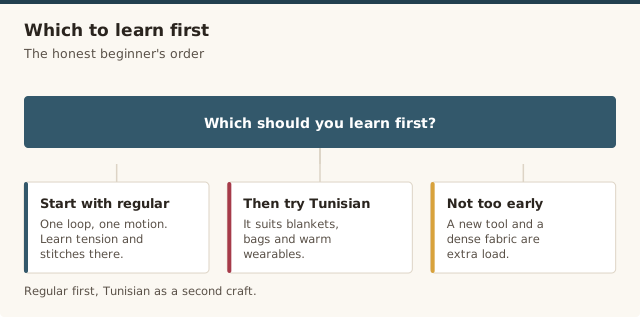
That said, if the knit-like look is the entire reason you want to crochet in the first place, there's nothing stopping you from starting with Tunisian. Just know that you'll be managing a lot of loops at once from day one, so a calm start with a chunky yarn and a narrow scarf is the gentlest way in. Either route eventually benefits from learning to follow a written pattern, and our how to read a pattern guide covers the shorthand you'll see in both regular and Tunisian instructions.
Common mistakes & fixes
Fix: curling is completely normal, not a mistake. Go up a hook size or two, loosen your tension on the return pass, and block the finished piece, and the curl will relax. A round of single crochet around the edge also helps flatten it.
Fix: you need a long hook or a cabled Tunisian hook so the whole row has room to sit. If you're just sampling, keep it to a narrow strip of ten or twelve stitches on a hook with no thumb rest.
Fix: the return pass always starts with a single yarn-over pulled through just one loop, then works through two loops after that. Missing that first lone pull-through is what skews the edge, so slow down on the very first stitch of each return pass until it's automatic.
Fix: you're almost certainly using a hook too small for the yarn. For Tunisian crochet, deliberately go up a size or two from what you'd use in regular crochet, and choose a softer, springier yarn rather than a stiff cotton for anything meant to drape.
Fix: the first few rows always feel awkward because you're not used to the two-pass rhythm yet. Work a full dishcloth before judging it — the forward pass collects a whole row at once, so the speed shows up as soon as your hands stop hesitating.
Fix: they build different fabric for different jobs. Use regular crochet for light, flexible pieces and Tunisian for dense, structured ones, rather than treating one as a worse version of the other.
Frequently asked questions
Is Tunisian crochet harder to learn than regular crochet?
Not really, but it feels unfamiliar at first because you hold a whole row of live loops on the hook instead of one. If you already know how to make a chain and a single crochet, the forward and return passes make sense within a session or two, and most of the awkwardness is just getting used to the longer hook.
Do I need a special hook for Tunisian crochet?
Yes, in practice you do. Tunisian crochet needs a long hook with enough room to hold every loop of a row, either a solid longer hook or a cabled one with a removable stopper. You can try a short sample on a regular hook with no thumb rest, but it gets cramped fast once a row is more than a few stitches wide.
Does Tunisian crochet use more yarn than regular crochet?
Yes, it generally does. Because each Tunisian stitch carries both a vertical and a horizontal loop, the fabric is thicker and denser, so a project uses more yarn to cover the same area than an equivalent regular crochet project would.
Is Tunisian crochet faster than regular crochet?
It depends on what you are making. Tunisian crochet builds a very neat, dense fabric quickly because one forward pass collects a whole row at once, but that density also means it eats through yarn. For loose, drapey fabric, regular crochet is often quicker and lighter.
Which should a beginner learn first, Tunisian or regular crochet?
Regular crochet is the gentler first step. It teaches tension, yarn handling, and how stitches work while only ever asking you to manage one loop at a time. Once that feels comfortable, Tunisian crochet is an easy and rewarding next skill to layer on top.
Why does my Tunisian crochet fabric curl at the edges, and how do I fix it?
Curling is completely normal for Tunisian crochet, especially with the basic Tunisian simple stitch, and it is not a sign you are doing anything wrong. A larger hook, a looser tension, or blocking the finished piece will relax the curl, and a small border of single crochet around the edge also helps flatten it.
Can I use a regular crochet hook for Tunisian crochet?
You can practice a narrow strip on a regular hook as long as it has no bulky thumb rest and is long enough to hold your stitches, but you will quickly outgrow it. A dedicated Tunisian hook, either solid or cabled, is worth getting if you plan to make anything wider than a sampler.
CrochetGuides is a participant in the Amazon Services LLC Associates Program. As an Amazon Associate we earn from qualifying purchases, at no extra cost to you.