How to Substitute Yarn in a Crochet Pattern
The pattern calls for a yarn you can't find — here's how to swap it without changing the size, the drape, or the finished look.
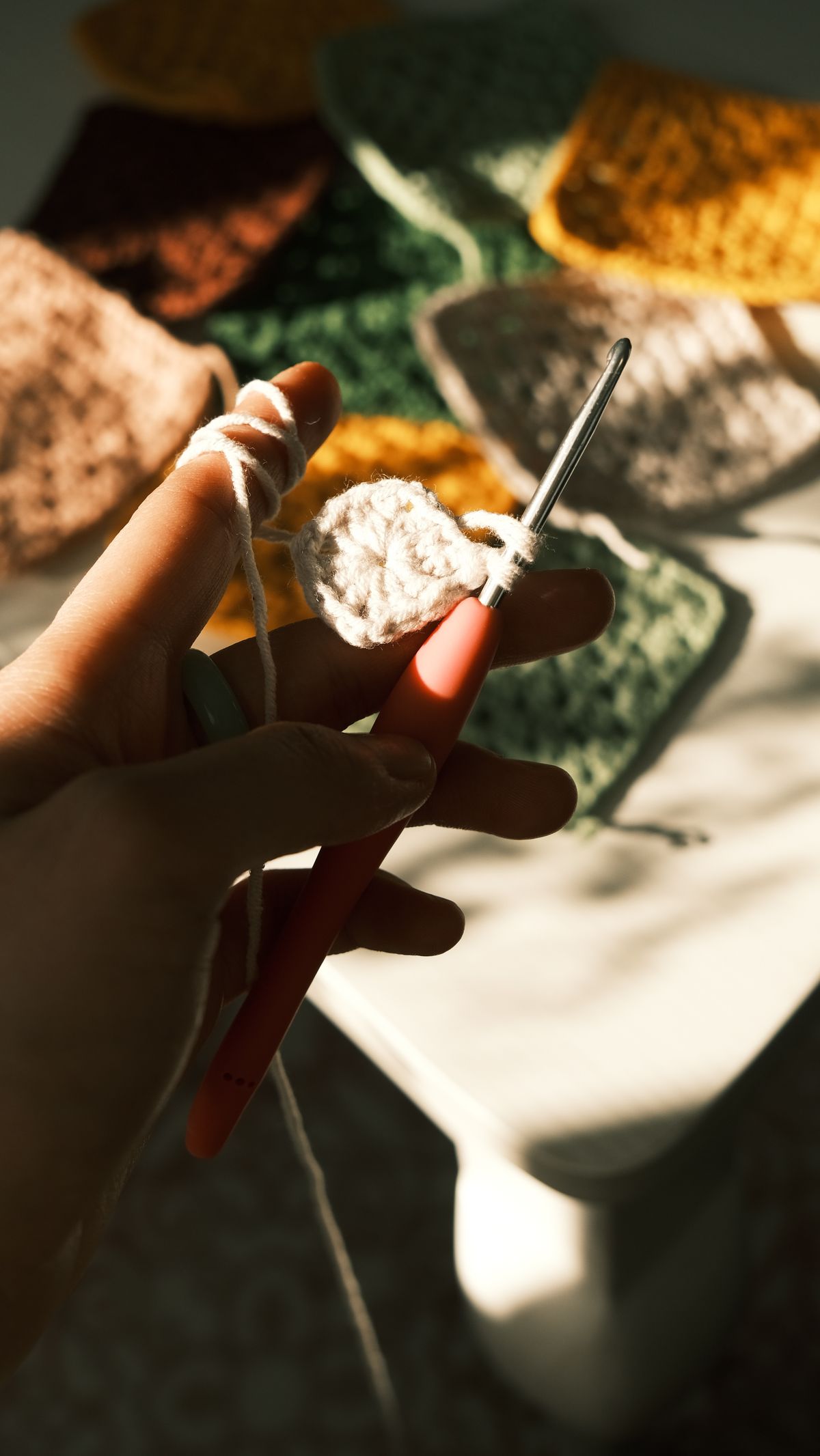
Sooner or later it happens to every crocheter: you find the perfect pattern, and the exact yarn it calls for is discontinued, out of stock, or costs more than the finished project is worth. Substituting is not cheating — it's a normal part of the craft, and designers expect it. What matters is doing it deliberately, because the wrong swap quietly changes the size of everything you make.
The good news: safe substitution is a short, learnable procedure, not a matter of taste. Five minutes with the ball band and one small swatch tell you whether a swap will work before you invest a single evening into it.
When you need to substitute at all
Three situations cover almost every substitution you'll ever face:
- The yarn is discontinued or out of stock. The most common reason, especially with older patterns — yarn lines turn over fast.
- Price or shipping. A premium wool the pattern names may cost three times what an equivalent acrylic-and-wool blend costs where you live.
- You already own something close. Using stash yarn for a low-stakes project is exactly what stash is for — as long as you check it first.
What all three have in common: the pattern's stitch instructions stay the same. What you're replacing is a material, and materials are judged by properties, not by name.
The one rule: match the fabric, not the yarn
Every substitution decision comes back to a single idea. The pattern doesn't care which yarn you use — it cares about the fabric that yarn produces: how thick it works up, how dense it is, and how it hangs. Two yarns that produce the same fabric are interchangeable. Two yarns with the same brand vibe but different thicknesses are not.
Fabric is described by three things, in this order of importance:
- Weight category. The number on the ball band (3, 4, 5…). Staying inside the same category is the easiest safe swap — our yarn weight guide explains the whole system.
- Gauge. The stitches-per-10cm number the pattern states. This is the test that settles everything — see what gauge actually means if it's new to you.
- Fibre and drape. Cotton behaves differently from wool even at identical thickness: heavier, less stretchy, more likely to grow when hung. For blankets and household items it barely matters; for garments it matters a lot.
The practical shortcut: substituting within the same weight category is nearly always fine after one swatch. Substituting across categories (worsted instead of DK, chunky instead of worsted) changes the size of every row, and you're effectively re-engineering the pattern — possible, but not where beginners should start.
Match yardage, not balls
The most expensive mistake in substituting is buying the wrong amount. Patterns state how many balls of their yarn you need — and balls of different weights hold very different lengths of yarn. A 100g ball of chunky might carry 120 metres; a 100g ball of DK carries 300. One ball each could not be more different.
| Step | Example |
|---|---|
| Pattern says | 5 balls × 110m per ball |
| Total needed | 550 metres |
| Your substitute carries | 180m per 100g ball |
| You must buy | 550 ÷ 180 = 3.05 → 4 balls (3 plus swatching margin) |
Always do this arithmetic before buying, and add one extra ball for swatching and repairs. Our yardage guide covers the estimates for common project types if the pattern doesn't state a total.
Substituting step by step
Here is the whole procedure, in the order that catches problems earliest:
- Read the pattern's yarn spec. Note its weight category, its stated gauge, and the total yardage. If the pattern names a yarn, look up that yarn's band online to get the numbers.
- Pick a candidate in the same category. Same weight number, similar fibre (wool-for-wool, cotton-for-cotton) is the safest starting point. Check the metre-per-100g figure — within one category, closer numbers behave more alike.
- Crochet a swatch. Use the hook size your substitute's band suggests first, not the pattern's hook size. Work at least 12cm square so you can measure 10cm cleanly in the middle.
- Measure and compare. Count stitches and rows over 10cm and compare against the pattern's stated gauge. Matching exactly? Proceed. Too many stitches per 10cm (fabric too tight)? Go up half a hook size. Too few? Go down.
- Re-swatch once if you changed hooks, then buy your yardage and start. The half-millimetre-at-a-time adjustment is the same skill our pattern-reading guide covers — and it transfers to every future project.
Our picks
Cotton worsted-weight yarn, 3-pack
When you need a reliable stand-in, a smooth worsted cotton is the easiest to gauge: consistent thickness, no fuzz hiding your stitches, and clear stitch definition for measuring a swatch accurately.
View on Amazon →Common mistakes & fixes
Fix: categories are ranges, not guarantees — two category-4 yarns can differ by two or three stitches over 10cm. One swatch turns a hopeful guess into a known result.
Fix: ball counts only apply to the pattern's original yarn. Convert to total yardage first, then divide by your substitute's metres per ball — and buy one extra.
Fix: cotton doesn't bounce back like wool, so garments fit differently, grow when worn, and weigh more. For your first substitution, keep fibre family roughly constant and experiment later.
Frequently asked questions
Can I substitute a different yarn weight in a pattern?
Not safely as a beginner. Staying within the same weight category keeps the pattern's sizing intact; changing category changes the size of every stitch and effectively rewrites the pattern. If you must change category, expect to swatch extensively and resize.
What happens if I ignore gauge when substituting?
The finished project comes out a different size than the pattern promises — hats that don't fit, blankets that shrink or grow, garments that miss their measurements. Gauge is the check that catches this before you invest the hours.
How do I know how much substitute yarn to buy?
Convert the pattern's ball count to total metres (balls × metres per ball), then divide by your substitute's metres per ball, and round up plus one spare ball. Yardage is the only comparable number between two different yarns.
Is it okay to substitute acrylic for wool?
For blankets, amigurumi and household items, usually yes — at the same weight category it works up much the same. For fitted garments, be careful: acrylic doesn't block or drape like wool and behaves differently in heat, so swatch and manage expectations about the finished feel.
My swatch matches in stitches but not in rows. What now?
Row gauge matters less for many projects but is critical for shaped ones. If only rows are off, try a slightly different hook from a different brand (hook depth varies) or accept it for unshaped items like scarves and blankets, where the length is easy to adjust as you go.
Can I substitute yarn for amigurumi?
Yes, but stay with the same category and favour smooth, tight-spun yarns in similar colours to the pattern's — the tight fabric is the whole point, and fuzzy or splitty substitutes hide the stitches you need to see. Our amigurumi yarn guide covers the specifics.