Running out one skein short of a finished blanket, with the dye lot long gone from shelves, is one of the most avoidable disasters in crochet.
Updated 2026 · 8 min read
Early in my teaching, I underestimated the yarn for my own wedding blanket project by a single skein, and by the time I went back to buy more, the shop had sold out of that exact dye lot. The replacement skein was close, but not identical, and there's a very faint band in that blanket to this day where the shade shifts. It's not a disaster, but it's a permanent reminder of a mistake that a bit of arithmetic beforehand would have prevented entirely.
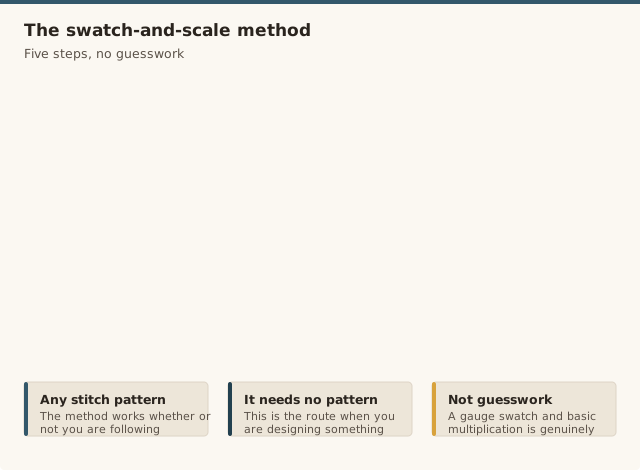
Estimating yarn accurately isn't guesswork, and it doesn't require anything more advanced than a gauge swatch and basic multiplication. Whether you're following a pattern that states its yardage, adapting a pattern to a different size, or designing something with no pattern at all, the same underlying method works: figure out how much yarn a known area of your project uses, then scale that up to the whole thing, with a sensible buffer built in.
This guide covers that method step by step, gives quick reference amounts for the projects people ask about most, explains why buying slightly more than you think you need is almost always the right call, and walks through a full worked example from swatch to final purchase so you can see the arithmetic applied to a real project rather than just in the abstract.
The one thing to remember: always buy your full estimated amount, plus 10–15 percent extra, from the same dye lot in one purchase. Going back for "just one more skein" later risks a dye lot mismatch that shows as a visible line in the finished piece.
This is the most reliable way to estimate yarn for a project without a stated yardage, and it works for any stitch pattern.
Work a gauge swatch of a known size, for example 4x4 inches (10x10cm), in the exact stitch pattern, yarn, and hook you'll use for the project.
Unravel the swatch and measure the total length of yarn it used, using a tape measure or by counting arm-lengths against a known distance.
Divide that length by the swatch's area (16 square inches for a 4x4 swatch) to get yards per square inch.
Calculate the total area of your planned project and multiply by that per-square-inch figure to get your estimated total yardage.
Add 10 to 15 percent to that total as a buffer before buying.
For an irregular shape, like a garment with sleeves and shaping, estimate the area of each piece separately (treating curves as rough rectangles is close enough for this purpose) and add them together before applying the buffer.
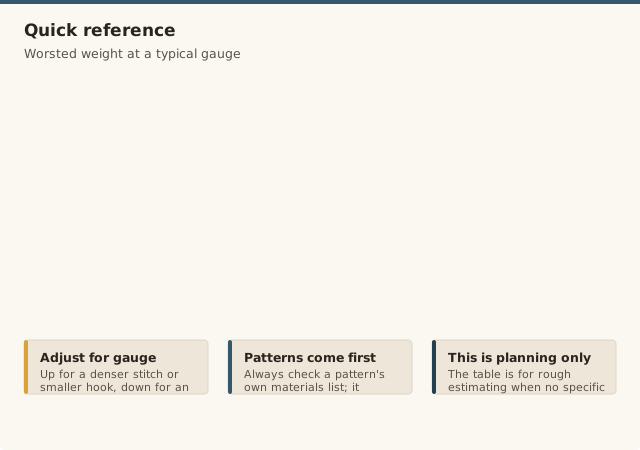
Quick reference for common projects
These are rough starting estimates for worsted-weight yarn at a typical gauge; adjust up for a denser stitch or smaller hook, and down for a more open stitch or larger hook.
Project
Approx. yardage
Dishcloth or coaster
50–100 yards
Beanie or hat
150–250 yards
Scarf
400–700 yards
Adult cardigan or sweater
1,200–2,000 yards
Throw blanket (50x60in)
2,500–3,000 yards
Full-size bed blanket
4,000–6,000+ yards
Small amigurumi toy
50–150 yards
If you're working from one of our patterns, always check the stated materials list first, since it reflects the exact gauge and stitch pattern used; this table is for rough planning when no specific pattern yardage is available.
Adjusting a pattern's stated yardage for a different size
Many patterns state yardage for one specific size, and scaling it for a different size isn't a straight ratio, since area doesn't scale the same way linear dimensions do. As a practical approximation, yardage scales roughly with area: doubling both the width and length of a blanket roughly quadruples the yardage needed, not doubles it. For a garment sized up or down, comparing the pattern's stated finished measurements (chest circumference and length) between sizes gives a more accurate area ratio to apply to the stated yardage than assuming a flat percentage increase per size.
Why dye lots matter so much
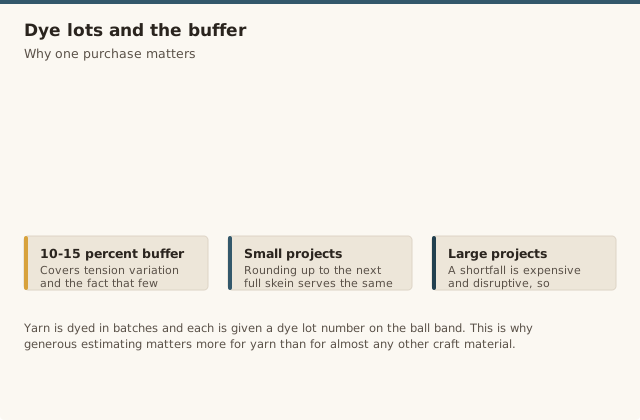
Yarn is dyed in batches, and each batch is assigned a dye lot number printed on the ball band. Two skeins in the same named colour but different dye lots can show a visible, sometimes quite noticeable, shade difference once worked up, even though they looked identical on the shelf. This is why estimating generously and buying everything you need in one purchase matters more for yarn than for almost any other craft material: a small shortfall discovered weeks later may mean the dye lot is no longer available at all, and even finding the same dye lot again is not something most retailers can guarantee.
If you do end up mixing dye lots, working the transition gradually, alternating rows or rounds between the two skeins for a few rows, blends the shift far less obviously than switching abruptly mid-row.
How big a buffer to buy
A 10 to 15 percent buffer over your calculated estimate covers normal variation in tension, a swatch that wasn't perfectly representative of your actual working rhythm, and the reality that few people crochet with machine-perfect consistency across an entire large project. For a smaller project like a hat or coasters, rounding up to the next full skein serves the same purpose more simply, since the absolute yardage difference is small either way. For a large project like a blanket or garment where a shortfall is expensive and disruptive, calculate the percentage buffer properly rather than rounding loosely.
A full worked example
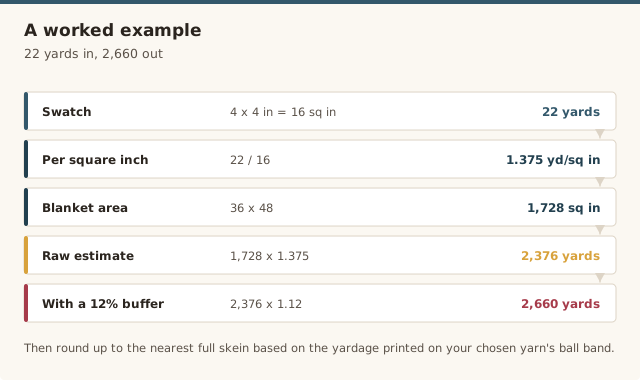
Say you want to make a lap blanket, roughly 36 by 48 inches, and you have no pattern, just a stitch you like and a hook you've chosen. Work a 4x4 inch swatch in that stitch and hook, then unravel it and measure the yarn: suppose it comes to 22 yards. That's 22 yards for 16 square inches, or 1.375 yards per square inch.
Your blanket's total area is 36 x 48 = 1,728 square inches. Multiply that by 1.375 yards per square inch, and you get roughly 2,376 yards. Add a 12 percent buffer (2,376 x 1.12) and you land at approximately 2,660 yards, which is what you'd actually buy, rounded up to the nearest full skein based on the yardage printed on your chosen yarn's ball band.
Estimating for multi-colour projects
For a project using several colours, like stripes or a colourwork pattern, estimate the total yardage for the whole piece using the method above, then divide it proportionally by how much of the finished piece each colour actually covers. A blanket with four equal stripe colours splits the total roughly evenly; a piece that's mostly one background colour with small accent details needs far less of the accent colour than the total-divided-by-colour-count math would suggest.
For colourwork with many small sections, like intarsia motifs or a granny square blanket using leftover scraps in many colours, exact yardage per colour matters less than making sure your primary or background colour has a generous buffer, since running short on one accent shade among many is a much smaller problem than running short on the yarn that makes up most of the piece. It's also worth weighing finished scrap-yarn projects, like coasters or granny squares from a previous blanket, on a kitchen scale against the ball band's stated weight-to-yardage ratio if you're trying to estimate leftovers precisely rather than by eye.
Common mistakes & fixes
Mistake: buying the exact calculated amount with no buffer at all. Fix: always add 10–15 percent over your estimate. Normal tension variation across a large project accounts for most shortfalls, not calculation errors.
Mistake: buying skeins for one project across multiple shopping trips without checking dye lots match. Fix: buy your full estimated amount, buffer included, in a single purchase, and check that every skein shares the same dye lot number before leaving the shop or completing an online order.
Mistake: scaling a pattern's yardage by the same percentage as a size increase in circumference alone. Fix: yardage scales with area, not a single linear measurement. Compare both relevant dimensions (like chest circumference and length) between sizes to get a more accurate scaling estimate.
Mistake: estimating yardage from a swatch worked at a different tension than you'll actually use for the full project. Fix: work your estimating swatch in a relaxed, natural sitting rather than a careful, slow one, since tension on a deliberately careful swatch often doesn't match your real working tension over a long project.
Mistake: guessing yardage for a photo-only project with no comparison to any similar existing pattern. Fix: find a published pattern for a similar finished size and stitch density and use its stated yardage as your starting point, adjusting for any differences in gauge or stitch openness.
Frequently asked questions
How do I calculate how much yarn I need for a project without a pattern?
Work a gauge swatch, unravel it, and measure the length of yarn it used, then compare that to the swatch's area to get yards per square inch or square foot. Multiply that figure by the total area of your planned project to get an estimated total yardage, and add 10 to 15 percent as a buffer.
How much yarn does an average adult blanket need?
A worsted-weight throw blanket around 50 by 60 inches typically needs roughly 2,500 to 3,000 yards, though this varies with stitch density and hook size. A denser stitch pattern or smaller hook increases yardage for the same finished dimensions.
Is it better to buy too much or too little yarn?
Too much, within reason. Running short mid-project, especially with a dye lot you can no longer match exactly, is a far more disruptive problem than having a partial skein left over, which can go toward a future scrap project.
What is a dye lot and why does it matter for yarn amounts?
A dye lot is a batch number printed on the yarn's ball band identifying which dyeing run produced that skein. Skeins from different dye lots, even in the identical named colour, can show a visible shade difference in the finished fabric, so buying all the skeins you'll need for one project from the same dye lot avoids this.
Does a bigger hook use more or less yarn for the same project?
A bigger hook generally uses less yarn for the same finished dimensions, because it produces larger, more open stitches that need fewer of them to cover the same area. A smaller hook produces denser fabric that requires more yarn to reach the same size.
How do I estimate yarn for a project made from a photo, with no written pattern?
Find a similar existing pattern for a comparable finished size and stitch density, and use its stated yardage as a starting estimate, then add a buffer since your stitch pattern or gauge may differ. This is far more reliable than guessing from scratch.
Nora has been teaching crochet for 12 years, from absolute beginners to people coming back to the craft after decades away. She started CrochetGuides to write the clear, honest instructions she wishes she'd had when she was learning — the ones that actually work the first time.
CrochetGuides is a participant in the Amazon Services LLC Associates Program. As an Amazon Associate we earn from qualifying purchases, at no extra cost to you.