Best Crochet Project Bags and Travel Totes
Practical yarn storage bags and travel organizers keep your current project clean, tangle-free, and ready to go wherever you stitch.
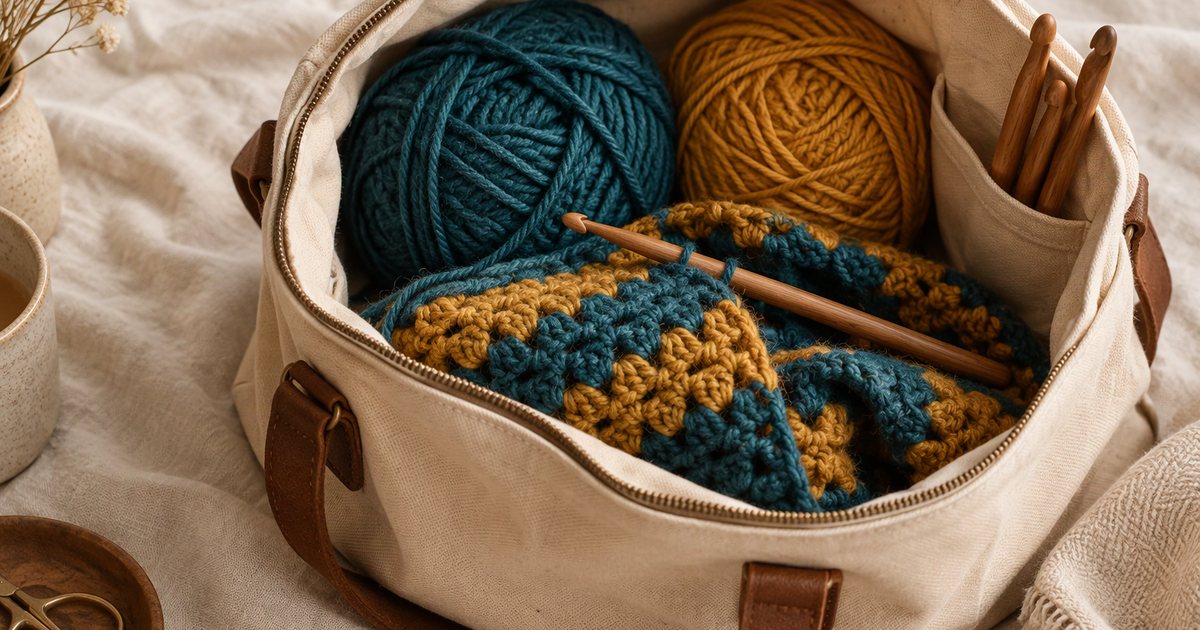
AI-generated illustration, not a photograph of the finished item. About our images
Key Features of a Good Crochet Project Bag
When shopping for a project bag, look for smooth interior linings that won't catch on textured fibers or delicate yarn strands. Built-in yarn grommets or top slits allow thread to feed through smoothly while keeping skeins securely inside the pouch. Pockets specifically sized for hooks, scissors, and stitch markers keep essential tools from falling to the bottom, while sturdy handles make it easy to carry your work anywhere.
Pay attention to the bag's overall structure as well. Soft-sided canvas bags fold flat for easy storage inside a wardrobe or drawer when empty, whereas stiffer drum bags stay upright while sitting beside your favorite chair. An upright bag makes it far easier to pull yarn directly from the skein as you stitch throughout the evening without the bag collapsing.
Drum-Style Yarn Totes for Single Projects
Drum-style totes feature a cylindrical shape that sits upright on floor or table surfaces while you stitch. These bags usually hold two to four standard 100-gram skeins alongside your working project. The top zipper enclosure often includes built-in grommets so you can pull yarn without opening the main compartment, which protects your yarn from inquisitive pets, accidental spills, and household dust.
These bags suit medium-sized projects such as scarves, baby sweaters, hats, and amigurumi toys. Look for models with generous exterior zippered pockets specifically meant for your hook roll, tape measure, tapestry needles, and scissors. Keeping your sharp tools in external pockets prevents accidental snags on the working yarn stored inside the main chamber while making your tools easy to grab quickly.
Large Craft Organizer Totes for Afghan Projects
If you regularly work on afghans, chunky throw blankets, or multi-skein garments, a small drum tote will quickly feel cramped. Large rectangular craft totes offer wide main compartments that comfortably hold five to ten skeins alongside substantial crochet fabric without crushing your work. Having plenty of room ensures your blanket stays clean and manageable while traveling or moving between rooms.
These larger bags frequently feature adjustable internal dividers to keep different color skeins separated, which is a major benefit for colorwork, tapestry crochet, or multi-stripe blankets. Look for reinforced handles and padded shoulder straps, as a bag loaded with heavy acrylic or cotton skeins and metallic tools can quickly become tiring to carry by hand during travel.
Compact Travel Cases for Small Accessories and Notions
For crafters who prefer small projects like granny square motifs, socks, or amigurumi parts, a heavy tote is often unnecessary. Compact zippered travel cases feature elastic loops that secure aluminum or ergonomic hooks, small mesh pockets for stitch markers and tape measures, and just enough interior space for a single working skein of yarn.
These flat, book-style organizers slip effortlessly into a backpack, handbag, or carry-on bag. They keep sharp scissors secure in designated slots and protect your ergonomic hook handles from scratching against other personal belongings while you are on the move. They make craft organization simple without adding bulk to your daily luggage.
Maintaining Your Crochet Storage Gear
Yarn bags accumulate fiber fluff, dust, and stray threads over time. Fabric and canvas totes can typically be spot-cleaned with mild soap and cold water, while nylon bags can be wiped down easily with a damp cloth. Avoid machine washing structured bags with rigid cardboard or plastic inserts, as water can warp their shape permanently.
Always clear out loose yarn snippets and secure tapestry needles or sharp embroidery scissors in protective sheaths before packing your bag away after a trip. Taking a few minutes for simple routine maintenance ensures your travel bag remains clean, unsoiled, and fully stocked for your next crochet project.
Frequently asked questions
Why do yarn bags have holes or grommets on top?
Top grommets let you feed yarn directly from inside the bag to your hook while keeping the skein clean, safe from pets, and contained.
Can I use a standard handbag as a crochet project bag?
Yes, but standard handbags often lack needle slots and grommets, which means yarn can snag on zippers and tools can fall to the bottom.
What size project bag should a beginner start with?
A medium drum bag holding 2 to 4 skeins is ideal for beginners, as it fits common beginner projects like scarves, hats, and small blankets.
How do I prevent my working yarn from tangling inside a multi-skein bag?
Choose a bag with separate internal dividers and individual grommets so each color feeds smoothly without twisting around other skeins.
Are hard cases or fabric totes better for traveling on airplanes?
Fabric totes are usually better because they compress into carry-on luggage, though structured cases protect sharp tools and delicate hooks effectively.