Free Crochet Kids Fingerless Mitts Pattern for Beginners
A simple tube with a thumb gap — quick enough to finish a pair in one sitting.
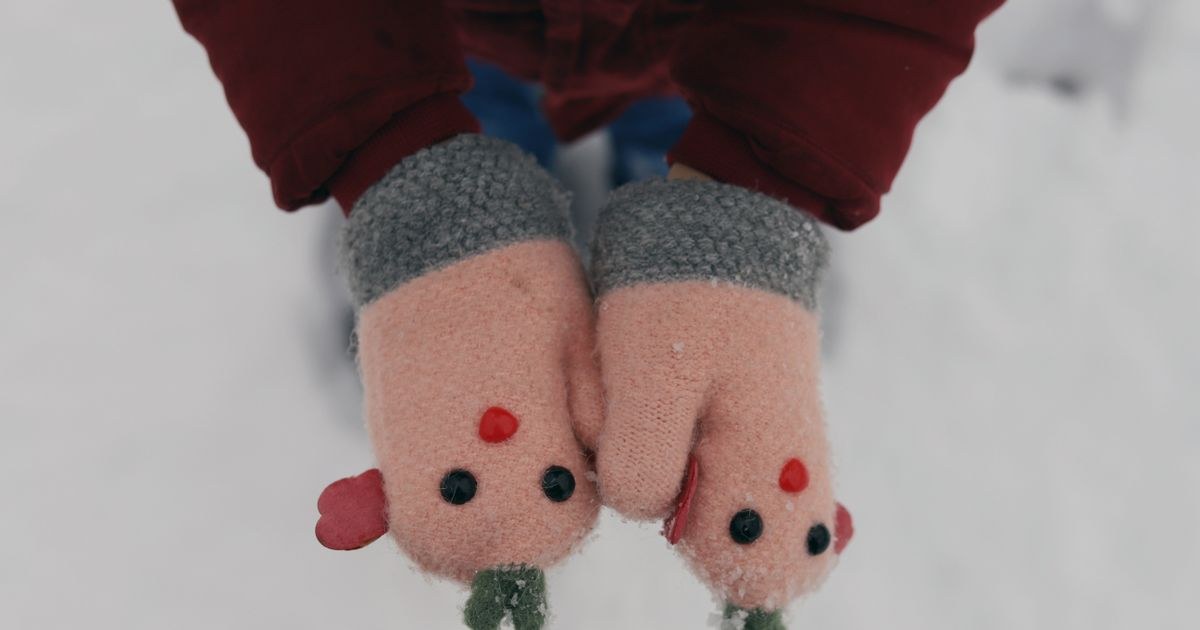
In my classes I get asked about kids' mitts more than almost anything, usually by a parent who has made the adult size and now has a small person tugging at their sleeve for a matching pair. The mistake I see most often is treating a child's hand as a shrunken adult hand and scaling everything down evenly. It doesn't work like that. A five-year-old's hand isn't just smaller around; it's shorter and chubbier in proportion, which is why this pattern adds the thumb gap earlier and keeps the tube shorter. I still remember measuring my own niece's hand against mine in the yarn shop and being surprised by how different the two shapes really were.
These mitts are a plain tube worked in a continuous spiral, the same round technique from our beanie pattern, with a small gap left for the thumb. No fitted shaping, no fingers to work individually — just a snug tube that stretches over a child's hand.
Materials
- Small amount of worsted-weight yarn (about 50–70 yards for a pair)
- 4.5mm (US size 7) crochet hook
- Stitch marker, to track the start of each round
- Scissors
- Yarn needle, for weaving in ends
Abbreviations (US terms)
| Abbr. | Means |
|---|---|
| ch | Chain |
| sc | Single crochet |
| st(s) | Stitch(es) |
| rnd(s) | Round(s) |
See our abbreviations glossary for the full list including UK terms.
Gauge
14 sc and 16 rows measures about 4in / 10cm square with a 4.5mm hook and worsted yarn. Fit depends directly on your starting chain — measure the child's hand before starting for the best fit.
Notes
- Written in US terms, worked in a continuous spiral — use a stitch marker to track round starts, same technique as our beanie pattern.
- Makes one mitt; repeat for a matching pair.
- Measure around the child's hand (excluding thumb) for the starting chain — the numbers below fit an average 5–6 year old hand as a starting point.
Pattern (make 2)
Ch 20, join with a sl st to form a ring, being careful not to twist the chain. Place marker. (20 sts)
Sc in every st around. (20 sts each round)
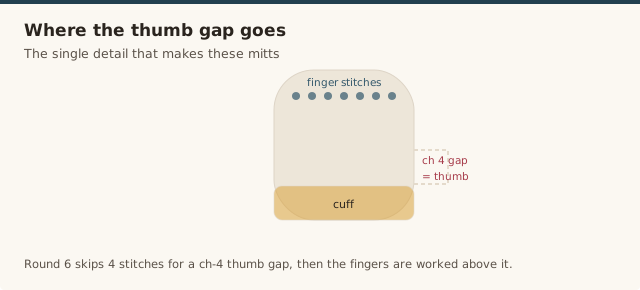
Sc 16, ch 4 (skip next 4 sts, leaving a gap for the thumb), sc in remaining sts to end of round. (20 sts total, including the 4-chain gap)
Sc in every st around, working sc into each of the 4 chain sts from the gap as if they were regular stitches. (20 sts)
Sc in every st around. (20 sts each round)
Fasten off and weave in ends with a yarn needle. Repeat the entire pattern for the second mitt.
A sized tutorial for crocheting mittens for children, useful for seeing how the pattern is adjusted across toddler and youth sizes.
Choosing kid-friendly yarn
A machine-washable acrylic or acrylic-blend worsted-weight yarn is the practical default for kids' items, since it holds up to frequent washing without felting or losing shape the way some wool blends can. Softness matters more here than for most adult projects too — kids are quicker to complain about a scratchy cuff than adults are, so it's worth choosing something labeled soft or baby-safe even though these mitts fit an older child.
Color is where kids' projects get to be genuinely fun: bright, saturated colors and even variegated or self-striping yarns tend to be more popular with kids than the muted, sophisticated shades adults often reach for. Letting the child pick their own color from a few options, if they're old enough, turns the finished mitts into something they're proud of rather than just something they wear.
Sizing for growing hands
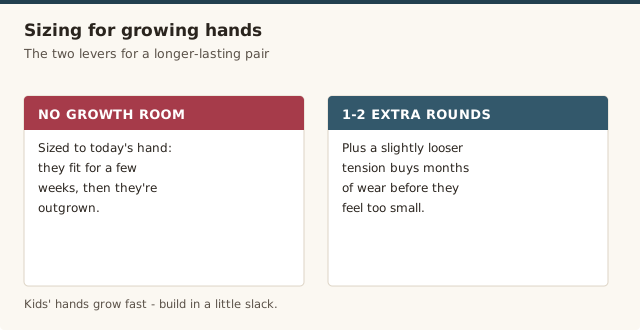
Kids' hands grow quickly, so it's worth building in a little room rather than sizing exactly to a snug fit today. Adding 1 to 2 extra rounds to the straight sections, plus working at a very slightly looser tension than usual, buys a few extra months of wear before the mitts feel too small.
As a rough size starting point: a toddler's hand (around ages 2–3) generally needs 4–6 fewer starting chains than the 20 used here, a young child (4–6) is close to the pattern as written, and an older child (7–9) usually needs 2–4 more. These are starting points, not exact rules — measuring the specific child's hand, as the pattern notes recommend, always gives the most accurate fit.
Care and durability
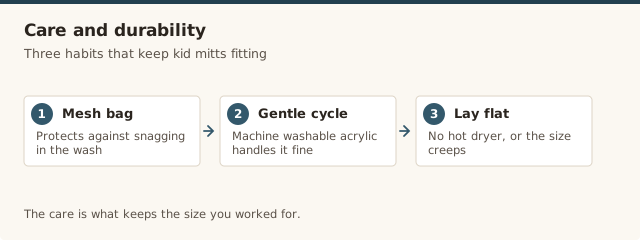
Machine washing on a gentle or delicate cycle, in a mesh bag to protect the fabric from snagging on zippers or fasteners in the wash, works well for most acrylic and acrylic-blend yarns used here. Laying flat to dry rather than using a hot dryer keeps the stitches from stretching or shrinking out of the size you worked so carefully to get right.
Since kids' items get more wear and tear than most adult accessories, it's worth doing a quick check every so often for loosening stitches or a fraying thumb-gap edge, and reinforcing with a few extra stitches if needed before a small issue turns into a bigger repair.
Common mistakes & fixes
Fix: add 1–2 extra rounds and work at a slightly looser tension to buy a few extra months of wear.
Fix: stick to a soft, machine-washable acrylic or acrylic blend — it's both more comfortable and far more practical for daily kid use.
Fix: err slightly larger on the thumb gap chain count for kids, since an easy on/off matters more for a child than a snug thumb fit.
Fix: move the stitch marker up every single round without exception, even though it feels unnecessary on a project this fast — it's easy to lose your place on a small tube with few visual landmarks.
Our pick
Stitch marker & tapestry needle kit
The stitch marker keeps track of round starts on this small project, and the needle handles weaving in the several ends a pair produces.
View on Amazon →Frequently asked questions
How do I size fingerless mitts for a child's hand?
Measure around the widest part of the child's hand (excluding the thumb) and work enough rounds in the tube to match that circumference, adjusting the starting chain up or down in multiples of 2.
How much yarn do I need for a pair of kids mitts?
A pair of child-sized fingerless mitts uses roughly 50 to 70 yards of worsted-weight yarn total, comfortably within a single skein.
Where does the thumb hole go on fingerless mitts?
The thumb hole is created by skipping a small group of stitches partway up the tube rather than working them, leaving a gap. Chain over the gap on the return round to keep the stitch count consistent.
What yarn holds up best to daily wear from an active kid?
A machine-washable acrylic or acrylic blend worsted-weight yarn is the most practical choice, since it handles frequent washing without felting or losing shape the way some wool can.
Should I size kids mitts to fit now or leave room to grow?
A little growing room is worth building in, since kids' hands change size quickly; adding 1-2 extra rounds to the length and slightly looser tension gives a few extra months of wear without the fit feeling sloppy right away.
Can I let my child help make their own mitts?
Yes, especially the easy parts — picking the yarn color, or later, once they know basic single crochet, working a round or two under supervision. It's a common way kids get their first hands-on introduction to the craft.
What age are these fingerless mitts for?
The written pattern fits most 5 to 6 year olds, but it's easy to adjust: remove a couple of starting chains for a toddler, or add a couple for an older child. Measuring the child's hand first always gives the most accurate fit.
Can I make these mitts with a thicker yarn for extra warmth?
Yes, a heavier yarn and a slightly larger hook will make a warmer, denser pair, but go up a hook size or two and re-check the starting chain, since thicker yarn changes the circumference.
CrochetGuides is a participant in the Amazon Services LLC Associates Program. As an Amazon Associate we earn from qualifying purchases, at no extra cost to you.