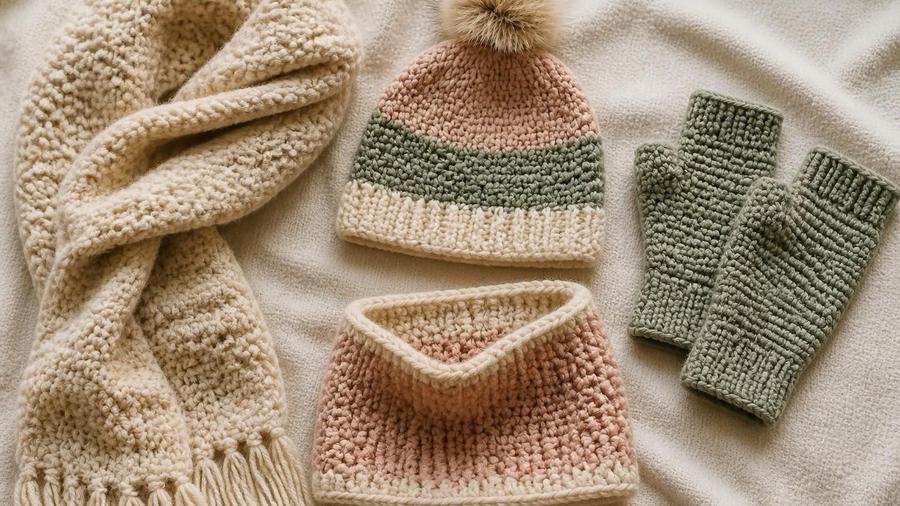
From a first-ever scarf to a full boxy cardigan — ten wearable patterns to keep your hands busy and your neck warm this season.
Updated 2026 · 8 min read
There's a specific kind of satisfaction in wearing something you made, and it's different from finishing a blanket or a coaster; you get to walk around in it. My own wearables drawer grew slowly and a little out of order, a scarf first, then a beanie once I trusted myself with shaping, then a cardigan much later once I stopped being intimidated by the idea of a whole garment. This roundup is roughly that same progression, laid out on purpose so you can follow it instead of stumbling through it the way I did.
I picked these ten specifically because, together, they cover the full range of what "wearable" means in crochet: flat accessories with no shaping at all, hats and cowls that introduce basic construction, and full garments that ask you to think about fit and seaming. Whichever end of that range you're starting from, there's a next step here rather than a jump straight to something overwhelming.
Fall is genuinely the right season to work through a list like this, and not just for the obvious reason that you'll want to actually wear the results soon. Cooler weather makes worsted and heavier-weight yarn more pleasant to work with for long stretches, since you're not fighting the heat of a wool blanket of yarn across your lap in August, and there's something satisfying about timing a scarf or cardigan to be finished right as you start reaching for warmer layers anyway.
Below, each pattern links straight to its full free instructions, with a short note on where it sits in terms of difficulty and who it suits. For the full collection beyond these ten, our wearables category has everything currently on the site.
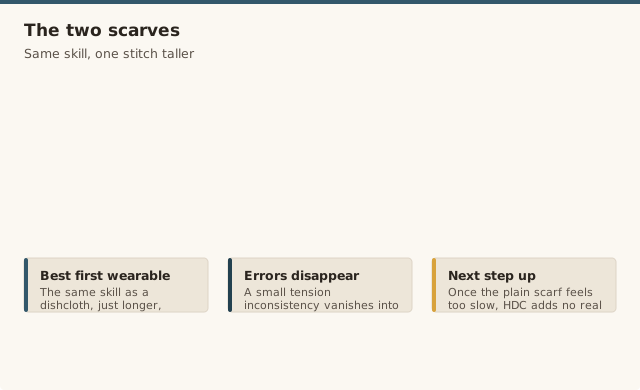
The classic first wearable: the same skill as a dishcloth, just longer, using only chain and single crochet with no shaping to worry about. A forgiving project that's hard to get wrong, and the natural place to start if you've never made anything wearable before, since any small tension inconsistency simply disappears into the length of the scarf rather than distorting an overall shape.
A thicker, softer, faster-working scarf using half double crochet, one stitch taller than the plain single crochet version above. A natural next step once the basic scarf feels too slow, since half double crochet covers more ground per row without adding any real complexity.
Your first project with real shaping: a flat crown that grows into a wearable hat through a sequence of increase rounds. This is where construction starts to matter in a way it didn't for the scarves above, so it's worth taking slowly the first time.
A closed loop worked in half double crochet with no ties, buttons, or ends to manage, just slip it over your head. A relaxing project once you're comfortable joining a round, and genuinely faster to finish than a full-length scarf, since there's simply less total fabric to work through.
Two flat rectangles and one seam is genuinely all this is, despite looking far more complicated draped over a shoulder. A good bridge project between accessories and full garments, since it introduces seaming without asking you to shape anything, and a surprisingly versatile silhouette that works over almost any outfit once it's finished.
A boxy, oversized cardigan worked as five flat rectangles with no shaping and no fancy stitches, just single crochet and a few confident seams. The most approachable full garment on this list, and proof that a sweater doesn't have to mean complicated shaping, since the oversized, boxy fit is genuinely forgiving of small sizing variations between makers.
A snug tube with a thumb gap, sized for adult hands, the grown-up version of our kids mitts pattern. Quick enough to finish in an evening, and a genuinely useful accessory for anyone who wants warm hands without losing dexterity for typing, texting, or handling small objects.
A single strip of half double crochet, twisted once and sewn closed, with no shaping and no increases to count. One of the quickest wearables on this entire list, and an easy stash-buster for leftover yarn from a bigger project.
A cozy sole-and-sides construction built from the same flat circle and straight rounds used across our beginner patterns, just assembled into something you can actually wear on your feet. A satisfying, practical make for the exact season this roundup is aimed at, and one of the few wearables here that's genuinely quick to make in a matching pair for a gift.
A simple two-panel crop top built in double crochet rows, sized to your own gauge swatch rather than a fixed chart. The most fit-dependent pattern on this list, and a good one to save until you're confident checking gauge and adjusting a pattern to your own measurements, since working from a swatch rather than a rigid size chart genuinely produces a better fit once you trust the process.
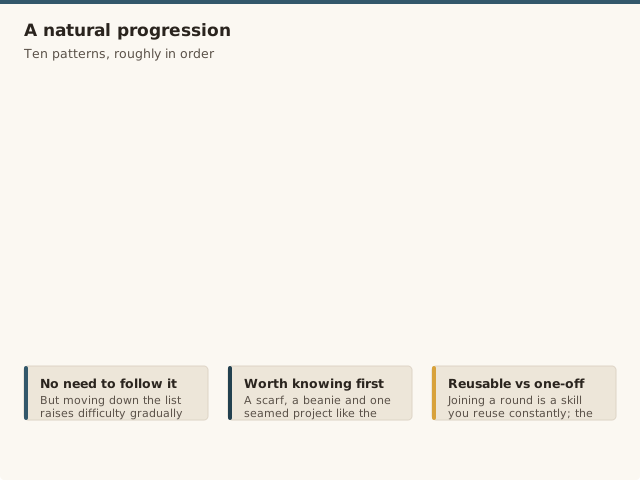
If you read this list top to bottom, it roughly traces the path most crocheters actually take toward wearables: flat, unshaped accessories first, then a first taste of real shaping with the beanie, then a garment built from simple rectangles before anything genuinely fitted. There's no requirement to follow it in order, but if you're newer to crochet and want a sense of what to try next once you finish one of these, moving down the list is a reasonable way to keep gradually raising the difficulty without ever facing a huge jump.
The cardigan and crop top are the two patterns here that ask the most of you in terms of genuine garment-fitting skills, checking gauge, understanding ease, and seaming multiple pieces together, so it's worth having at least a scarf, a beanie, and one seamed project like the poncho under your belt before attempting either.
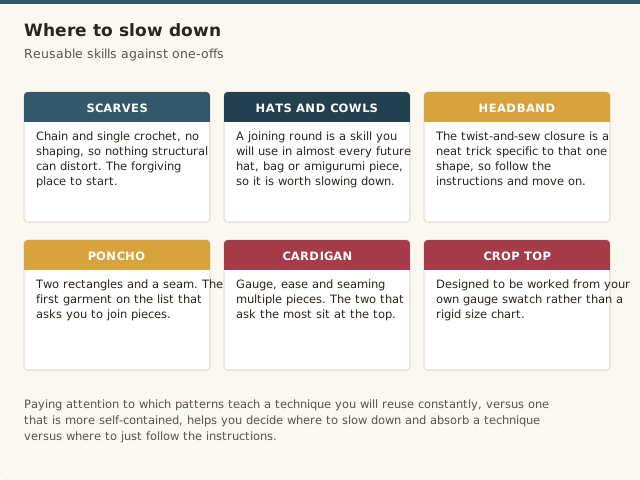
It's also worth noticing which patterns on this list teach a technique you'll reuse constantly versus one that's more self-contained. Joining a round for the beanie and cowl is a skill you'll use in almost every future hat, bag, or amigurumi piece, while the headband's twist-and-sew closure is a neat trick specific to that one shape. Paying attention to which is which helps you decide where to slow down and really absorb a technique versus where it's fine to just follow the instructions and move on.
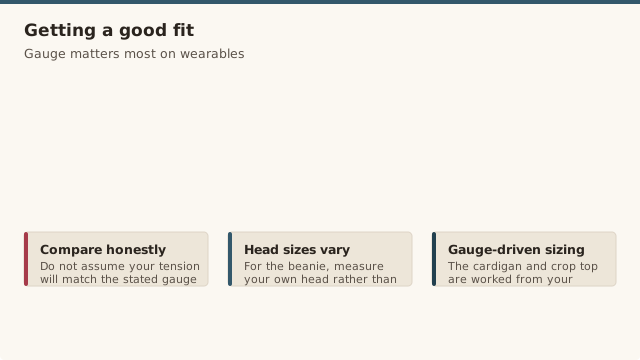
Getting a good fit
Gauge matters more for wearables than for almost anything else on this site, since a small tension difference that's invisible on a coaster becomes a genuinely different-sized garment once it's multiplied across an entire cardigan or crop top. Always work a gauge swatch before starting one of the larger patterns here, and compare it honestly against the pattern's stated gauge rather than assuming your natural tension will match. It only takes ten or fifteen minutes to check, and it's far less frustrating than discovering a whole garment runs too small once you're several rows into the body.
For the beanie specifically, measure your own head circumference and compare it against the pattern's sizing notes rather than trusting a single fixed size, since head sizes vary more than most people expect. For the cardigan and crop top, both are designed to be worked from your own gauge swatch rather than a rigid size chart, which means taking a few extra minutes up front saves you from an ill-fitting finished garment later.
Frequently asked questions
Which crochet wearable is easiest for a first project?
The scarf is the classic first wearable, using only chain and single crochet worked in straight rows with no shaping. The headband and cowl are close behind, since both are simple strips or loops with minimal construction.
How do I make sure a crochet hat or cardigan actually fits?
Check your gauge swatch against the pattern's stated gauge before you start, since even a small tension difference compounds significantly over a whole garment. For the beanie specifically, measure your head circumference and compare it to the pattern's sizing notes rather than trusting a single fixed size.
What's the most beginner-friendly sweater or top pattern here?
The cardigan is deliberately built from five flat rectangles with no shaping and no fancy stitches, just single crochet and a few confident seams, which makes it far more approachable than a typical fitted sweater. The crop top is a close second, sized to your own gauge swatch rather than a fixed chart.
Which yarn works best for wearables like these?
A soft worsted-weight wool, wool blend, or acrylic is the standard choice for most of these patterns, since it balances warmth, drape, and washability. For anything worn close to the neck or wrists, like the cowl or fingerless gloves, a softer, less scratchy fiber matters more than for an outer layer like the poncho.
Can I make these patterns in a smaller or larger size?
Yes, most of these are written to be adjusted. The scarf and headband simply need more or fewer stitches in the foundation chain, the beanie and slippers scale with your own measurements, and the cardigan and crop top are both sized from a gauge swatch rather than a single fixed chart.
How long does it take to crochet a wearable like a hat or scarf?
A scarf, headband, or pair of fingerless gloves typically finishes in a few hours across one or two sessions. A beanie or cowl usually takes an evening or two, while the poncho, cardigan, and crop top are bigger projects, often a week or more of steady evening work.
Nora has been teaching crochet for 12 years, from absolute beginners to people coming back to the craft after decades away. She started CrochetGuides to write the clear, honest instructions she wishes she'd had when she was learning — the ones that actually work the first time.
CrochetGuides is a participant in the Amazon Services LLC Associates Program. As an Amazon Associate we earn from qualifying purchases, at no extra cost to you.