10 Cozy Crochet Blanket Patterns You Need to Try
From a super bulky throw you can finish in a weekend to a year-long temperature blanket — ten blanket patterns worth adding to your queue.
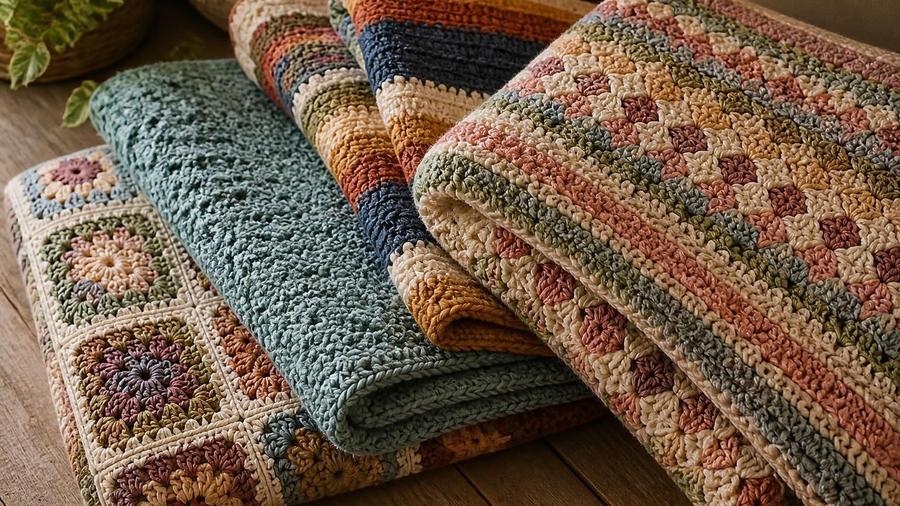
I get asked some version of "what blanket should I make next?" more than almost any other question, and for a long time I didn't have a good answer beyond "whatever you're in the mood for." That's a fine answer, but it's not a very useful one if you're staring at a queue of a hundred saved patterns and can't decide where to start. So this is the list I wish I'd had: ten blankets from across this site, chosen specifically because each one teaches or showcases something a little different, from a first-ever texture stitch to a genuinely long-term project.
I didn't pick these because they're the fastest or the easiest; a couple of them, like the temperature blanket, are deliberately slow projects you live with for a year. What they have in common is that each one earns its place on a list like this: a distinct look, a specific skill or technique at its center, and a finished size that makes sense for how it's meant to be used, whether that's a nursery, a car, or your own sofa.
Below, each pattern links straight to its full free instructions on this site, with a short note on what makes it worth making and who it's best suited for. If you're new to blankets specifically, our home & décor category has the full collection, including a few smaller projects to warm up on first.
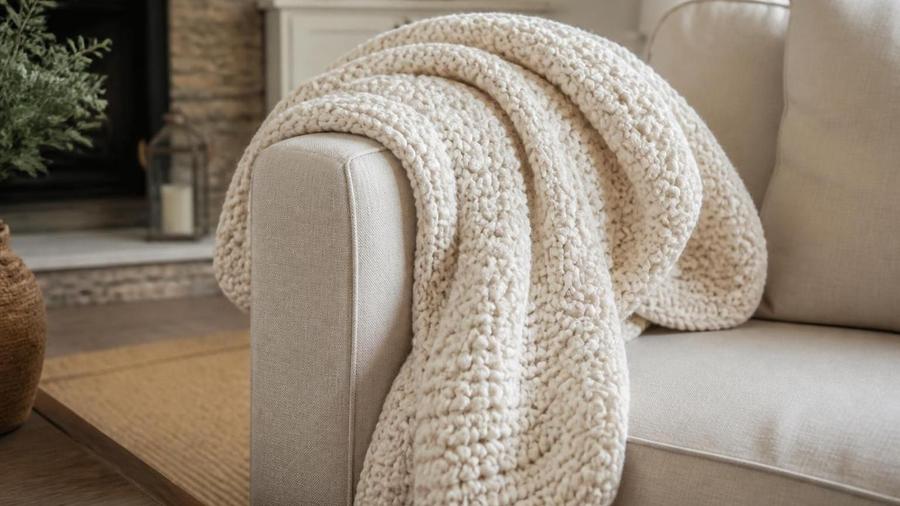
Chunky Crochet Throw Blanket
Super bulky yarn and a huge hook mean this blanket grows visibly fast, row by row, which makes it one of the most satisfying projects on this list if you want to see real progress in a single evening. The single crochet back-loop-only texture gives it a nubby, ridged surface that photographs beautifully and feels substantial the moment it's off the hook.
See the full pattern →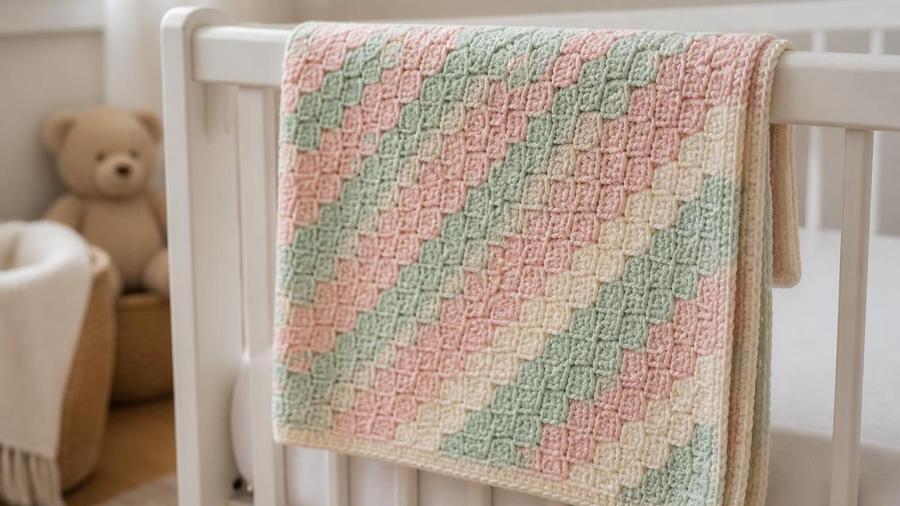
Corner-to-Corner (C2C) Baby Blanket
C2C is one of those techniques that looks far more advanced than it actually is once you understand the block-by-block logic, and this diagonal pink, mint, and cream baby version is a genuinely good place to learn it. If you haven't worked C2C before, pair this with our C2C stitch tutorial first.
See the full pattern →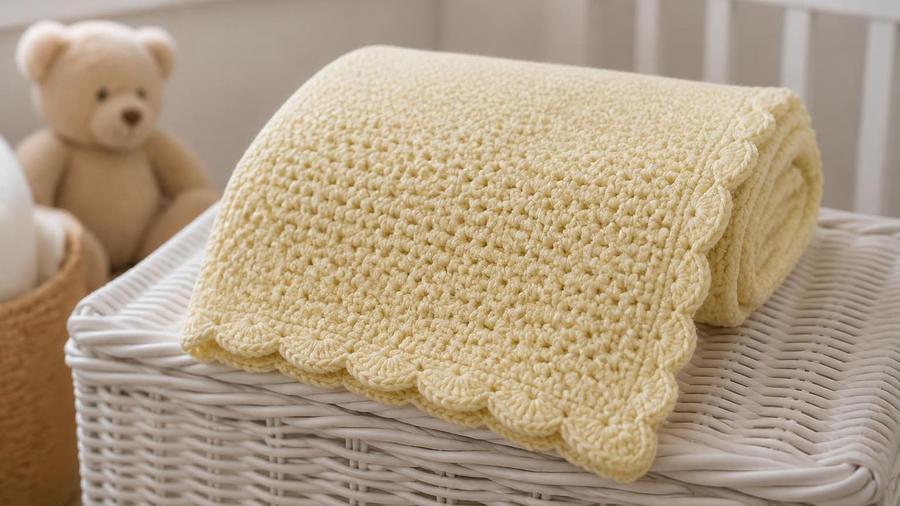
Easy Baby Blanket
A plain single crochet body finished with a scalloped shell-stitch border, this is the pattern to reach for if you want a baby blanket without tracking a color sequence or a repeat stitch through the whole body. The border is the only part that asks for any real attention, and it's worth the extra round for how much it elevates a simple rectangle.
See the full pattern →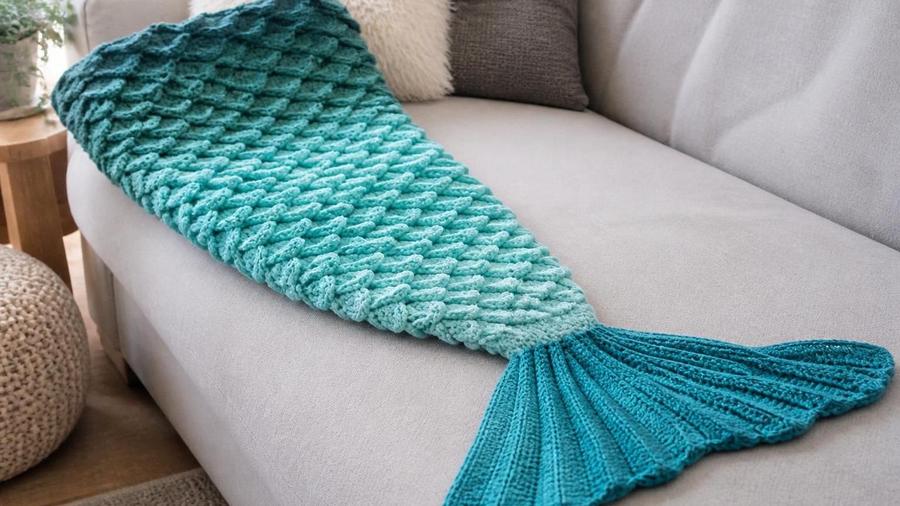
Mermaid Tail Blanket
The showstopper of this list: a teal ombre body built from overlapping crocodile-stitch scales that tapers into a ribbed fin. It's a project for someone who already has a few blankets under their belt, since the scale stitch takes a bit of practice, but the finished result is unlike anything else on this page.
See the full pattern →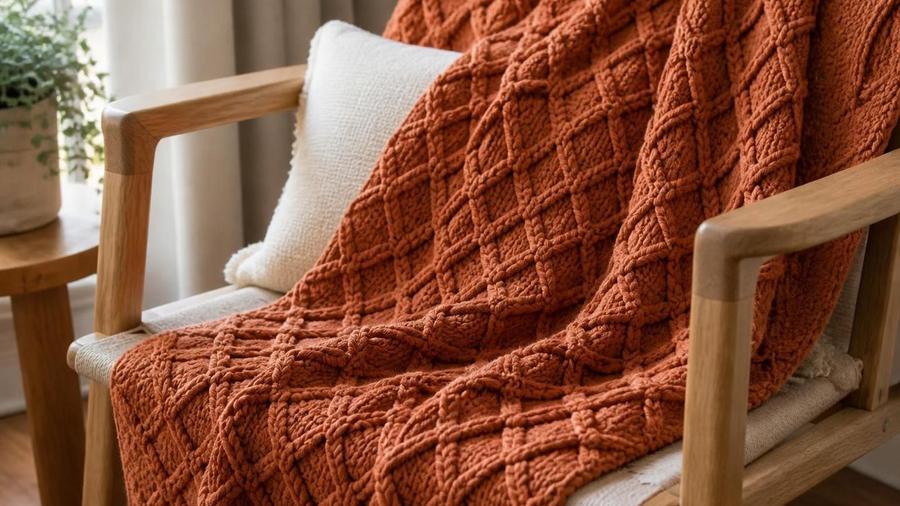
Diamond Trellis Stitch Blanket
A diagonal lattice of front-post double crochet worked over a plain background, this rust-toned throw has real depth and shadow once it's finished, closer to a woven textile than typical crochet. If you can already work a front-post stitch, the diamond repeat is very learnable within a row or two.
See the full pattern →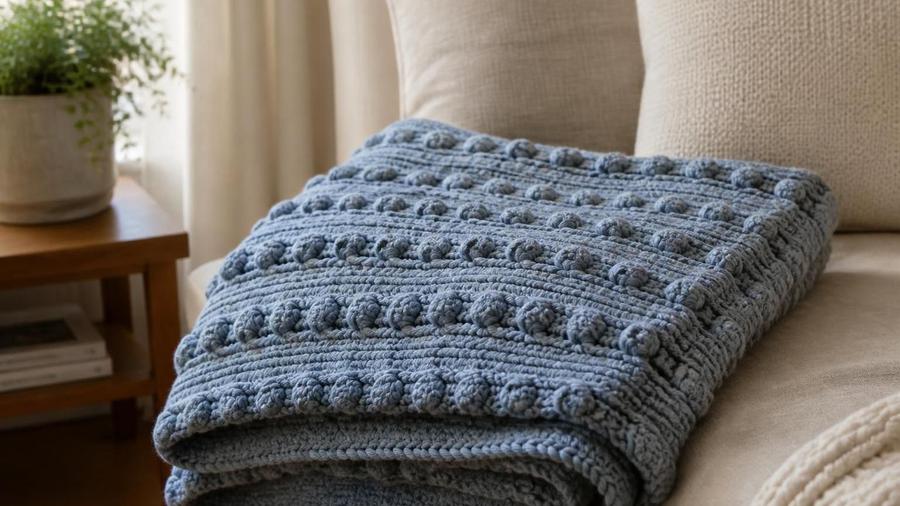
Bobble Stitch Throw Blanket
Rows of raised bobbles across a dusty blue background, spaced out so each one has room to stand out. This is the pattern to make if you want a tactile, textured blanket without committing to anything as involved as the mermaid tail — just one repeating cluster stitch, worked steadily.
See the full pattern →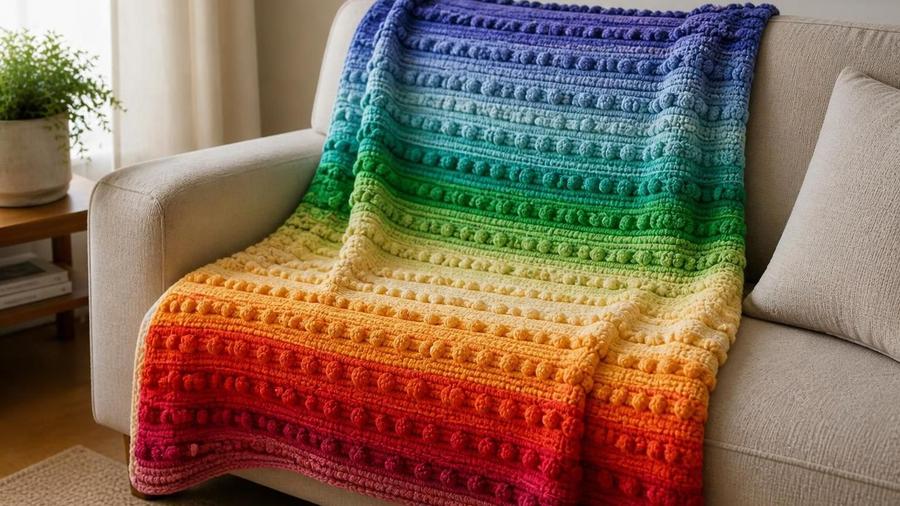
Temperature Blanket
Not a quick project, and not meant to be: one row a day for a full year, colored by that day's temperature, building into a gradient record of the seasons. If you want a long-term crochet project with real meaning behind it rather than just a finished object, this is the one on this list built for that.
See the full pattern →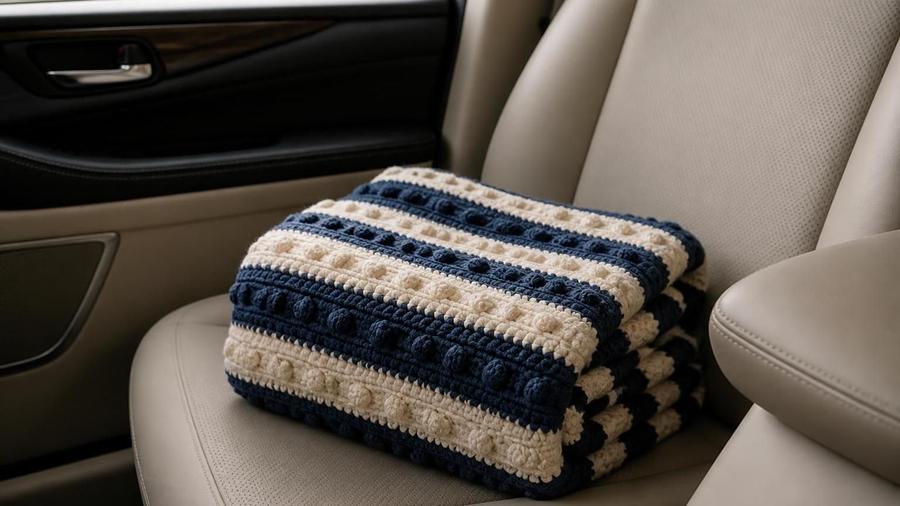
Cozy Lapghan / Car Blanket
A genuinely small, quick blanket sized for a lap or a car rather than a whole bed, in navy and cream stripes with a single bobble accent row through the middle. If your queue is full of ambitious projects and you just want to finish something this weekend, start here.
See the full pattern →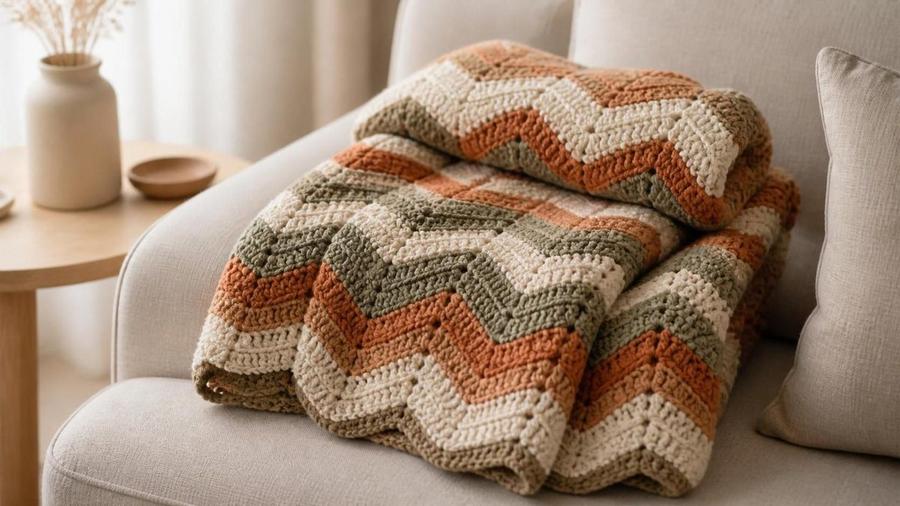
Classic Ripple Blanket
The wave-stitch chevron pattern that's been a staple for generations, built from repeated peaks and valleys that make it a genuinely great way to use up leftover yarn in stripes. There's a reason this shape has stayed popular for decades — it's forgiving, stash-friendly, and looks intentional even in a random color sequence.
See the full pattern →Granny Square Blanket
The pattern that probably taught most of us crochet in the first place. This version covers how many squares to make for a given size, how to join them cleanly, and a finishing border, so the only real decision left is your color palette. A dependable, portable project since each square is small enough to carry anywhere.
See the full pattern →How to pick the right one
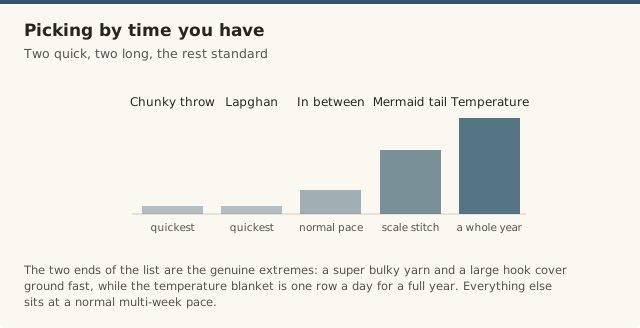
If you're choosing based on how much time you have, start from the ends of this list rather than the middle: the chunky throw and the lapghan are both designed to move fast, while the temperature blanket and the mermaid tail are the two genuine time investments here, one because it spans a year and the other because the scale stitch takes patience. Everything else sits comfortably in between, at roughly the pace of a normal multi-week blanket project.
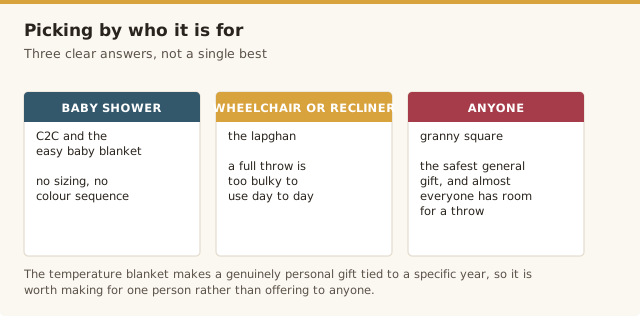
If you're choosing based on who it's for, the C2C and easy baby blankets are the obvious picks for a baby shower, the lapghan makes a thoughtful gift for someone in a wheelchair or recliner, and the granny square blanket is the safest general-purpose gift, since almost everyone has room in their life for a soft, colorful throw.
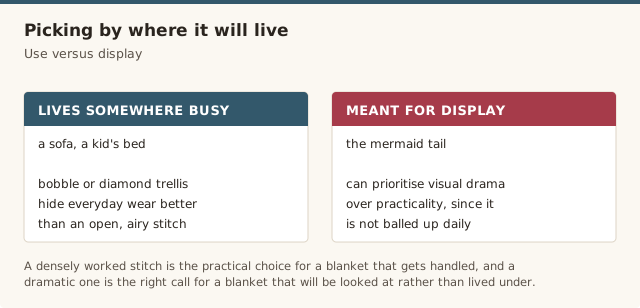
It's also worth thinking about where the blanket will actually live once it's finished. A blanket meant for a busy sofa or a kid's bed benefits from a sturdier, more densely worked stitch like the bobble or diamond trellis, since those textures hide everyday wear better than a very open, airy pattern would. A blanket meant purely for display, like the mermaid tail, can afford to prioritize visual drama over practicality, since it's less likely to be balled up and dragged around daily.
Yarn tips across these patterns
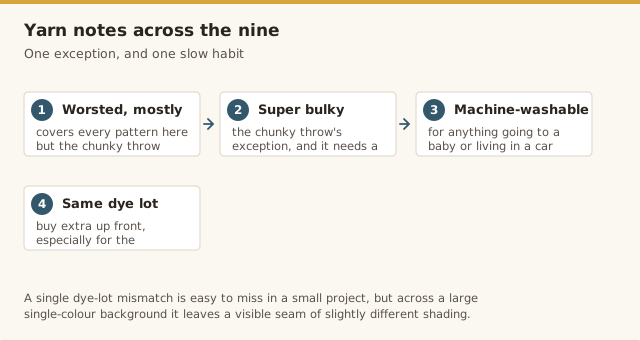
Worsted-weight yarn covers most of this list, with the chunky throw as the one clear exception, since it specifically calls for super bulky yarn and a larger hook to get that fast-growing, nubby texture. If you're substituting a yarn weight in any of these patterns, check the individual pattern's gauge section first, since swapping weights changes both your final size and how much yarn you'll need; our guide to estimating yarn walks through the math if you're not sure where to start.
For anything going to a baby or living in a car, like the C2C, easy baby, and lapghan patterns, stick to a machine-washable acrylic or acrylic blend rather than a natural fiber that needs special care; it's a small choice up front that saves a lot of hassle later.
Buying yarn for a multi-skein blanket also benefits from checking dye lots before you start, especially for patterns like the temperature blanket where you'll be returning to the same colors across many months. A single dye-lot mismatch is easy to miss in a small project but can leave a visible seam of slightly different shading across a large, single-color background, so it's worth buying a little extra of your main colors up front rather than risking a return trip mid-project.
Frequently asked questions
Which crochet blanket pattern is best for a total beginner?
The chunky crochet throw and the easy baby blanket are the most forgiving starting points, since both use a single stitch repeated over and over with no color changes or stitch counting to track. The granny square blanket is also very beginner-friendly once you can make one square, since the rest of the project is just repetition.
How much yarn do I need for a full-size blanket?
Most throw-sized blankets in this roundup use somewhere between 800 and 1,800 yards of worsted-weight yarn depending on the stitch and finished size, with bulkier stitches like the chunky throw using less yardage but more bulk. Check the materials section of each individual pattern for its specific amount, and see our guide to estimating yarn if you're substituting a different weight.
What's the fastest blanket to make from this list?
The chunky throw and the lapghan are both designed to work up quickly, the chunky throw because super bulky yarn and a large hook cover ground fast, and the lapghan because its small, car-blanket size means far fewer rows than a full throw.
Which blanket pattern makes the best gift?
The C2C and easy baby blankets are popular baby shower gifts, the temperature blanket makes a genuinely personal gift tied to a specific year or milestone, and the lapghan is a thoughtful, quick-to-finish option for anyone in a wheelchair or recliner who would find a full-size throw too bulky.
Can I mix and match stitches from different patterns in this list?
Yes, within reason. Because most of these patterns are built from the same basic single or double crochet base with one distinguishing texture or color technique, it's fairly straightforward to borrow, say, the bobble accent row from the lapghan and add it to a plain throw, as long as you keep your stitch counts consistent.
How do I know what size to make my blanket?
Each pattern lists its own finished size, but as a general guide, a lapghan or car blanket is usually around 30 by 40 inches, a baby blanket is typically 30 to 36 inches square, and a full throw blanket is commonly 50 inches or larger in each direction.
CrochetGuides is a participant in the Amazon Services LLC Associates Program. As an Amazon Associate we earn from qualifying purchases, at no extra cost to you.